

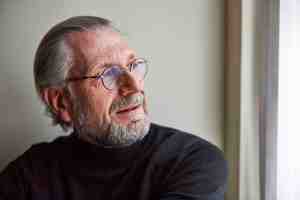
About this episode
Lars Tallert took a wild swing from classical violinist to hard-hitting journalist early in his career, and then became an advisor to prime ministers, UN agencies, and The Guardian—and even served as a frontline witness in Nicaragua, where a reporting project on poisoned banana workers changed his life. Lars then co-founded the Sustainable Journalism Partnership—now 70 countries strong—to answer a simple, urgent question: how can climate journalism actually motivate people to act? In this conversation, Lars traces the thread from anti-apartheid campaigns to today’s “doom and gloom” news cycle, and lays out a blueprint for journalism that empowers communities instead of exhausting them—shifting audiences from consumers to participants, and linking climate change to the systems we live in, from culture to national resilience.
Notes and resources
- Lars Tallert’s LinkedIn
- Sustainable Journalism Partnership
- Climate Swings episode with Peter Prengaman, global climate and environmental news director, the Associated Press
- Climate Swings Substack
Full transcript
Michael Ethan Gold (00:01)
Lars Tallert, welcome to Climate Swings. It’s great to have you here.
Lars Tallert (00:05)
Thanks for having me.
Michael Ethan Gold (00:07)
So could you just start with a brief self-introduction, a little high level about your career to this point and a brief introduction about what you’re doing now?
Lars Tallert (00:19)
Well, I’ll try to be as brief as possible, but the thing is I’ve done so many things and I’m not sure I can call it a career, but I give it my best. I actually started out as a classic violinist long time ago, ⁓ but then I realized that I was better at journalism than playing the violin. So
I’ve dedicated most of my life to journalism and communication in different ways. So ⁓ I was for many years a journalist and editor working for leading Swedish media. But then I started
to somehow experience that just reporting on things was not enough. I wanted to influence. So I started to work as an advisor and I did that for many years, I know, like 15 years, working as an advisor to governments, to UN agencies, to media companies.
Yeah, different entities. I work for the Swedish Prime Minister’s Office, The Guardian, the Swedish Development Agency, OECD, the Cabinet of Ministers of Ukraine, the regional Kurdish government. And for three years I was stationed in Nicaragua, where I worked as a reporter and
as an advisor to the Nicaraguan Center for Human Rights. So it’s not kind of a straight career, but I’ve been doing a lot of different things. So about, let’s see, 13 years ago, I focused on media development and I led the development of the Fojo Media Institute
which is the leading Swedish media institute for media development.
In for about, what is it, four or five years ago, we were a bunch of editors and journalists and researchers who kind of thought, why do we always talk about journalism in relation to freedom of expression? Why don’t we talk about journalism’s relation to sustainable societies? So we founded an organization called the Sustainable Journalism Partnership
as an NGO, international NGO. Today we have members in 70 countries, ⁓ researchers, educators, editors, senior reporters, students. Everyone is welcome. Everyone who believes it’s important ⁓ to see how to somehow explore the connection between
sustainability, sustainable societies, sustainable media organizations and journalism. So that’s in brief what I’ve been doing for the last 67 years.
Michael Ethan Gold (03:51)
A brief a brief three minute introduction to 67 years. Well, I think you did a good job there So there’s obviously lots that we could get into in at various points at your career because you have done such a collection of different things but let’s go way way back to that very first swung you made into journalism
because that’s really carried you through and been a connective thread throughout many of the things you’ve done subsequently. So what pulled you specifically, I mean, from classical violin into journalism, that is not a typical swing that you hear about a lot. So if you could ⁓ go back in time and enlighten us about your thinking at that time.
Lars Tallert (04:26)
Hehehehehe
Well, we are now, if we look where we are in time, it’s the 70s.
And at that time, you know, people were discussing about a new world order with a lot of political discussions, with a lot of discussions about economic equality. And I’m from Sweden and there was a lot of things going on in that arena. And I’ve always been very interested in, you know, how to
improve things, how to change things, how to make things better, how to make things differently. ⁓ so I guess that is why I turned into journalism and why then I eventually ⁓ turned journalism into sustainable journalism. How can you do things differently? How can you somehow influence ⁓ and ⁓
as a violinist, that is difficult to do.
Michael Ethan Gold (05:48)
Yeah, as a violinist, you tend to focus on one thing and one thing only, which is playing violin. I suppose it’s somewhat removed from those broader societal trends that you’re talking about, whereas journalism is very much plugged right into those trends. But as a journalist, ⁓ I’ve worked as a journalist for a good chunk of my career, and there tends to be…
an inclination where you’re supposed to focus on one beat or another so you’re an economics journalist or you’re a society journalist or this or that. What was there like a thematic pull that tugged you into journalism you wanted to focus on this topic or that topic specifically?
Lars Tallert (06:29)
Well, not really. I can say I’m kind of a late bloomer when it comes to sustainability, an extremely late bloomer, because when I really understood the gravity of the climate emergency, I was plus 60. And before that, did a lot of things, just different things that I thought
were important at the moment. And ⁓ I worked with journalism. I thought journalism was important. But then I gradually saw the world is changing, not least with social media. But not only with social media, also from a political aspect. I mean, in the 70s and 80s and 90s, where I was active as a reporter,
everyone agreed that liberal democracy was the best system, I mean, in the Western world.
Now we have a totally different situation. We see that a lot of people oppose liberal democracy as an idea. We also see that a lot of people deny that climate change is actually occurring. So the situation now is very different from what it was in the 70s, 80s
and 90s. ⁓ I think you remember the end of the world Fukuyama’s book. I mean, we really believe that now we have found the perfect system. It’s capitalism and neoliberalism and the market will solve all problems. We don’t need to worry. We just consume and be happy. And so the world has changed incredibly during the last 25 years.
And as I’m old enough, I’ve experienced that change compared to what the world was like in the 70s and 80s. But journalism has not changed. The journalism, how to say, the news logic has not changed. And that is a big problem. That is something that has occupied my mind and thoughts for the last
five years at least.
Michael Ethan Gold (09:01)
Yeah, no, that’s interesting, sort of the idea of making journalism fit for purpose for our changing world. But again, just kind of focusing on the retrospective on your past for a minute so we can build up to the work you’re doing now. And we’ll certainly get there. What did you cover in those early days as a journalist? And what were the specific beats you had?
Lars Tallert (09:25)
I did a lot of stories, for instance, on the fall of apartheid. That was a theme for several years. And I was very engaged in the Swedish anti-apartheid movement as head of information of the Swedish anti-apartheid
movement. But I also did a lot of jobs for Ericsson, for ABB, for Volvo. I mean, extremely commercial jobs. So I just, you know, kind of a more of a jack of all trades than specializing into one subject. I did, I think,
The alarm clock for me when it comes to environment was a story I did in Nicaragua when I lived there at the turn of the century working for the center of human rights in Nicaragua and the center of human rights and also working as a freelance journalist. I read a small article in Nicaraguan newspapers about banana workers that were
poisoned by Nemagon, the herbicide Nemagon. And I thought, wow, this is incredible. So, I mean, why has no one reported about this? So I found the leader, the union leader who organized the workers and he organized for me and a brilliant photographer to visit one of the plantation, banana plantations. And we went there.
Secretly we were taken in and and I remember specifically all the banana workers that they kind of lined up and they told me about their diseases about their cancers about the deformations. I met with the way with their deformed children. I saw, you know, young dead young people that died because of the Nemagon.
We went to the airstrip and we could see the planes taking off, spreading the poison not only over the banana plantations, but also over the workers’ houses. And we did a story on this. It was, I mean, it got tremendous attention. In Sweden, it stirred up a debate about organic bananas, which was not a thing. It was very, very difficult to find organic bananas in Sweden at this time.
And so this was kind of the start of that movement. And it got a lot of international attention as well. And finally was a court case in the US where these, the banana workers, at least they got attention. I’m not sure they got the kind of, ⁓ know, the…
Michael Ethan Gold (12:39)
Remuneration or anything like that. Yeah. Yeah, no worries
Lars Tallert (12:40)
Thank you, you, thank you. Remuneration,
they were entitled to it because their suffering was incredible. It was incredible. And that feeling of helplessness when I sat there like a doctor with absolutely no medicine and I was listening to all these testimonies, I think that story changed my life. ⁓ But it was only until…
20 years later that I really realized the consequence of this.
Michael Ethan Gold (13:14)
Mm-hmm. Yeah. I mean it sounds like your path through journalism had many different flavors, many different colors. You you talked about reporting on apartheid, you talked about reporting on commercial and business issues, you obviously talked about this very affecting banana story. Would you say that you felt like journalism was an exciting career that
like you wanted to continue and then other factors got in the way that took you out of being a beat reporter and into a more advisory state or was that a conscious decision that you made that you decided, okay, I don’t want to be on the front lines anymore. I kind of want to be a little bit more behind the scenes.
Lars Tallert (14:01)
I think there are several explanations. One is that I like to build things and I like to organize. I like communities. As a journalist, and especially in that time, you were a lone wolf, you know, against and kind of revealing all kind of injustices.
And of course, that is a good thing. And that is also why I still think journalism is so extremely important in society. But I also felt that as a reporter, are a spectator. You don’t engage. If you engage, then you’re suddenly labeled as an activist. And as you know, ⁓
if you’re labeled as an activist, that’s the worst thing you can say to a journalist. You can say that you’re a son of a bitch. Well, I don’t care. But if you say you’re an activist, well, then I get really pissed off. So I had a hard time with that. And I actually had a hard time with that during many, years because I wanted to engage. And I felt that just reporting was not enough.
And especially as I could see, when I started to work with scholars and eventually at the Linnaeus University, I realized that if we look at the research around journalism, especially the kind of doom and gloom journalism that we see so much of in climate journalism, it’s not effective.
Yes, it’s telling the truth. That is the truth. But it’s not effective. And as I have worked so much with strategic communication, which kind of my other leg, I was upset that there was so much good journalism being published, but it was not effective. And we can see that today, that despite all the good journalism and despite all the good communication work being done,
we are not winning, we are losing, we are losing and there more and more…
people that deny climate change. I mean, of course we can look at the U.S. but not only the U.S. we see it everywhere. We see it everywhere. And so we have to ask ourselves, how can we change journalism and how can we look differently upon journalism and the function of journalism and what journalism is about to be more effective? Because even if we do fantastic stories, if
the result is that people get depressed, that they shy away from the issue of climate change or any kind of sustainability. Then we have failed.
Michael Ethan Gold (17:19)
So was there a single moment or sort of like a catalyst that set off that spark in you that said, I want to move from beat journalism into a kind of more advisory role?
Lars Tallert (17:33)
Well, I would describe it more like climate change. It’s a slow, gradual process. Especially, I think it was very much when I got involved with the anti-apartheid movement and where I started off as a journalist covering apartheid. And when you cover apartheid and you see the atrocities,
of apartheid, the extreme injustices. It’s difficult to just, anyway, for me, it was very difficult to just, okay, I will just continue reporting on this. I felt that I had to get engaged and do something about it. So I guess that was probably the reason why I then decided to join the anti-apartheid movement.
And then from there, I mean, I wish I could say it was a straight line, but I’ve also been doing a lot of commercial stuff because I thought it was fun. It was not. And of course it was, it was also lucrative. so, so, it, it’s not been a straight line and it’s not been a kind of decisive moment. The only decisive moment I can think of is really.
Well, the story about the Nicaraguan banana workers where I really understood the gravity of environmental degradation and the ruthlessness of these companies. People were dying and the misery there was incredible. And it is not like the producer of Nemagon cared. They continued. ⁓
So and it was the same thing with my first visit to South Africa. I think it just moved me so much that I felt that I can’t just be a spectator. I have to…
do journalism differently somehow, which actually turned into that I became more of an advisor. And maybe you can say an activist as well, though, in the anti-apartheid movement. ⁓ But then now when I’m getting a bit older and I don’t care that much about what other people think about me and how they label me, well, they can label me whatever they want. But I see a need that we need to change
the role, the function of journalism, not only to cover ⁓ corruption and abuse of power, but we also need to empower people. We have to empower people, and especially when it comes to climate change. And we’re not doing that. Traditional journalism is not doing that at the moment.
Michael Ethan Gold (20:31)
Yeah, yeah, and we will rest assured we will get into that changing role of journalism for sure. But I still want to focus just a little bit more on on the time that you spent as an advisor ⁓ and maybe your time at the at the Fojo Institute ⁓ and just think about kind of what was driving you in terms of ⁓ the types of jobs that you were interested in working on I mean you talked about the commercial things because it was generally fun but I think the more meaningful stuff for you was probably a
about
these kind of bigger picture things like sustainability and human rights and whatnot. Was it kind of the case that sustainability was like one aspect of the work at the time and then became bigger and bigger or how did it kind of snowball into becoming like the main central thesis of your career?
Lars Tallert (21:20)
Yeah, think, I mean, I’ve always been very interested in culture and I didn’t mention I also worked as a marketing manager at an opera house, the Swedish folk opera and at the Stockholm Culture Centre. So culture is extremely important.
That was also kind of a game changer for me and to understand how culture can change people. But I think as I have tried to do so many things during my life and I’ve done so many things, but somewhere when I was plus 60, as I mentioned, I realized that if, I mean,
if we’re not able to build sustainable societies, then everything else is unimportant. That is the one question that rules everything. Unfortunately, it took me very long time to realize that. But when I realized it, this has been the focus, my total focus for the last five years. And of course, climate change
is absolutely overarching when we talk about sustainability. If we cannot handle climate change and somehow make sure that that CO2 emissions are lowering, then then we’re lost. So so so it is just the realization that whatever we do, this
it depends on this. This is by far the most important question in our time and is also the question that is most politicized and the most difficult thing to report about. So I think that there was a gradual change, I can say, during my time at the Fojo Media Institute when I worked with media development in, you know,
specifically in Africa, in Asia and Eastern Europe. There we looked a lot at the impact of what we were doing. And we were doing, we were supporting different kinds of media projects, supporting independent media, independent journalism. And we had this big machinery to measure impact. And I guess that is also where I really started to think about, well,
what is the impact of journalism? And how do we make journalism that is impactful, that does not only sell, but journalism that give people agency to act?
And when you start to think about those things, you realize that we have to do journalism in a different way.
Michael Ethan Gold (24:41)
Did you, were you personally involved in the development of that impact machine, as you called it, to assess the outcomes of the journalism in the countries ⁓ that you were working on?
Lars Tallert (24:55)
Well, in a way, of course, there were experts on measuring the impact. But as I was responsible for development, I was very much engaged in this and that. And it’s interesting because, I mean, if I go back once again to the 80s and 90s, excuse me for that, when I was a journalist and editor, we never thought about impact.
We ⁓ produced, we published, and we made a lot of money. And we never thought about the audience. We never spoke about, know, what is our audience? Who cares? I mean, it’s we had an information monopoly. We had a news monopoly. So we published and that is what the information people had. And we all people trusted journalism.
Even though journalism was not, I would say actually much of the journalism today is much better than the journalism in the 80s and 90s because there are so many different mechanisms, not least in social media, that are checking on the quality of journalism.
The context for journalism has changed dramatically. Of course, if we also see that the business model for media collapsed long time ago, 20 years ago, when Facebook was introduced, basically. And it’s been a slippery slope ever since.
Journalism is in a different, very, difficult situation. On the one hand, it’s extremely important for any democracy. On the other hand, we can see that the business model has cracked. We can also see that if we talk about climate journalism today, we can see that the typical doom and gloom journalism, everything is going to hell. The uncertainty journalism, we don’t know
but we think that in 30 years there will be a collapse. ⁓ That’s about, if we look at different surveys, it’s about 80% of the journalism that is being produced today. It’s not effective. I mean, we need to get the truth out. if you look at history, it’s been extremely important to get that information out. But now there’s a different situation.
Because people are just exhausted. They are exhausted. Now you can see if you read, for instance, the Reuters digital news report, you can see that. Why are they exhausted? One, because it’s just too depressing. It’s just too much bad news. And I can feel the same. Another report from scientists saying it’s actually worse than we thought it would be.
Second is that people don’t trust media, which has to do with the polarization and the politicization of climate journalism. I talked about being an activist. Today, it’s in many countries, it’s enough just to write about the climate and you’re labeled as an activist. If you’re a climate denial,
which in my sense, in a kind of logical sense, that’s activism. To deny climate change, that is activism, because it’s happening. We know it’s happening. If you deny it, then you’re an activist. So we need to find new effective ways of doing climate journalism.
Michael Ethan Gold (29:09)
So let’s get into now the methods and the theory of change and the outcomes that you’re hoping to see from the Sustainable Journalism Partnership. Can you just sort of level set for the audience and just describe what is the Sustainable Journalism Partnership and a couple remarks about how it came together?
Lars Tallert (29:31)
Well, things I’ve been talking about, I’m definitely not alone in thinking like this. And the more that Sustainable Journalism Partnership grow, the more I realize that people all over the world have similar thoughts. So we were a small group of scientists and reporters and editors that thought we need to explore this. We need to explore how can
how can we make sustainable journalism more effective? How can we make journalism that without losing the independence and the integrity of journalism, how can we make journalism that actually give people agency and give people and empower people? ⁓ So it’s not like we have the definite, very clear answer. We have some ideas, but
it’s very, very difficult to say exactly how this is supposed to be done. So the Sustainable Journalism Partnership is an NGO. It’s now a global NGO. We have members in 70 countries and we do reports. We organize conferences and we recently did an online course together with The Guardian and the Danish Politikken.
Norwegian Swedish Shipstead and the Finnish Sanoma and a number of universities where we discuss basically two things. One is how can journalism better contribute to sustainable societies? The other is how can the media sector in itself become more sustainable? Because just like any other sector, the media
needs to look at the operations, we need to be zero emission, just like any other industry. But our product is the most important. Our product is news and news, our news affect climate change and sustainability
to a very high degree. And if we look at different scientific surveys, it seems like much of the journalism we do has a negative effect. I mean, turning people…
depressed and
or denying, I mean, or just giving up, not taking part of news. We see news avoidance is increasing at an incredible rate. ⁓ So this is basically the idea of the Sustainable Journalism Partnership. This is what we do.
Michael Ethan Gold (32:39)
So one of the interviews I conducted last year for Climate Swings was with the global editorial director for climate and sustainability and environmental news at the Associated Press. I can put a link to that episode in the show notes. And I asked him similar questions about how they craft their coverage and what they like to focus, what they choose to focus on. And one thing that he said that really stuck with me is that it was really stories about people and people doing things on the ground and
their struggles and what they’re trying to overcome that seem to be the most effective, that seem to actually create impact and linger in the reader’s minds. Is that something that you’ve seen through your work with the Sustainable Journalism Partnership?
Lars Tallert (33:24)
yes. And, and we, we are, mean, I’ve listened to several AP representatives talking about this and, it’s, it’s true. ⁓ and there are several things that you can say that. Yes, this is, this is an interesting story. And, and of course, ⁓ people taking action is
incredibly important. I can talk about a little bit about that first, because Robert Cialdini, he coined the phrase social proof, which actually means we do what other people do. It’s very simple. And this is very, very basic human behavior.
So this means if we are kind of fed with stories, doom and gloom, it’s hopeless, about loss and uncertainty, which is about 80% of the news coverage today, we feel that, okay, no one is doing anything, so why should I act? I mean, as human, that’s the way we are, as human. So we have to kind of just…
realize this is the way we’re not better than that. We do what other people do.
A study I read a couple of years ago said that it was about, we talk about people taking action. It’s about 2% of the coverage on climate that is about people taking action. And if we think about this imitation behavior that is kind of inherited in us as human beings, then we have 2% of the total coverage that say
look, here we have some people who are doing things. They are taking action. They are inventing things. They are organizing communities and so on and so forth. So, yes, absolutely. That is one of the basic conclusions, I would say, that we have to, if there is activism, we have to report about activism.
And unfortunately, it’s been a bit like this that, I mean, one, if we report about climate change, we’re already labeled as activists. If we report about climate activism, we’re almost in jail. So that is one thing we have to do. And it can be, I remember when I did this project with The Guardian, and one of the editors told me, it’s like,
it could be also, doesn’t have to be these fantastic, brilliant people, like Greta Thunberg or something like that. It could be just a quirky researcher who does something and that has a lot of interest. It’s extremely difficult to measure the relationship between what is published and what actually give people agency to act
and what empower people. But I think we can say with some certainty that based on psychological arguments, that if we publish all the good things that people are doing to somehow stop climate change, that will have an effect. That will have an effect. And on the other hand,
if there’s too much of doom and gloom, that will have an opposite effect. And what we really should avoid is shaming people.
Shaming messages backfire that we can, know, all the things that we are going to lose this and don’t eat meat and don’t do that. It doesn’t work. You can say it’s absolutely necessary and it’s absolutely true, but it doesn’t work. What works are positive, reinforcing positive social norms. And you can see that if you look at Trump’s campaign, I mean,
if you have two messages to choose from, one is climate change is not serious. It’s not something we need to think about. We just need to go on with our lives. Drill baby drill. It’s a wonderful message. It’s simple. It’s positive. Well, I don’t have to change my life. Nobody wants to change their lives. And while our message typically is,
we might have a total disaster in 30 years. Negative and it’s uncertain. stories that are… ⁓
demonstrating people that take action, that do things are certainly very effective. But I would take it one step further, because it’s another problem with climate journalism, and that is that we address individuals and we see that individual as a news consumer.
So basically what we do is that we thrust all these terrible news on the shoulders on single individuals and it doesn’t work. So the question is rather, how can we get out of the old information where we inform consumers, news consumers? That is typically a heritage from radio, TV and newspapers.
How can we get out of that behavior and start treating people like participants? How can you make journalism that treats people like participants? Well, it’s happening. And there a lot of good examples on that. So I think we need to take it one step further. It’s not enough just to say that, yeah, we usually do stories about people who take action.
It’s good to do that, but it’s not enough. We have to change the entire ⁓ ecosystem for journalism and address not only individuals, but to realize that individuals live together with other people and they are part of networks. For me, it’s about it’s a combination of strategic communication
and journalism. And of course, look at the positive, simple stories.
Michael Ethan Gold (41:06)
Yeah, I mean a lot of climate journalism, even ones that are about people taking action, as you said, it can be very much about the activists and the kind of journey that they’re on and the struggles that they have. But at the same time, it tends to set up this kind of adversarial relationship, right? It’s the activist against the fossil fuel company, the activist against the big business, the activist against the state
the development, et cetera, et cetera. Do you find that those stories are effective? Like what do you think about the adversarial nature of climate journalism versus something more uplifting? Because you can imagine where people are just looking at some of these adversarial stories and maybe, that’s just a story for the already dialed in, that’s just an echo chamber thing. But at the same time, they’re potentially important stories. How do you think about that tension?
Lars Tallert (41:58)
Well, it’s very difficult to give a straight answer to that question because, of course, we need to put big oil and big tech and big finance. We need to hold them to account. I mean, they are responsible. They are responsible. And we cannot shy away from that. As climate journalism has been so politicized,
it’s a problem how to approach this. And unfortunately, I mean, I think in most countries we see that we have kind of two camps. One is kind of the conservative camps where you’re kind of against abortion, you’re against homosexuality and you’re a climate denier. Which is kind of absurd. I mean, I can understand that people are against abortion. I’m not, but I can understand
that you think this is not morally correct. I can understand it. But climate change is not a political issue. It’s happening. It’s happening. So denying climate change, destroying the earth, if we look at from a Christian perspective, I mean, I cannot think of a bigger sin than destroying God’s creation. How can you do that and call yourself a Christian? So somehow climate change have become
Michael Ethan Gold (43:01)
strongly held religious convictions, right? Yeah.
Lars Tallert (43:26)
part of this value package where you are a conservative person and you don’t believe in government interference, you believe in the right to carry your gun and so on and then time it, which has nothing to do with the other values. And this is very unfortunate and this is very problematic from a communication perspective, of course. And I think we need to be tolerant. I think we need to be tolerant.
Yes, I mean, homosexuality, I have a son who’s homosexual. I don’t have a problem with that. But if I meet someone who doesn’t think this is normal or natural, OK, that’s his or her opinion. But we can still work together to stop climate change. And how do you make journalism out of that? I think you have to choose your battles.
I feel a lot journalism that get into that kind of ⁓ cage where you are supposed to be a certain kind of person. ⁓ And I think that’s extremely dangerous. I think that the conservative, they call the crunchy cons in the US, I think they’re interesting. I don’t agree with them. I mean, I think it’s absolutely absurd that they say that enlightenment kind of destroyed everything.
I think what they are doing, a lot of things that they are doing is good. Let’s see how can we have a dialogue. And I think if we talk about journalism, think journalism should be more of a kind of encouraging, a deliberative dialogue, because we think of journalism very much still from the information perspective. Our duty as journalists is to inform the people, to give them reliable
information so that they can take ⁓ informed decision. But the world doesn’t look like that anymore. It’s about creating community. It’s about, more than anything else, creating dialogue. And you see a lot of media who is doing that. And that is the way forward, I think.
Michael Ethan Gold (45:45)
Yeah, I mean, on the topic of things that are actually going right, what else are you seeing by way of green shoots or promising trends in the sustainable journalism world or via the work that you’re doing?
Lars Tallert (46:00)
Well, I’m happy to be born in the Nordic countries. And we have just started a project, the Sustainable Journalism Partnership. We do this on a Nordic basis, together with some of the big media companies, ⁓ the Politikken and Shipstead, The Guardian is also engaged. ⁓ We do it with leading universities,
scholars and in the front seat are youth organizations. ⁓ And we also have private companies and private energy companies that are contributing with their knowledge and also financially. So basically what we do is in this project to sort out two things.
As you know, the Nordic countries, are threatened now. Trump threatens to invade Greenland and Putin threatens to invade Finland and all of us. So we’re kind of a bit worried at the moment. And we have a lot ⁓ of discussions about how to build an efficient defense. But if we look at…
military defense as a risk, we can also see, I mean, that’s why we have a defense. There’s a risk that there might be a war. But climate change is the same. It’s a risk that we calculate. There’s a risk that things will get worse because of climate change. So how can we deal with these two risks? How can we talk about these two risks in the same room? And there are a lot of implications around a lot of similarities and lot of things you can do.
when we talk about military defense and where we talk about climate defense, or whatever you want to call it. So it’s basically building resilient society structures. And the positive thing is that it doesn’t matter if there’s someone from the private sector or a youth organization or from the academy, we all agree on that this is important. And we all kind of have the same agenda.
And that is very promising to me. In the Nordic countries, see that we don’t have, of course, we also have an alt-right party that is kind of climate denial. But they’re not strong. They don’t have the dominant position. So I think this is possibly the way
forward and I’m very curious to see the outcome of this project. And I think I’m very happy also that the media companies are participating because they are participating as dialogue partners. And we can see especially Politiken in Denmark and also another Danish media called Settland. They are very much based on dialogue with their audience. And I think this is the way to
improve journalism and it’s a way to build strong alliances and communities to stop climate change.
Michael Ethan Gold (49:32)
Yeah, so it’s kind of about ⁓ expanding the definition of climate beyond sort of those echo chamber topics into things like defense and risk and the things that you were talking about to bring more people into this issue, essentially. ⁓
Lars Tallert (49:47)
It all comes down to, it’s one word that I want to express everything that I believe in, it’s community, communities. Building communities, I mean, everything from a small friend community, it’s a book club. And you decide that, okay, let’s not only talk about books, but also talk about the climate, acquire, congregation, whatever.
There’s so many different communities where you have room to talk about climate. And I think that is the most important thing. We have to engage in communities. It could also be global communities, regional, all kind of communities, because the burden is just too big to carry as an individual. I think I feel that I think everyone
who is engaged in climate, whatever you call it, climate activism or ⁓ is, feels this. It’s such a strong existential issue. It’s impossible to carry that yourself. So you need to engage with people around you and realize that even though presently we see there’s a lot of headwind, we see there’s a lot of
bad news around. But if we look at global surveys around do people think that it’s important to act against climate change, we see that it’s 70% of the world’s population, more or less, that think yes, politicians are not doing enough. We have to act stronger.
And yet we are in a situation where we, you know, drill baby drill situation. And that is, I think we cannot just blame other people. We need to look at our own strategies, our own tactics and how we communicate climate change.
Michael Ethan Gold (51:59)
So if I could just keep you for a couple more minutes, I have just a couple more questions that I like to ask all my guests to kind of wrap up the discussion. So the first one is, and I know that, you know, in the early part of our discussion, you really talked about there was no kind of single guiding philosophy or anything that drove you, but if you could just pinpoint anything that you felt like has been a connective thread throughout your career,
anything that you felt like has sort of carried you through the different swings that you’ve made and into the position that you are in now.
Lars Tallert (52:33)
Well, ⁓ I would say two things. ⁓
One, I have always been upset with injustice. And I think it’s natural. You can see every child is upset with injustice. And somehow we are being taught that we should accept injustice. I never learned that. So I think it’s, I mean, if we talk about climate change, it’s extremely unjust what is happening.
So that’s the one thing, one red thread. The other one is of course communication
and building communities, which is very much related to communication. The combination of journalism and strategic communication, strategic communication, not to earn more money, but to build strong communities that can be the basis of good, sustainable societies. So building communities and the wish
to build communities. That is something that has grown over the years. And I think finally, you know, when I was plus 60, I realized that this is what it’s about. This is what it’s about. If we don’t build strong communities, we will not be successful. And
not really answering your question, but on that theme, I think we must also get rid of the responsibility on our shoulders. One way that I comfort myself when I wake up in the morning and I feel that I give up, I give up, it’s no use, it’s just too tough. I think, well, I don’t have to solve the problem. I don’t have to solve the problem. I don’t have the answers.
And but I know where I stand and I stand together with my friends, with my family, with my children, with my colleagues and with all the people that are engaged in the Sustainable Journalism Partnership. And that is what gives me strength. And that is what is important. We don’t we need to be kind to ourselves and say, OK, we don’t have all the answers, but we see the gravity
of climate change. And we know we have to do something about it. We know we have to change a lot in our societies. And that is what is important. So build communities. That is my one and only message to you.
Michael Ethan Gold (55:30)
Yeah, I mean, I think that that sort of feeds into my next question, was going to be about, you know, given that this is a podcast about climate careers and people who are trying to maybe pivot their career in a more climate focused direction. What’s some advice that you might give to them, you know, who are inspired by what you do.
Lars Tallert (55:52)
Well, you know, sustainability has a lot of headwind at the moment. Also ESG and everything that is related to sustainability. I’m convinced that this will not endure because
the facts are with us. Climate change is a fact. It’s not an opinion. It’s a fact. And it will influence our lives. And more and more people will be aware of this. So I think that we will get back to sustainability as a concept. Sustainability is a concept that has been terribly abused. The concept, according to the Brundtland report, the original
of sustainability is that it’s threefold. We need environmental sustainability
that sets the limits of what we can do. We live on an earth that is with limited resources. We need ⁓ social responsibility. We need to build systems where everyone can have a good life. And we need economic sustainability where we can, where the economy…
is adapted to social and environmental sustainability instead of the other way around. ⁓ The Chinese, they have an interesting ⁓ perception. They say that it’s also threefold. They say that we need to be in harmony with nature. We need to be in harmony with each other and we need to be in harmony with ourselves, which is inner harmony.
And I think that’s an interesting approach. So to get back to your question, I think that there lot of different tracks, as you can hear from my bit philosophical wording, I think that talking about the function of journalism in this case and talking about the function of activism is extremely interesting. Engaging philosophers
as they did in a very interesting UK project. That is important. ⁓ Of course, if we talk about things like sustainability reporting,
it’s a huge market. It’s a huge market. And when I spoke about the Nordic countries, I don’t think it’s only the Nordic countries, but we see that in the entire EU, sustainability reporting will be mandatory and to an even greater extent. There’s incredible lack of people who knows how to do sustainability reporting.
I’m talking about Excel reporting, not journalistic reporting. So that’s another track that I think is ⁓ important. There are so many possibilities. I think it’s because it’s also you can also say that maybe it’s wrong. That’s how we think about Sustainable Journalism Partnership. That is not we actually
tried first is something that was called climate sensitive journalism. I said, no, it doesn’t work because everything is interconnected. We have to have a holistic approach and you can do sports and be very into climate change. You can do fashion and be into climate change. You can do celebrities and be into climate change. So I don’t think there’s like one track, do this, do this and do that. It’s a possibility in what,
whatever you do, there is a possibility to give an angle that is related to sustainability and climate change.
Michael Ethan Gold (1:00:14)
Yeah.
Looking back at the various swings you’ve made in your career, you know, and we talked about all the different diverse positions that that you’ve held and the and different kinds of work you’ve done Is there some advice that you might give to your younger self? About the work that you would go into that might help smooth the path or avoid a pitfall that you didn’t see coming? You know, maybe if you could talk to that classical violinist as he was, you know doing his first reporting story and just tell him, you know, make sure you watch out for
for this.
Lars Tallert (1:00:49)
Yeah, well, well, ⁓
I think there are basically two ways to go about. I have, my path has been, I’ve done so many things. I’ve met so many people, a lot of stupid things and a lot of good things. But I have learned a lot. And I think this has given me kind of a holistic view of what is important to do. ⁓
But then again, there are other people who choose a very narrow track and become specialists. So I think we need both. I don’t want to say that, you know, people should follow my path because I don’t even know. I haven’t even seen my path. But it depends on it. We need all kinds of people. We need the specialists. We need the generalists. We need the people that are extremely good at social and socializing and organizing.
We need the tech people. And of course, I didn’t mention tech, but of course, tech in relation to sustainability. And if we talk about the whole open source community, that is revolutionary. And so there are lot of different tracks that you can choose. And I think, of course, what is important is that you have to look at your own capacity.
And don’t go for the lie that you can do everything because we can’t. We have different skills and different capacities. So what is your capacity and what is your passion? Because if you don’t follow your passion, then I think you will get very tired at some point. And I’m 67 and I’m still not tired because I always follow my passion.
So that sounds a bit shallow, perhaps, but look at your own capacity and realize your passion. And then, of course, you have to look at the world. What is the need? What is the need? But I think when we talk about the need of ⁓ climate change knowledge or climate change attitudes, it’s everywhere. It’s in every field, is in every business, in every situation.
So ⁓ I will give a very broad answer to that question.
Michael Ethan Gold (1:03:24)
Yeah, no, that’s totally fine. Lars, having talked to you for a while now, I can tell that you feel like you’re at the beginning of something really exciting. And you just said you’re 67 and you’re not tired at all, but…
As my last question, which I do like to ask all my guests, I’m going to challenge you to cast your mind to the end of your career and maybe just put together a sentence or two about what you would want people to have said, you know, what you’d want your epitaph to be about the causes you care about, about your contribution to solving climate change, if you could.
Lars Tallert (1:03:59)
⁓ Yes, and I have, you know, after having done so many stupid things, I think I have a very clear and very narrow perspective. I want to make climate journalism more effective. That is my passion. That is my passion. I see there’s so much good climate journalism that I see, but I see also that
a lot of that good climate journalism is not having the intended effect. It doesn’t give people agency to act. So I want to explore and find out more about the correlation between climate journalism and empowering people and building sustainable societies. How are those connected? So that is what I will dedicate my upcoming 30 years to.
Michael Ethan Gold (1:04:59)
Excellent. I love the can-do spirit there. That’s great. Lars, this was such a rich and interesting conversation. I really appreciate you taking the time to appear on Climate Swings. Thank you so much.
Lars Tallert (1:05:09)
Thank you very much, Michael, for having me and I really enjoyed the discussion.