

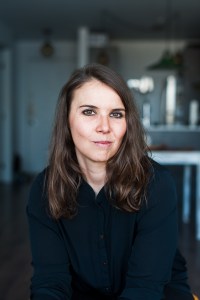
About this episode
From scaling an AI startup before it was cool, to negotiating international trade deals, to building Canada’s first blue innovation cluster from a literal garden by the sea, Amelie Desrochers’ journey is anything but linear. In this episode, she traces the unlikely path that led her from Silicon Valley’s tech bubble and diplomatic corridors to the beating heart of the ocean economy. Now principal for blue economy and maritime sustainability at Cleantech Group, Amelie’s work represents the culmination of her search for meaning at the intersection of innovation, diplomacy, and nature—a place where technology meets tides, and purpose truly finds its depth.
Notes and resources
Full transcript
Michael Gold (00:00)
Amelie Desrochers, welcome to Climate Swings. It’s wonderful to have you here.
Amelie Desrochers (00:05)
Thanks for having me Michael, happy to be here.
Michael Gold (00:08)
So can we just start with a brief background, a self-introduction, and a couple of key points that you think the audience should know about you?
Amelie Desrochers (00:19)
Well, my name is Amelie. I love the ocean and I love nature in general.
In terms of professional life, it’s definitely not a linear road, but I’d say that I have three phases ⁓ in my career so far, and it’s probably not going to be, it’s probably going to keep evolving as we move forward. But I was involved in a tech company in my 20s. It was a family business. ⁓ I scaled an AI tech venture when it wasn’t so cool to do so, and we sold it to the
to the government in 2013. And then I pivoted. I went back to school. I did a master’s in international relations. I’m trained as an economist. And I ended up working in diplomacy. So I worked for the Canadian government and the British government. I was doing a lot of government relations and EU negotiations. And I did that for about 10 years.
And then I pivoted again and I started working in ecosystem building. So I was fascinated at startups and how they evolved in technology settings. So I was involved in the
in the tech ecosystem in San Francisco and Toronto, Montreal. And eventually I built a marine ecosystem back in the countryside, six hours away north of Montreal. ⁓ So, which was a very interesting journey as well. So, yes, I guess I can say that I’m a multifaceted, curious human who is constantly evolving.
Michael Gold (02:09)
I’d say that multifaceted, curious and constantly evolving is like very much a through line for Climate Swings. You’re right where you need to be right now, which is great. Starting like well back in your career, ⁓ you studied international relations, and then you kind of like went into the kind of like startup business world and you went back into international relations. Can you just like explain a little bit about those early motivations, maybe coming out of university, what drove
to this AI startup that you did before it was cool as you say.
Amelie Desrochers (02:43)
Yeah, I guess I mean I was really a geek
and I wanted to understand the business world. So I did a bachelor in business with a concentration in applied economics. And I was very fascinated at the time by the balance of power and negotiations and the financial world. And it was during the 2009 financial crisis. So there was a lot happening in terms of economic world order. So yeah, I just wanted to have kind of a
a full grasp of where the world was going and how it was ⁓ working. And I thought I would become an economist, a journalist. I was reading The Economist at the time and I don’t know, I just thought I would write about the economy and the world and financial ramifications. ⁓
My father was leading a business, it was very small and it wasn’t… Tech wasn’t a big thing at the time, it was just the beginning or in the early 2000s. Especially in Montreal, it wasn’t like a burgeoning ⁓ world. So it wasn’t my primary focus of interest and for me… ⁓
being an entrepreneur seemed like very risky. And I was very afraid of that. But then I think two days before I graduated, Google knocked at the door and asked our business if we could start a digitization project with them on a massive scale. And it seemed very interesting. It seemed like a great opportunity. I was in my mid-20s at that
time and I guess having no other better options
and seeing the potential, just didn’t really think about it. I just jumped. I just jumped in and I landed ⁓ in a space where the average age of the employees were around 60s. They were doing everything, the checks, the accounting, they were doing everything manually. It was very kind of an old school business ⁓ and it had to…
all of sudden had to adopt ⁓ Google Drive and all of these innovative tools that we’re not used to at the time. So it was ⁓ a major innovation shift internally and I became kind of the poster child for that internally. Great, great experience, but very difficult experience as well.
Michael Gold (05:30)
So when you
say family business, was literally your family’s business.
Amelie Desrochers (05:35)
Yes,
yes, and that’s another component. I wasn’t sure I wanted to get involved in that. My grandfather started an archiving business. It was the first archiving business in Canada ⁓ in 1950. ⁓ And then my father took over and he bought some scanners and he started to digitize all of the national archives and started to sell that to libraries. ⁓
And then we started developing a software to do word recognition and started to do some R&D around the digital recognition. Yeah, that was kind of the beginning of all this. And the idea was to have an online platform for archive search, like Google Books, but for archives.
Michael Gold (06:24)
So it was that sort of was starting to I guess scratch that innovation itch that you seem to manifest, know much further along in your career as well. But you didn’t stay in the tech world. You obviously didn’t stay at your family business You went in a pretty different direction. So can you talk about what drew you into the world of diplomacy essentially?
Amelie Desrochers (06:49)
Yeah, guess life is really not a straight line and for me up until recently I thought I had done the entrepreneur journey just because I had to because the opportunity was there and because it was a family obligation.
When we sold it, I thought, okay, well, I’m going to get back to my, I’m on my true path, on the path of success that I was, that I took in a detour with the entrepreneurship thing, but now that’s behind me. I learned a lot of things, but I will go back to school and I’ll become a serious, proper person again. And I guess maybe in the back of my mind, I had my grandmother who always wanted my father to become a diplomat. ⁓
It was just lingering. So I applied to a few things when I was in ⁓ during my masters and I applied for a position in auto and diplomacy and I got it which was kind of a fast track program and yeah, I ended up there.
Usually people have to go through a lot of exams and the typical pathway is a bit treacherous. ⁓ But I had the opportunity to leapfrog into it and I discovered a fascinating world.
Michael Gold (08:10)
What did you mostly work on?
Amelie Desrochers (08:12)
I was doing Canada-EU negotiations during the free trade agreement treaty.
And then also I covered, I was a trade commissioner for some times because I have my background in business and I was representing Canadian companies, big corporations who wanted to do business in Europe. I discovered how the commercial diplomacy was conducted at the Canada EU level. And then I had the opportunity to move to a much smaller team in Montreal.
I was working for the British consulates, the British government, I was a local employee, I’m not British, ⁓ but it was very interesting to work ⁓ for foreign government that was not ⁓ Canadian. The mindset and the culture was very different, so that gave me another perspective on things.
Michael Gold (09:11)
Yeah, and then after those two stints kind of in the diplomatic international relations world, you sort of pivoted again and you went to work for the Mars Discovery District. And can you just explain what that is? Cause that actually seems like it’s, that was like quite a break and that really put you on a path toward this kind of cluster world, which you are really carrying through in your current work and in the trajectory that you’ve been on.
Amelie Desrochers (09:39)
Yes, and I think working for the British government, I was seeing what was happening in London and San Francisco. We were starting to talk about it was really the beginning of the big startup,
startup revolution and it was becoming like a big trend to be an entrepreneur It was not so much happening in Montreal yet, but ⁓ I started being very curious about that world ⁓ so I did take some time off. I took a half of a sabbatical year and I went to San Francisco and I spent some time ⁓ with a small mandate with the Canadian Embassy there, but really I wanted to ⁓
to learn a new way of doing things. I wanted to immerse myself in a new mindset and really kind of break away from the traditional pathways and the proper political ⁓ way of doing things, which was really helpful, but I wanted to…
Yeah, I wanted to dive into this new, innovative, very creative world. So that was really helpful to spend some time in a dynamic ecosystem like Silicon Valley. And from there, I heard about Mars Discovery District, which is based in Toronto. And basically, Mars is a big campus. They invested massively in real estate. And the bet was that they’d be able to attract ⁓
big tech companies like LinkedIn or Facebook or Adobe, and they would set up all of their headquarters in Canada, in Toronto, in that building. And there was, it was a hybrid building where you had ⁓ tech companies, but you also had space for smaller startups. And you had big corporate partners like K-Kinion Banks and interest company.
So you had all of the components of what an ecosystem of innovation needs, ⁓ capital, new talents, universities, ⁓ big corporations. ⁓ So, yeah, again, that brought me into a very, very different world. It was very innovative at the time to bring geographically all of these players in the same building. And a lot of people would
said that it would fail. ⁓ A lot of people, there was a lot of news coverage at the beginning of this adventure and now I think it’s a massive success. They are building new spaces. It’s a resounding success.
Michael Gold (12:31)
Yeah, yeah, good. I mean, ⁓ one thing I’ve gotten really interested in through doing this podcast are kind of like the what if moments in people’s careers. Because as you said, like nothing was a straight line. And you’ve zigged and zagged and swung between this and that. And I’m so curious about when you went to San Francisco and you immersed yourself in a new mindset, and then you kind of went back to Canada and I guess sort of started to apply those lessons or sort of apply that mindset into this like very innovative kind of like new way of thinking. Like what was it
in
Silicon Valley, in the Bay Area, what were you actually doing and do you think there’s a world in which you would have stayed and become a tech entrepreneur, a startup person in Silicon Valley itself?
Amelie Desrochers (13:12)
That’s
a good question. I think my first reaction coming at the time, coming from the diplomatic world, I had my Blackberry and I was like wearing a suit and you have to think back, we were in 2015. So the corporate world was still very, very rigorous. We couldn’t work from home. Like it was before the pandemic. It was very serious.
And what I was seeing in the tech world ⁓ was, well, first of all, different way of dressing, ⁓ like being more, being able to bend the rules ⁓ and working from home and having this, there was this aura of freedom around that,
around entrepreneurship. ⁓ But I think aside from that, there was also this idea that I could be who I wanted, whoever I wanted to be. You could, every day I was meeting people who were inventing new lives for themselves and new companies with new ideas. And ⁓ it was every preset ideas of how the world was supposed to work
was out of the window and all of a sudden, it was very disorienting, but all of sudden everything I imagined was actually possible. And that gives you lot of freedom in itself.
Michael Gold (14:48)
And do you think that the San Francisco Bay Area life would have continued in another, in a different sort sliding doors version of Amelie?
Amelie Desrochers (14:57)
Well, I have to say that my expectations for what Silicon Valley was were probably not realistic. I thought I would be there forever and I thought I would meet finally a lot of people like me and that we would just reinvent a new future. And at the time it was ⁓ the beginning of the big fours and we really thought that we would be able to disrupt Wall Street and disrupt
Washington and reinvent the way we do diplomacy and reinvent the way we organize the financial world. There was a lot of utopia at the time. It was very exciting, but it was not really rooted in reality also. So ⁓ it was very a bubble. It was really a bubble. ⁓ And also, think coming from a world of diplomacy where I speak two different languages and studying about
the EU interacting a lot with Europe, I was surprised and a bit disappointed that, ⁓ I mean, the US market is so big in itself that there was a lot of ⁓ insularities and there was a lot of focus on the US, ⁓ but not as much international trade and international relations as I thought there would be. So for me, that part was a bit… ⁓
lacking and maybe I think the last thing I’m going to mention and I think it probably changed since then but it was still very much a boys club. I don’t know if you’re familiar with Sheryl Sandberg’s book which was at the time ⁓ my reference, her coming back from coming from from Washington being a senior advisor and it took her at least at least one year before before she was able to to convince Mark Zuckerberg to actually hire her.
So my CV in Silicon Valley was not interesting and kind of worthless. And I was a woman and I was not coming from the typical circles. So getting in was really, really hard. ⁓ So I think it’s moving in the right direction, but it was also a bit upsetting to see that.
Michael Gold (17:17)
Yeah, so seeing both the exciting parts and perhaps the disappointing parts, but being able to essentially take that with you when you went back to Canada, worked for the Mars Discovery District. And as you said, this kind of like really new untested sort of model for what innovation could look like, especially in a Canadian context, which I presume things were still pretty new at that time vis-a-vis, you know, compared to Silicon Valley for sure.
Amelie Desrochers (17:48)
Yeah, so exactly. It was very the beginning of the AI fintech boom in Toronto. And it’s an interesting lab to be in Canada’s capital because all of the headquarters are located there. And it was a hype in 2016. Everybody wanted to have an innovation lab. And we were helping them set them up,
connecting them with startup ecosystems. So there was lot of great ideas, a lot of money flowing around, and not all of them worked out the way we envisioned they would. But in terms of the FinTech world, we saw a of banks creating their own innovation labs. And what came out of that? I think the banking system is very different than it was 10, 15 years ago.
Michael Ethan Gold (18:42)
Yeah, yeah, I can only imagine. ⁓ So just looking over your CV ever since that experience, and you weren’t there for that long, you’re only there for, it looked like essentially half a year or so, you then swung into quite a diverse set of roles in kind of business and innovation. And I’m just kind of curious, can you just sort of pluck out a few of the most interesting aspects of that time and what was kind of driving you from a professional perspective?
Amelie Desrochers (19:12)
Well, it was an interesting time, but also kind of a scary time. I was really trying to deconstruct my rigid mind and trying to find my way in this new innovative world.
It seems a little bit all over the place, but at the same time, I think it was a crucial moment in my journey because I got to try different things. ⁓ Some of them I really enjoyed, some of them not so much. ⁓ coming out of, I think Mars was a very interesting experience, but again, it was still kind of a big organization. ⁓
With a lot of structure and I was trying to shy away ⁓ from that. So I went back to Montreal and I did a few innovation mandates that I was freelancing at the time and I was trying to find my way also in the local ecosystem. That’s always the same whether you’re in San Francisco or Toronto or Montreal ⁓
at end of the day where all ecosystems are based on human relationships. Whenever you get to a new place, you need to weave your web again.
Once you have it, then you start having webs all over the place, which makes sense after a while, but at the beginning, it was definitely that me trying to weave my web and get my footing again in an ecosystem that I had left for almost a decade and trying to get the credibility going again and finding my positioning. Coming back also, I think, from a bigger ⁓ Silicon Valley
mindset and coming back to a smaller ecosystem where they were a bit impressed but also maybe feeling a bit threatening sometimes by my experience. So yeah, it was me navigating ⁓ those waters.
Michael Ethan Gold (21:34)
Yeah. but, it, sort of you use the term navigating those waters, which I think was an unintentional segue into my next topic and question and sort of field of your practice that you got into, which was essentially the oceans blue economy, blue innovation space, which of course connects to the purpose of this podcast, which is climate.
So how did that swing happen? I mean, you started your very first sentence on this podcast, your introduction saying you love oceans, you love nature. Can you talk about what finally drew you into the oceans world? ⁓
Amelie Desrochers (22:14)
Well, think if I look back, I think that the thread had been there for many years when I was working for the British consulate. I was doing government relations around electrification and smart cities and ⁓ innovation in the climate world. This was the beginning of all of these trends, but I was very interested by that. ⁓
Going to Silicon Valley and Toronto, I was expecting people to want to save the world. And that was part of the narrative. But then when you started digging deeper, it was all about fintech and AI and all of these ⁓ cool apps. There was nothing to do about changing the world. And I was stuck in big cities, disconnected from nature.
And it started to be kind of an ongoing reflection of mine. I started to read and to question what was my relationship with nature and what was the relationship of technology with nature because I was spending all of my time working to build this new world. And then I was escaping on the weekend in national parks, going to hike and going to connect with nature. And I felt that I was really out of balance
me personally, but also the whole ecosystem ⁓ that had a lot of idealistic ideas about saving the planet. And I couldn’t see a lot of that happen on daily basis. There was a lot of disbalance and there are still today a lot of unbalance in that tech world.
Michael Ethan Gold (23:58)
Yeah, and so you kind of…
went through quite a number of blue economy positions and now with your current role at Cleantech Group. So from a practical perspective, how did that swing happen? Because you were in sort of more digital, more kind
of sort of ⁓ less idealistic part of the innovation landscape, I would say, right? And then you went into these ocean roles. How did that happen?
Amelie Desrochers (24:32)
Well, I think sometimes the best things in life happens when you don’t plan. ⁓
Michael Ethan Gold (24:38)
Thank
Amelie Desrochers (24:38)
I could not have planned this, to be honest. I think it’s the first time that I really follow my intuition and I started dreaming about whales and I was really drawn to, I don’t know, was drawn to the natural world. I had this huge yearning to be in nature for an extended amount of time. If you had known me at the time, I was such a city girl, I had not spent more than three days in the forest or in nature and it was not camping most of the time.
So, but I decided to take some time off and to be in nature for an extended period of time. I wanted to ⁓ be in remote areas also to understand what was the ⁓ relationship between…
rural settings and cities, I think we tend to disregard that. And I didn’t know much about the topic. And I think I’m a doer. So I thought, I’m going to go there. And I’m going to try to understand why there’s such a discrepancy. ⁓ We’re so connected in an urban setting. And you go 50 miles away. And all of a sudden, you can’t even pay with your credit card. How is that happening? ⁓ So I think it started from this curiosity. ⁓
doing a temporary position in a garden where I was just basically in charge of ⁓ innovation and digital experience, which was fairly new for them. ⁓
From that, I ended up building a co-working space in a small incubator project in the gardens with a local grant. So that was me trying to be innovative in a rural setting. And from there, I got approached to ⁓ build this big blue innovation cluster around maritime technologies. And to be honest, at first I thought,
this is not for me. You have the wrong person. I know nothing about boats. I’m not interested about fishing. It’s not… This is not my gig. Just go find a marine biologist. And they said, no, no, we worked with marine biologists for many, years and we have… The results are not there because people from the sector are too focused and they’re so detail-oriented in their areas of expertise that they don’t have the…
Michael Ethan Gold (26:54)
You
Amelie Desrochers (27:16)
the outsider’s ⁓ perspective. So your background is actually perfect. So and the three positions the blue zone and the…
the startup project and the accelerator flow, I did it all at the same time. So basically, it was a big government project. So part of it was to build an innovation zone around blue technology. So it was a government competition. So I was wearing more of my diplomatic hat and trying to build a solid business case on why,
why this sector was ⁓ becoming important, why it was very promising, and why the government should invest massively into it. And then at the local level, we had a lot of businesses and we had great universities, ⁓ but there was no ⁓ incubation or acceleration. There was no venture building ⁓ in the blue economy space. I built that.
I built an acceleration program and also at the Canadian level, I was involved in the Ocean Startup project, which was kind of a national incubation program for Canadian ventures in the blue economy sector. And I think one thing about innovation and about art in general, it’s you get influenced by others who have done it before you. So ⁓ my role was really
to look outward at what was happening in Portugal and in Norway and in Iceland because they’ve been focusing on that sector for a very, very long time. And we can learn from that. You don’t have to reinvent the wheel from scratch. And then locally, at the Canadian level, I was looking at what Halifax has been doing for many, years. They are a coastal province and they’ve invested massively in the space
and they are one of the top ten ecosystems in terms of the blue economy in the world. So yeah, I got involved in those three positions all at the same time, but they were all focusing on basically developing the blue economy in Canada.
Michael Ethan Gold (29:40)
So you were literally working in a garden, like an actual garden in a very natural environment, obviously. This was from your sort big city innovation focus, go, go, go kind of life. And then you kind of, it sounds like you sort of reentered a more fast paced, but working at the intersection of something that felt to you at least very meaningful ⁓ and very connected to nature, even if it was still innovation
based
innovation focused with a set of KPIs and kind of an accelerated life compared to what you were used to probably at the garden. Is that right?
Amelie Desrochers (30:21)
Well, I think the garden was a good teacher for me because I really thought it would be slow-paced and I meant to have a few months of…
leisurely time, but I realized quickly that working with nature is really hard, and that ⁓ trying to do innovative projects in a garden setting and doing innovation in general with people who are not used to innovation, ⁓ it sounds very…
very idyllic and it was the setting was wonderful. It was a garden by the ocean. It was probably the hardest thing I’ve done in my life, working in this garden. So I give a lot of credit to people who are working with nature.
Michael Ethan Gold (31:16)
Yeah, I mean, but again, kind of back to that what if moments aspect, which has you maybe more in that world rather than the path that you did choose, which was back more on the innovation side, building things from scratch. But it seems like that’s really where you feel like you were most activated.
Amelie Desrochers (31:21)
Mm-hmm.
⁓ Yeah, and I think you said it really well, you know, it was at the intersection of both worlds. And I think that’s where I’m having the most fun. ⁓ It’s nice to be in a nature setting. It’s nice to slow down. But at the same time, and it was also the pandemic, so I got to slow down at some point.
Michael Ethan Gold (32:06)
You had to slow
down, yeah.
Amelie Desrochers (32:08)
But then you feel very disconnected and you need to reconnect with innovation and to every young people who are working in the
settings, it’s the same challenges, it’s a real challenge. Your community is not there, you have to drive miles ⁓ to actually get to meet people who are curious and innovative. So that was really a really interesting setting to… ⁓
to bring this beautiful landscape into kind of an urban world and to showcase to a new generation, hey, this territory exists and all of these ⁓ solutions are coming to fruition and they deserve your attention and they deserve the capital they require to scale because they will generate a positive
impact
on the environment and coming from I think coming from an urban setting where you you’re surrounded by water but you’re you know you see the ships every day and you don’t you don’t care because you’re focusing on developing your technology and disrupting the market or whatever ⁓ but being able to celebrate ⁓
nature and the technology that is being developed to save it ⁓ for me really made sense.
Michael Ethan Gold (33:40)
So
now after meandering long enough through your CV, we have reached your current role at ⁓ Cleantech Group, where you are principal in blue economy and maritime sustainability, which seems to very much put you square at the nexus of innovation, blue economy, obviously climate is a very big factor in what you do. Can you just talk a little bit about your current job, your day to day, what you’re looking at, the big picture, the small picture, a little bit of all of it?
Amelie Desrochers (34:10)
Yeah, well, the cool thing about clean technologies is that they’re following the same pathway of growth than the blue economy, but they’re probably 15, 20 years ahead of the curve.
So the Cleantech Group started 25 years ago. They actually trademarked the word cleantech. At the time, clean technologies were emanating from Boston, Silicon Valley. And it was not even something that was bankable. They were having a really hard time raising capital in that space because who wanted to invest in the solar panel 25 years ago, right?
It seemed like a distant future that wouldn’t really materialize.
When I look at that, it gives me a lot of hope about the economy because that’s kind of where we are. We’re gaining slowly momentum, but it’s still very early stage. And it’s one of the fastest growing sector, but it’s very hard to convince ⁓ climate investors and regular investors also that most of those projects are bankable and that they are going to generate interesting ROI’s.
I think my role is really to bring the expertise of the blue economy and to bring this sector into the light ⁓ and to make it part of the portfolio of what is defined as a clean technology. So we’re different, we’re usually tracking six different sectors at Cleantech Group and the odd thing with the blue economy is that it’s cross-sectorial. It’s a little bit like AI
⁓ you find blue economy in different sectors. It can be applied to energy, it can be applied to ⁓ marine underwater observation and transportation optimization. It can be for transportation itself and engines optimization. ⁓
So it’s very hard to pin down into one specific thing. It is a sector of its own, but it’s also integrating a lot of different cross-sectoral technologies. So yeah, my role is really to bring the expertise and to…
to build a market intelligence around that because that’s always the case when we want to grow a tech ecosystem, we need capital. To grow capital, we need data and metrics to show banks and investment banks and governments and venture capitalists that this sector is worth paying attention to and that it’s actually
really exciting. So that’s my role. We have a program called Open Waters and really the idea is to be very rigorous about data and give investors everything that they need so that they can invest wisely.
Michael Ethan Gold (37:23)
What do you think ⁓ the blue economy is? I mean, and specifically, what do you think the broader climate community should know about the blue economy that they usually don’t or maybe misconceptions that they have about it? Like, can you just provide your sort of general lay of the land for the blue economy?
Amelie Desrochers (37:44)
Well, think the blue economy is that the label is being used in different settings. It’s understandably a bit confusing. If you go back to the OECD definition, it’s the economy that is related to coastal preservation. So anything that has to do with ocean and coastal conservation
is labeled blue economy. I think the biggest misconception is coming from the maritime sector. They think that the blue economy, for the most part, is restoration and algae, seaweed, protecting the whales. And it’s more kind of on the conservation side. That’s what we’re hearing a lot from investors also.
But actually, the blue economy is integrating the maritime sector and the tourism sector. It is an economic benchmark. It is an economic sector. It’s an economic label. So 50% of the sector is actually the maritime sector. And the tourism industry, coastal tourism industry, is maybe 25% of the sector. And offshore marine wind generation ⁓
is a very large percentage of this sector as well. But everything that touches the ocean and has an impact on the ocean is encompassed in the blue economy.
Michael Ethan Gold (39:19)
How much does ⁓ do climate solutions specifically pass your desk? And I know that everybody talks about the ocean as basically the largest climate solution problem solver there is essentially. But like how much do specific projects with kind of climate as their main motivator sort of enter your professional lexicon?
Amelie Desrochers (39:43)
Well, in terms of…
quantification, it’s evaluated to be ⁓ a $15 trillion industry by 2050, just in terms of economic opportunities. And I know we always throw trillions of dollars at numbers, but if you rank it in terms of ⁓ GDP, if the blue economy was a country, it would be the eighth largest country in terms of ⁓ GDP. So it’s massive.
It’s a massive ⁓ investment opportunity. That’s the first thing I always like to say. ⁓ I think in terms of ⁓ critical mass of startups, if you compare it to the large pool of clean technologies,
it’s still a very small amount. I’d say that around 7% of all deals in the blue economy sector are coming from in the 7% of all clean tech investments are invested in the blue economy sector. So it’s still ⁓ still below 10%. But last year, it was 4%. So it’s increasingly it’s doubling and growing in
some people would say ⁓ an exponential growth curve. So that’s the encouraging thing.
Michael Ethan Gold (41:11)
And again,
in the blue economy, how much, sort of back to what I was asking before about how much are climate solutions part of the portfolio of blue economy projects or blue economy initiatives versus other kinds of natural solutions, other kinds of environmentally minded solutions or even economically minded solutions?
Amelie Desrochers (41:33)
I’d say that around half of the portfolio is climate related. We’re seeing more and more… ⁓
carbon capture projects being tested and deployed. We’re seeing even a blue ⁓ carbon credit market being developed. ⁓ I think offshore energy, ⁓ offshore energy, ⁓ especially wind, is also taking a big chunk of the portfolio. I think it’s a bit the projects that were being deployed in North America are
paused for the most part, if I understand correctly. ⁓ But I think Europe and Asia are still moving pretty fast in that sector.
Michael Ethan Gold (42:28)
And what are, what’s sort of your main theory of change? Like what are you most excited about? What gets you most out of, you mostly gets you out of the, out of bed in the morning and gets you excited to work in this space right now?
Amelie Desrochers (42:41)
Well, I think we can easily take the ocean for granted because it’s just there. ⁓
One thing I always like to remember is that 80% of the oxygen that we breathe is coming from a healthy ocean. It needs phytoplanktons and it needs the biodiversity in the ocean. And at the end of the day, we can be excited by different technologies.
I’m watching closely what’s happening with carbon capture technologies and carbon capture markets. I’m seeing, especially for these years of adaptation and with the new IMO regulations and the maritime sector having to adapt to a new ⁓ regulatory framework in an environment where they have very big, massive real estate that are not
easily interchangeable. They cannot just change their whole fleet in two or three years. So I think the carbon market, the marine carbon market is going to be very interesting to watch unfolding in the past, in ⁓ next decade or so. But my new found ⁓
passion is around also biodiversity preservation and nature-based solutions. And it’s something that… ⁓
we don’t comprehend well yet, and it’s always kind of a second area of investment because it doesn’t seem as pressing as ESG reduction. But I have to constantly remind myself that healthy oceans and thriving dynamism in underwater ecosystem
should not be taken for granted and that actually marine preservation and all of the conservation efforts which were not so much on my radar before are also really really important and there are actually a lot of technologies like a Coral Vita they’re using AI to grow
to regrow coral reefs and bring them back to life and to bring them back to the vitality. It’s a bit less sexy, but it brings economic growth to islands and the
coastal preservation ecosystem. It’s vital for fishing and for coastal community survival. And it’s greater against climate mitigation. We need to address the acidity of our oceans. So these things are a bit less tangible and they’re not as cool as underwater drone, but they also, I think, deserve our full attention.
Michael Ethan Gold (45:48)
Yeah, and I can imagine that the innovation element and the technological element is like maybe even more important than in other sectors of like climate or the clean economy because the ocean is so hard to access, unknown. You really have to think differently if you want to understand it, let alone try to help it or fix it or turn it into a climate solution or anything like that, right?
Amelie Desrochers (46:13)
Yes, and there was actually a gathering last week in June called the Blue ⁓ Economy Finance Forum, ⁓ which was just before the UN Ocean gathering in Nice.
I think we’ve been watching those UN conferences happening for many, years. And sometimes they’re dragging, they can be painfully slow. But there was a very interesting moment in this past month where a lot of around 1,200 financial institutions and climate leaders came together to address the specificity and the unusual
financial setting that we are facing in the ocean world. So it’s an asset that belongs to everybody and to nobody. And a lot of the regulations around the oceans are done at the government level. So we need to rethink the way we invest in the ocean and what the ROI are.
They’re not just on the capital, the assets, the way we quantify ⁓ the gains. They’re not just financial. They are also planetary and for the health of all human beings. So I think it requires a different mindset and a different ⁓ financial framework. And the good news is that the banking sector and the investors are starting to get on board with this
this new narrative and it’s really a paradigm shift.
Michael Ethan Gold (48:06)
Well, you know, Amelie, you’ve been so generous with your time and I know we’re approaching the top of the hour so I have a couple of
wrap up questions that I like to pitch to all of my guests. You know because you’ve gone on about your career and about the work you’re doing now and all the swings that’s taking you into this position where you’re now working at really the intersection of purpose and innovation, climate, nature, all those things that you’re really passionate about. What advice would you give to people who are interested in trying to also sort of weave those threads together and you know kind of walk in your footsteps
in a way?
Amelie Desrochers (48:44)
⁓ What I’m seeing in a lot of young people right now, especially in North America, and I can really relate to that, I was like that too, I think we’re still trying to optimize and we’re trying to know exactly where we’re going and we’re trying to have a list of skill sets that we want to develop. And it’s good to have an understanding of where you want to be, but…
trying to define too much where you want to go is going to make you focus too narrowly on something. Sometimes you may miss the landscape. You may miss a lot of great experiences in the process. So I would say the best things come to those who experience a lot of different things. ⁓ And sometimes…
it might take a while before those experiences are starting to make sense. ⁓
And they may to the external eyes or to your parents or to the people who are around you who have chosen a more linear path because entrepreneurship and innovation is not for everybody also. But for those who are not on that path, it’s easy to take a look and say, well, your life is going nowhere or you’re too scattered or you’re trying too many things. ⁓ But everything that you’re trying
even if it doesn’t work out the way you intended it be or maybe you just hate it, well it’s new information that’s going to bring you to a bit further, closer to where you’re supposed to be in your journey.
Michael Ethan Gold (50:36)
Yeah, and shifting the perspective inward perhaps and thinking back to an early part of your career, maybe you’re just getting out of university or you’re just starting in your diplomatic work or whatever it is, what are a couple of things that you might tell yourself about the path that you would take and maybe you should do a little more of this or a little less of this to avoid this pitfall or think differently about something that you encountered?
Amelie Desrochers (50:59)
Well, I think the fear of uncertainty is something that I’m still ⁓ struggling not at the same level. ⁓ But I think I would tell myself, you’ve got this and trust yourself and trust… ⁓
trust that life is going to unfold in the way it’s supposed to be. It sounds a bit esoteric, when you’re… I think it’s all about the confidence, not your self-confidence, but also the confidence in your environment and that’s your skills and that’s your journey. If it’s done with purpose and with true intention, then it brings you… ⁓
where you’re supposed to be and it brings you to the right people or the right mentors who are going to connect you to the right people. Staying open to that curiosity and to, of course, sitting with that fear of not knowing what’s going to happen next.
But I think cultivating that mindset of openness ⁓ and resiliency is exactly actually what we need to build this new, to thrive in this new era where I think everything is becoming really uncertain right now with AI, all of the crises that we’re facing. But ⁓ if you cultivate…
a resilient mind, you become more agile and you become more open and you become less stressed when you’re facing those situations and can thrive.
Michael Ethan Gold (52:42)
Yeah, and then finally casting your mind to the end of your career and of course, you know, that’s knock wood a long way away. But what would you want people to have thought about the work you did and the contribution you made to ocean resilience or climate or the things that you care about in general and in general, what would you want your epitaph to be?
Amelie Desrochers (52:49)
Move it.
Well, I’d say that the blue economy is definitely not ⁓ an easy landscape. I it’s becoming better, but that’s also the purpose of innovation and choosing sectors who are ⁓ starting to emerge. It can be frustrating at times. ⁓
I wanted to walk away from it a few times, to be honest. But I think the ocean for me and water preservation is a big issue and it’s not something that’s gonna get solved in a year or two. And I think the more I’m being tested on this path, the more… ⁓
confident I am that it’s actually necessary. And I’m looking at Sylvia Earls and people who have been doing that since the 70s and are educating us about the oceans and how dynamic and thriving they were 30 years ago.
Yeah, I think that’s my drop in the ocean. I can just move the needle in the right direction and make sure that our oceans are still alive and thriving and maybe in a better shape than they are now, then I think I’m just going to be happy.
Michael Ethan Gold (54:38)
Well, you managed to get in two ocean-related puns, I believe, the last, or play, word plays in the last hour, which is great. So Amelie Desrochers, thank you so much for appearing on Climate Swings. This was a wonderful conversation.
Amelie Desrochers (54:42)
Thank you so much.