

About this episode
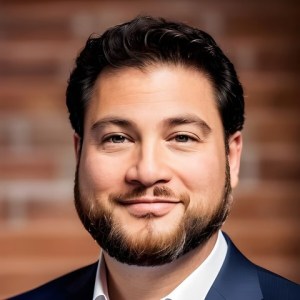
David Tze has crafted a unique career at the intersection of oceans, food, technology, investment, and climate. As the former CEO of NovoNutrients, he was, essentially, killing three birds with one stone: extracting carbon dioxide from the atmosphere, growing synthetic protein that could feed the world, and finding new and more sustainable ways to harvest fish. This multi-pronged mission emerged out of a professional journey that saw him swing through a variety of crucible moments, including optimizing the online sale of baseball hats and founding an aquaculture investment firm alongside Jared Polis, the current governor of Colorado. Although NovoNutrients has closed up shop since this episode was recorded in March 2025—as all too often happens in the wild world of climate-tech startups—David’s story is a vivid reminder that climate careers can emerge from the most unexpected detours.
Notes and resources
Full transcript
Michael Ethan Gold (00:00)
David Tze welcome to Climate Swings. It’s great to have you here.
David Tze (00:03)
Great to be here, Michael. Thank you.
Michael Ethan Gold (00:05)
So let’s just start with just a real high level introduction to yourself, a little bit about your professional background and just what you’re currently up to.
David Tze (00:17)
Yeah. So maybe I’ll start at the current moment. I’m at a company called NovoNutrients. We make protein ingredients for feed and food from carbon dioxide emissions. But I started my career in the internet doing e-commerce and digital media. And then I got into managing a small seed fund that invested in the peculiar area of fish farming, mostly in…
sort of hard tech investing in things for the farming of fish, shrimp, and we also looked at seaweed. And so, yeah, I’ve been out in California for about seven and a half years now working on NovoNutrients.
Michael Ethan Gold (01:01)
And just going back to those early formative days, your degree is in something that’s pretty different than what you’re doing now. What were your thoughts at the time about what you wanted your career to look like when you were studying at Princeton and getting your degree there? You worked on agricultural technology in India. Was that something that you thought you might
carry through to your future career.
David Tze (01:31)
Yeah, so my undergraduate thesis advisor, Anne Case, told me that she had an interesting data set and asked if I might be interested in using that as the basis for my senior thesis. And it was an econometric data set about smallholder farmers in India. And the sort of most interesting question, or the one that was proposed to me was,
is there anything about the assets held by these farmers that has a relationship to their decision to use high tech hybrid seeds versus traditional seeds? And it was not a very good thesis. I did it in about two days, which is not the recommended amount of time. It and the truth of the matter is I didn’t have a special interest in
the world food system at that point, that for me came later and really came through my initial exposure to aquaculture,
you know, in the year before I started Aquacopia, that investment group that I was co-founder of and that Jared Polis, now governor of Colorado, was the founder of.
Michael Ethan Gold (02:52)
So it was almost just by dint of circumstance and your advisor’s recommendation and the work you did with her that you worked on ag tech at that level and during that time. Is that right?
David Tze (03:06)
That’s right. my, you know, my, had taken a class with Professor Case. She was, it was demographics. She was really remarkable and I wanted to work with her. And so that was the primary decision. And then the actual topic was essentially inherited from that.
Michael Ethan Gold (03:23)
And what inspired your first career swing into, I guess you could call it like media technology? What was the driving force behind that?
David Tze (03:31)
Yeah,
I think, I mean, ever since I was a very young child, I was quite interested in computers and robotics. And the internet was really the progeny of that. And so it was not that surprising, especially given what I went on to do. I’m just always very interested in taking
new technologies and applying them to existing problems, which in a commercial setting means existing businesses. And so really that first part of my career was about taking the internet and applying it to business. And that went very quickly from brochureware in the early days to to real web applications. And then by the time I got to Network Oil, you know, marketplaces for
for physical goods and services.
Michael Ethan Gold (04:32)
Sorry, you called it brochureware? I’ve never heard that term before. Can you explain that a little bit?
David Tze (04:34)
Yeah.
Yeah, you know, it’s like some websites are just something very similar to what back in the day you would have just had on paper, their text and photos. Yeah, so that’s brochureware as opposed to a real web application, whether, you know, whether that’s Gmail or E-Trade or whatever.
Michael Ethan Gold (04:59)
Yeah, yeah. And so you worked in that space for a couple of years and then you made the swing into the aquaculture investment space, which on paper really looks like quite the pivot, right? How did that come about? What were the main considerations in your head and the main factors that drove you to make what looks like quite a dramatic shift and quite dramatic swing?
David Tze (05:24)
It was a real pivot. When I worked on the digital side, one of the projects that I did was I was a junior project manager for a client, lids.com. So these are the baseball cap folks that you find in malls and standalone stores. And when we were talking to the client about who the key user was, they were baseball cap collectors.
You know, folks who buy dozens of caps a year. And so at a certain point I was like, so I’m like putting in these long days and weeks to help baseball cap collectors just more efficiently collect baseball caps. And, you know, it led me to think about, you know, John Scully’s experience being recruited for Apple, where apparently the chairman
Michael Ethan Gold (06:07)
Mm-hmm.
David Tze (06:22)
was like, you’re at Pepsi now, like, do you want to be making sugar water for the rest of your life? And so for me, the right answer is like, if you have an opportunity to change the world in some meaningful way, and if it’s something you’re good at and would also enjoy, like then by all means do that. And so it was part of this broader realization that I’d had enough years moving bits and bytes around to make the existing economy,
to digitize it and make it run with a little less economic friction. And I wanted to start enabling new activities, new things that are happening with atoms, out in the physical world, concrete things. And aquaculture was the first area of innovation to really catch my attention because it serves a fundamental human need, the need for food. It’s like one of those things at the base of Maslow’s hierarchy of need.
And of all the food systems, it’s been the fastest growing since probably about 1970, major parts of the food system. But it’s still very much in its infancy. know, it’s just such a younger, the, I mean, frankly, the industrialization of it is in such an earlier state than the other parts of the food system, row crops and animal, you know, terrestrial animal agriculture. And so there’s just all this opportunity to do
to do new things in this relatively new area and to do things much more sustainably, much cheaper and much higher quality than the legacy systems for producing protein.
Michael Ethan Gold (08:04)
Yeah, and one, there’s an argument that the level of industrialization in the food system, period, is also not that high compared to other parts of the economy, right? Yeah, so you’re looking at a part of the economy which is low, even by the standards of a fairly low industrialized part of the economy, right?
David Tze (08:15)
Absolutely.
It was a minimally industrialized subsystem within a less industrialized system, absolutely.
Michael Ethan Gold (08:34)
Right. And you mentioned Jared Polis, the current governor of Colorado. What was his involvement? How did you know him? Did he like bring you into that? Like what was your guys’ relationship like?
David Tze (08:47)
Yeah, Jared and I originally met at something called Princeton Model Congress, which is something that Princeton undergrads put on for high school students from around the region or the country. And it’s a congressional simulation. And so he was the chair of the Science and Technology Committee. I was the co-chair. And so we collaborated to put together a simulated Science and Technology Committee. I forget if it was of the House or the Senate.
Michael Ethan Gold (09:16)
So you guys were classmates at Princeton, is that right? Got it, gotcha, gotcha. Gotcha, gotcha, gotcha, okay, that makes sense. And you did this model congress with him.
David Tze (09:20)
That’s right. Yeah, that’s how we ended up doing this model.
Yeah, we were just assigned by the organizers to work together.
Michael Ethan Gold (09:31)
I see. Okay. How did the oppor- how did he was he the one who brought you into the aquaculture opportunity? Like how did that work out?
David Tze (09:40)
Yes.
So there was like one thing that I did and then one thing that he did. So what I did was I read a magazine article. I had a subscription to Wired magazine on paper at the time. And there was an article about the prospects for offshore aquaculture. So for doing fish farming, not right at the coast in like a protected embayment in Chile or in a fjord in Norway, but like perhaps miles out into the open ocean where there are rough
conditions, a lot of storms, but there’s just a lot more water out there and therefore a lot more capacity to farm. This really caught my imagination. There was discussion of some very high tech and visionary aspects of the future there. But it was so different from what I had been doing in e-commerce at that point that I didn’t
seriously consider making a career change. I talked it up at parties. I told my friends, hey, if you’re going to start a company, you should start it in this area of aquaculture. And I was looking for the next thing. And I saw a posting for entrepreneur in residence position at a company called Pro Flowers, which was a brand of Provide Commerce.
And I knew that Jared was the founder of Provide Commerce. So I applied for the job and I separately let Jared know that I was applying for the job. And then when I decided not to pursue things to the second interview, I let Jared know as a courtesy. And he came back with a very, very short email that essentially just said, do you want to be a fish farmer? And I was shocked because I knew that
among our other classmates, I doubt there was even one who would say anything like a yes to that. But this was actually the thing I was most excited about at that time because it was only six months after I’d read that article in Wired. And so I jumped on that opportunity. I, for the first, you know, I don’t know, nine months, worked as the aquaculture investing arm of his family office. And then, you know,
we decided to professionalize it and make it a conventional GPLP venture capital fund structure, this seed fund.
So starting then of 2006, we launched Aquacopia. We had raised some money at that point and we’re off to the races. At that time, Jared Polis was on the Colorado State Board of Education. So it would be some years before he ran first for a house seat and later for the governorship and he’s since been reelected as governor of Colorado.
Michael Ethan Gold (12:40)
Right. Yeah. So you didn’t know obviously at the time what he would go on to become. So getting an email like that where, from, you know, an old classmate, someone who you probably trusted and knew pretty well, but still asking, do you want to become a fish farmer? I mean, that’s quite a leap into the unknown in a lot of ways. Yeah.
David Tze (12:58)
And of course, ultimately, I didn’t become a fish farmer. I became
someone who invests in fish farmers. Yeah.
Michael Ethan Gold (13:04)
Right. A euphemism in a
way. Yeah. So that kind of pivot does require a certain kind of personality and a certain kind of willingness to learn a lot quickly and try and fast fail and do all those things that they talk about in the tech world, but you’re doing it in fisheries, right? What was that experience like? I mean, can you talk about some of those early moments, early times,
early failures, just getting your feet wet, no pun intended, in this space.
David Tze (13:41)
So.
One of the pros, there’s some pros and cons to coming out of the internet sector in those early days, which was nobody had ever done this stuff before. And so nobody had experience in adapting existing businesses to the internet. And so it created an attitude that we still find today out here in Silicon Valley, right? That, you know,
if you come in with the right attitude and the right talent, you can do something important in an existing industry. Now, that’s not, far from always true. And I think there are lot of reasons why I would actually advise that people work with others who have experience in the industry. But certainly in 2006, when we launched Aquacopia, the thinking was, you know, generalists invest in a lot of areas.
This is something you can learn on the job. You just need to dive in. And I’m an extremely curious person. And so I loved it. Yeah, I became an, I was referred to at lunch today by someone as an aquaculturalist, which is not quite right. But still I take some pride in at least projecting some of that. Cause it is a fascinating overlap between many disciplines.
and something that I really got a kick out of trying to master.
Michael Ethan Gold (15:16)
Did
you have to do a lot of on the ground, literally getting your feet wet, literally diving into things? We’re using all these water, swimming euphemisms, but it’s aquaculture, right?
David Tze (15:28)
Yeah. Well,
yeah, I would, I would never invest in something without getting my feet wet. ⁓ and sometimes that was literal. ⁓ you know, I went, ⁓ I got in the water for some of these offshore fish farms, ⁓ scuba and snorkel. And sometimes it was just, you know, getting out and walking among the tanks at some nursery, looking at the juvenile fish. ⁓
And so I was on planes a lot. But like any investing, it’s mostly about investing in the teams in these early stage companies. And it’s about considering the technologies. And a lot of that can happen at your own desk.
Michael Ethan Gold (16:18)
Yeah, what, speaking of technologies, what types of technologies exactly were you looking at? I am not definitely not an aquaculture. I barely know anything about it, frankly, and I don’t think most of my audience does. So if you can just kind of give a sense of what aquaculture technology, what’s at the bleeding edge and the cutting edge of aqua tech aquaculture technology, especially at the time that you were looking at it. I don’t know. Maybe it’s, maybe it’s come a long way since then. I have no idea.
David Tze (16:39)
Yeah.
So I think, know, one interest, there are a couple of companies that I invested in that I think are illustrative in answering these questions. So we invested in Open Blue Sea Farms, which I think just goes by Open Blue now. And that was at the time the furthest offshore farm or was planned to be and later was the furthest offshore farm in the world on the Atlantic coast of Panama. And their innovations were really twofold. One was in domesticating
a new species, type of fish called cobia, which had been independently domesticated in Taiwan. But, you know, in order for Open Blue to take advantage of the species in the Americas, it worked with University of Miami to do that work again and to try to achieve
efficiencies in farming that species that had not been achieved before and in part were enabled by the warmer waters, which are much closer to where you would actually want, where cobia really want to live and thrive. The other thing with the farming systems. So one of the things about these waters in Panama is these are offshore. Panama does not have this protected coastline like a lot of the conventional
marine aquaculture farming countries do. And so you have to be willing to expose your farming systems, your containment, your cages to
currents and waves and storms, and that requires different hardware, different engineering, significantly so. So Open Blue also had to evaluate these cutting edge solutions from other companies and then actually figure out how to deploy them
in that particular location, those conditions, and for the operations they needed to do for that particular fish.
Michael Ethan Gold (18:47)
How did you, as an investor, evaluate these technologies? What was your kind of criteria? I mean, presumably you can look at how much fish grow or those kinds of factors. I mean, I have no idea how one evaluates whether a technology is worth investing in and is working, right?
David Tze (19:07)
I mean, looking at in certain technologies in aquaculture is not so different from looking at technologies in in another area. So, you know, basically, Open Blue was a producer.
But other companies we invested in like Ocean Farm Technologies or Nutrinsic are technology companies. And so for example, Ocean Farm Technologies made these geodesic spheroid cages. So they look like bucky balls or Epcot Center but were made of
metal mesh and were submerged in the water to keep fish in and seals and birds out. And so with the technology, the questions are, you know, is there defensible intellectual property that gives a long-term competitive advantage? How much is it going to cost to make? And at what scale? How much can you sell them for? What’s the market like,
which is really about what’s the value proposition or the pros and cons of people buying and using them for their farms. Does this require the emergence of whole new type of farm? Yes. And I mean, ultimately you want to be able to imagine like the future financial statements of a company like this, particularly the profit and loss statements and understand like how do you get from here this nascent company that hasn’t got an investment yet
to a future year where it’s both meaningfully profitable and growing quite quickly. And you have to look at everything. And the good news is that you don’t reinvent the wheel. Like, VCs have been doing this for decades. And so it’s just a matter of taking the same principles and trying to apply them to a different industry.
It’s the same things. Not all the things that apply in software apply in aquaculture. I think those are probably the more important learnings is not what to apply, but what not to apply.
Michael Ethan Gold (21:25)
Yeah, yeah. And you also discussed that increasing the performance on sustainability and working toward goals which were not purely financially driven was also something that motivated you at the time to switch over from e-commerce and selling baseball hats to something much deeper in the global food system, right? Did you have a ESG metric
that you applied or how did the kind of sustainability aim emerge through the investing that you did with Aquacopia?
David Tze (22:01)
So I’d say this from that first article that I read, I understood that practiced correctly aquaculture would be much more sustainable than other forms of animal, of protein production with animals, right? And so it was clear because fish are just much more efficient users of feed. So if you take corn and feed it to a cow or a pig or a chicken,
or a salmon, right, are you going to get, if you take a pound, are you going to get more beef, pork, chicken or salmon and you’re going to get the most out of the salmon. And so fundamentally in our world of limited resources, which a lot of which is used for feed for animal production, the most sustainable production of animals tends to be aquaculture, fish and shrimp.
That was one thing. And of course, since then, you know, it turns out the smaller the organism, generally the more efficient it is. So insects can be more efficient than fish. You know, people have eaten fish for a long time and most, you know, the majority of the world doesn’t eat insects intentionally anymore. And then, of course, microbes, which we’ll get into, you know, when we talk more about NovoNutrients. And then the other sustainability thing is
Michael Ethan Gold (23:19)
Right, right, right.
Mm-hmm.
David Tze (23:31)
you don’t need grazing land. You don’t have to worry about the limited ability of the environment to take on the waste produced by the animals, which is much more delicate and problematic on land, particularly than in the oceans, right? It’s different when you’re talking about ponds and even rivers. Those are, relatively speaking, small bodies of water and therefore maybe have more in common with a field or a piece of land.
But when you’re talking about the open ocean, the volume of water there is so immense that even if aquaculture were to become very large scale, there are so many sites that can just easily absorb what’s being put out there. And so for both of those reasons and probably others I’m forgetting now some years on, from my earliest awareness of aquaculture, I understood it to be a much more sustainable solution. And I understood that if I focused on this,
I wouldn’t have to think a lot explicitly about sustainability because the default was this thing is going to be more sustainable than other ways of doing something similar. Now, in practice, of course, you do end up running into some exceptions, but they were very much the exception rather than the rule. My original learnings about aquaculture sustainability have carried me through, I mean, in a certain sense to today, directly or indirectly.
Michael Ethan Gold (24:41)
Mm-hmm.
Right,
Right. Of course, if your aim as a company is to, know, rid the ocean of all fish, then clearly that’s unsustainable, right? But presumably what you were, the companies you were working with were working in a much more targeted way and trying to create fish stocks, which could be harvested again and again in a sustainable fashion, right?
David Tze (25:19)
Yeah, and that’s the difference between hunting and farming. Like, buffalo had historically been hunted, and so they were, in North America, they were brought to very low levels, because that’s not, by definition, that’s very hard, that’s hard to manage. Cows have been farmed. There are a lot more cows, because with the invention of barbed wire particularly,
you know, could keep them in and it was a lot easier to determine which was your cow and which was your neighbor’s cow. Yeah, so, you know, wild catch fishing versus aquaculture, you know, it’s basically that same difference.
Michael Ethan Gold (26:02)
Yeah. And you talked about, I mean, domestic, domestication of fish, which I had actually never heard of before, but I can see why that actually is a analogous to the way we do it on land, but with a much lighter environmental footprint as you were, as you were discussing. Yeah.
David Tze (26:17)
Yeah, and it’s not
always lighter, but it can be and it should be, right. There are always, you know, there always short sighted folks or folks who are, yeah, I guess it’s really it’s being short sighted, whether it’s, you know, around sustainability or even ultimately economics. It’s often times the, the easiest way to do something is not the best way to do it. And so,
Michael Ethan Gold (26:21)
Mm-hmm. Mm-hmm. Mm-hmm.
David Tze (26:45)
you know, aquaculture is maximally sustainable when you do it in the right way rather than the easiest way. And there were lot of bad actors early on because people were too ignorant to even know what the right way was. But but by the time I came on the scene, that had been clarified and it was it was pretty clear what could be achieved versus what was being done more commonly.
Michael Ethan Gold (27:13)
Yeah, yeah, exactly. And then you made this the swing over to NovoNutrients. Can you talk about that process? It does seem like a less dramatic swing than the one from e commerce and digital and digital tech to aquaculture. So can you talk about that, that time in your life?
David Tze (27:24)
Yeah.
Sure. So, you know, I had been doing Aquacopia for some time on the investor side of the table. You know, I for a while, for a long time, I thrived on all that variety and novelty. You know, you look at hundreds or hundreds of companies a year and like on average, you probably invest in one. Right. But you get all that
learning, you meet all these people, you visit the places. I didn’t go to hundreds of places a year, but in my imagination, I was going to the ones I didn’t actually visit in person. And that was pretty thrilling, very stimulating. But after some time, I missed what I had had in the first part of my career, which is working for one company instead of evaluating so many companies, instead of sitting on the board of ultimately
I think I was on five boards at one point. And I was like, I want to wake up in the morning and work on building one thing with one team of people, ideally under the same roof. Because I was a New York City-based investor working on my own. And that isn’t really what’s best for me. Like I do much better on a team. So it was those thoughts that pushed for me to make a change. And I…
decided I wanted to stay in aquaculture in some way. I decided that I wanted to leave the investor side and go back, become an operator, meaning, you know, join a management team of a startup of some kind. I didn’t know whether that was going to be through meeting a technical co-founder by like, you know, buying some interesting patents off a university as part of technology transfer, you know, coming upon a company that was
in need of a turnaround but had great promise or maybe even coming up with my own idea for some aquaculture technology. It wasn’t outside the realm of possibility. And ultimately, after surveying the entire aquaculture technology landscape again, doing a few deep dives, deciding to focus on the protein issue,
which we’ve alluded to but is essentially that fish are very demanding consumers of protein. That most of the fish that people want to eat are carnivores in the wild. The big fish eating small fish. And there aren’t that many small fish to go around ultimately when you have something growing as quickly as aquaculture. And so alternatives were needed. You can get some alternatives by using
plants by taking soy, for example, and turning it into an ingredient that can go into a formulated fish feed. But the limits of that were clear relatively early on. And so even as we were approaching those limits, the industry was looking for higher quality proteins that could be made economically. And so that was the problem I decided I wanted to solve
in my search for a team to join or start a technology to commercialize. And so I came across Oak Bio Inc., which is the corporate name for NovoNutrients, at a workshop and was intrigued and within a week was seeing it move into sort of…
It was never, for a while it wasn’t clear, was it my number one or my number two prospect for getting involved with? But ultimately I decided for NovoNutrients in preference to this soy-related technology that was more mature, lower risk, shorter time to realize in value I think, but just ultimately less ambitious
and not into something that wouldn’t have the impact of NovoNutrients.
Michael Ethan Gold (31:59)
Yeah. Can you give like the, just the elevator pitch for NovoNutrients? Just explain in simple terms to the audience what the company does.
David Tze (32:06)
Yeah, so NovoNutrients has a set of technologies that allows it to do a very special fermentation. So fermentation meaning like a bit like making beer or wine, which is say you’re growing microbes. But instead of growing microbes to produce alcohol, we grow the microbes so that they can reproduce, so that you can just get more microbes. So you can turn a pound of microbes into two pounds of microbes
into a million pounds of microbes. Classically, you would grow a microbe whether that’s yeast or bacteria or microalgae on something like sugar, something that comes from a fruit or a grain or even a vegetable oil. But what this company, NovoNutrients, had come across was
academic work that indicated that you could grow bacteria on gases. And not just any gases, but carbon dioxide, the second largest waste product of humanity after water. Hydrogen and oxygen, which are the, I mean, hydrogen is the easiest form of chemical energy that you can produce from electricity,
which means from clean power, right, potentially. And when you’re producing that hydrogen, you also produce the oxygen. So these are three ideal gases for different reasons to use together, which is what NovoNutrients can do. And so essentially we, in a very, in a proprietary way, pipe those gases into water. We have to add a few other inorganic compounds, including ammonia. And then the bacteria grow
in that gas infused water. That’s everything they need for life. And when they reproduce themselves, they’re creating themselves as these packages of nutrition with like a tremendous, I mean, for their size, a tremendous amount of high quality protein, vitamin B and some other interesting nutritious qualities, all in a digestible cell membrane. And so it’s something which if you…
sterilize it and dry it can form a powder that is an ideal ingredient for a lot of applications in human and animal nutrition. So future versions of the Impossible, hopefully. You know, and ideally we’d love to be an ingredient in future versions of Beyond Meat, you know, maybe later this decade, certain cat and dog foods, and of course feeds for fish and shrimp, which is…
which is where we started when I came across the company.
Michael Ethan Gold (35:09)
And so from my understanding, the process that creates these microbes that ultimately leads to this protein additive that you can put into food, food stuffs, this is a net carbon sink, right? Like it actually absorbs carbon as it goes along. Is that right?
David Tze (35:27)
Yeah, so you need about 1.6 tons of carbon dioxide for our process to make a ton of protein rich, what we call Novotein. That’s our trademark product name. So essentially, you start with these gases. And what you make is more water than you started with and this protein rich biomass, this Novotein.
And so on that basis, it can definitely be carbon negative. But with the caveat, we have to be realistic. Other inputs may have a carbon footprint and the one that we have to pay attention to is the hydrogen. So, sure, as I mentioned before, you can make hydrogen out of green energy from electricity, from solar, from wind, from geothermal, whatever. But today, more than 95 percent of all hydrogen is made
from natural gas or other fossil fuels. And so even using that so-called gray hydrogen that comes from fossil fuels, you can still be the most sustainable protein that exists, whether you’re comparing it to animals or plants. But there’s that added, to be comfortably carbon negative, you’re going to want to use what’s called green hydrogen, which means it’s not being made from fossil fuels. It’s not…
it doesn’t have a strong carbon intensity to its own creation the way it does when you take natural gas and put it through steam methane reforming, which is the conventional way to produce hydrogen at scale, you’ve got your CH4 molecules, right? And steam is H2O. And so you end up with H2, hydrogen gas, and CO2. And so you’re adding emission. You’re taking carbon out of the ground, and you’re putting it in the air.
You want to be careful with that and understand the trade-offs between cost and sustainability. This is still like a great way to use hydrogen, whether it’s green or gray. But our vision of the future is definitely one based on green hydrogen. But we’ll take the intermediate steps that we need to get there. We’ll probably only build a few commercial plants this decade.
The carbon footprint of those plants and the material it produces, plants one, two, and three are much less important than plants four through 100. So other companies are developing these greener hydrogen technologies, making them cheaper, scaling them up. And so in the 2030s, when they actually become important to us, they’ll be there for us.
Michael Ethan Gold (38:04)
Mm-hmm.
Yeah. So just going through a little thought experiment here, if you’re thinking about the climate impact of, say, just protein production, clearly, the worst of the worst is like cattle, like beef livestock. Most animal production is fairly, is quite carbon intensive, right? If you’re just looking at like pound for pound amount of carbon to amount of protein at the end of the process, right? Then you have all kinds of…
David Tze (38:43)
That’s right.
Michael Ethan Gold (38:45)
agricultural proteins like you mentioned soy, other kinds, etc, etc. Where does the NovoNutrients innovation sit on that scale?
David Tze (38:56)
Yeah, so just by rough orders of magnitude, cattle are more than a thousand times as carbon intensive per protein as Novotein and soy is more than 10 times. Soy’s case, it’s more than 15 actually. So it can make a tremendous difference and honestly, if
the carbon negative versions of Novotein, obviously, it’s not even – you can’t even apply a multiplication factor to that because it just has a different sign.
Michael Ethan Gold (39:35)
Yeah, yeah, exactly.
So when you were looking at joining NovoNutrients, how much did the climate impact and those climate considerations factor into your decision?
David Tze (39:47)
So for me, it would have been enough that NovoNutrients was using a common, consistent waste stream as its primary feedstock. To me, that was going to be enough to make it a successful company given the other things. The fact that that waste stream was carbon dioxide was a big plus.
But that wasn’t necessary for me to select the company to join. It’s become a big part of why we’ve been as successful as we have been. But I didn’t fully realize what importance that would have at the time.
Michael Ethan Gold (40:36)
How long have you been at NovoNutrients now?
David Tze (40:40)
Yeah, so I’m coming up on seven and a half years at NovoNutrients. And for almost all of that, I was CEO. And then recently in February, we brought in a new CEO, Jonathan Wilson, who comes from three, four decades of leadership experience at some very well-established companies in the US and Asia, billion dollar companies, and just brings
remarkable experience on the commercial side, particularly in the nutrition area, which is an underdeveloped area for us and really will be a huge part of our next steps. Yeah, it’s been quite a while now. We’ve done a lot, but it’s been slower than I thought it would be for sure. And I think we’re really starting to accelerate now.
Michael Ethan Gold (41:36)
Do you know what you are going to do next in addition to your senior advisor role at NovoNutrients?
David Tze (41:43)
It’s early days and so I actually don’t know. But I’m enjoying what I’m doing now. I’m getting to focus on some of the more strategic areas as opposed to the day to day. And I’m just trying to contribute as I can and help orient and support our new leader.
Michael Ethan Gold (42:03)
Yeah, and to be clear, when this episode comes out, you may have something else and we can update that in the show notes in case this recording is a little bit out of date by then. And so just talking about your accomplishments at NovoNutrients, can you provide a couple of metrics for how the company grew and what milestones you achieved when you were there?
David Tze (42:08)
Sure.
Sure. So when I joined, I was the fourth volunteer working full time at the company. And today we have 17 people earning money full time at the company. We’ve gone from operating in a garage-like space in sort of nowhere Sunnyvale
to having 17,000 square feet in one of the premier biotech campuses in the world in Emeryville, California. We went from having very close to zero dollars in the bank account when I started to, I raised $27 million over in private funds over the time that I was CEO.
We’ve taken this gas fermentation process from a flask that is similar in size to a bottle of wine to the current pilot that we’re putting together in Emeryville, which requires its own room and a big room at that.
Michael Ethan Gold (43:40)
Yeah. And, you know, over the course of both NovoNutrients and your larger career, you know, we’ve talked about the kind of pivots and the shifts that you’ve made. What kind of lessons do you feel like you’ve learned growing from the digital space into the investment side and now into the CEO and kind of leader of a fast growing tech startup in the kind of deep aqua agro climate tech space like
What are some of the key takeaways that you could share?
David Tze (44:15)
I mean, nothing that hasn’t been said a thousand times by, you know, people more visionary than me. But so much of business success is based on cost. In this world of innovation, the sexy things are the things that people are willing to pay high prices for. But the things that get sold a lot of are the things that are cheap.
And particularly when you’re talking about food, right, we still live in a world where there are people who don’t get enough to eat, which is another way of saying food is still too expensive, right? And so…
And food is a very competitive market in that there are literally thousands of different ingredients you could eat at any given moment, right? And each one competes with every other one for your dollar at the grocery store, for whatever mouthful you’re consuming at that moment. And cost is the most important thing for most consumers, followed closely by taste and convenience. And then health is like a distant fourth.
So, cost. And then, you know, in small companies, particularly, the people that you work with are all important, right? You really don’t have anything else when you start and in the early days. And so, the advice that I give other entrepreneurs is it’s definitely like a measure twice, cut once situation with choosing your business partners, with hiring.
You just cannot put too much effort into that.
Really knowing who people are before you tie them to your wagon or vice versa is essential and not easy. And it’s not something that I’ve always been good at and I think it’s something I’m still learning.
Michael Ethan Gold (46:22)
Are there any takeaways for that team vetting process that you can share?
David Tze (46:28)
I think it’s good if you have the opportunity to work with someone before you hire them, which is to say, is there a way for them to be a consultant or to do something on a project basis with you, trial periods, you know, or just people you have literally worked with at some other company or organization in the past.
Michael Ethan Gold (46:51)
Yeah. Looking back, what are a couple of things that you might tell your younger self about the arc of your career or things you might wanted to have known when you were getting started, even maybe very early on, like in your digital life?
David Tze (47:06)
You know, Michael, I don’t really I don’t like keep a list of these kinds of learnings around. I’m not sure I’m going to be able to come up with something that merits inclusion on a podcast. I think more about the present and the future and like the specific problems that need solving. I’m not somebody who spends a lot of time looking for those like big patterns that make good advice for others. But I in specific situations, I’m
I love giving advice. I love helping people solve their problems. But yeah, that’s one of the reasons why I’m not a writer is because that’s sort of not how I go through the world.
Michael Ethan Gold (47:46)
Totally fair enough. Now the last question is very future focused and it’s basically to ask if you could cast your mind to the end of your career, which of course is we’re nowhere near that point, knock wood, but what would you want people to think about you and the contribution you made to like fighting climate change, the things you care about, sustainability, what would you want your overall epitaph to be?
David Tze (48:11)
Yeah, so I would really like to be seen as, because I did or will play a role in…
a new form of manufacturing, right? So within the general category of waste to value, specifically greenhouse gases to products, whether those products as they will be first are nutritional products or as they will be later, chemicals and materials, building the platform technologies that are the actual bioreactor designs,
the genetic work and the business models to support this gas fermentation bio manufacturing, I would hope would be seen as my contribution to the world. And, you know, it’s not something it’s something I do with other people. My job as a business leader is to enable the scientists, the technologists, the engineers, the product managers to do what they do well in an organization that supports them.
And so, but you know, my hope is that by the end of the career, we can look around and you know, the physical culture, the objects that we use because they’re made of plastic or that we eat. A lot of those are going to be made in a way that’s fundamentally different, that is more efficient, that is more economical, that is more sustainable, that is hopefully tastier,
than what’s been done in the past. And that’s because of the forward press of technology in climate tech, in agri-food, in industrial synthetic biotechnology. And I would be surprised if I have an opportunity to work on a more important problem. And so that’s the problem that I’m focused on today and I’ve been focused on since 2017.
Michael Ethan Gold (50:22)
Well, you I could keep you probably for another hour and just keep picking your brain about this. This is such a fascinating space and something I have not gotten much knowledge about before today. So I really, really appreciate your time and your insights and coming on my podcast. Thank you so much for being here.
David Tze (50:39)
It’s been a pleasure, Michael. Thank you.