

About this episode
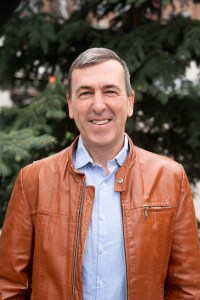
Tim Gray is one of Canada’s most seasoned, quietly formidable forces in conservation and climate action. He’s spent decades in the trenches—from getting arrested at an environmental protest in Northern Ontario to policy backrooms where evidence becomes law—and has built a career translating science into power, confronting entrenched interests, and evolving traditional conservation into a relentless push for deep climate mitigation. This conversation traces the arc of his career, from acid-rain fieldwork and old-growth forest fights to shaping modern climate policy and steering Canada through the turbulence of the global energy transition. Now, as executive director of Environmental Defence, Tim is a model for what commitment looks like when it spans a lifetime—and how conservation becomes climate action at scale.
Notes and resources
Full transcript
Michael Ethan Gold (00:00)
Tim Gray, welcome to Climate Swings. It’s wonderful to have you here.
Tim Gray (00:03)
Yeah, thanks for having me.
Michael Ethan Gold (00:05)
So my usual opening question for all my guests is to ask you to provide a brief self-introduction, a couple of high-level bullet points about your professional background, and a little bit of what you’re doing now.
Tim Gray (00:18)
Yeah, so I am currently the executive director of Environmental Defence. My background, which will describe a little bit of how I got there, but I have a science background and have done a lot of public policy work. And now I do a lot of campaign design. But I got into this because I’ve always been a bit of a nerd in my interest for public policy work and nature. My dad used to tease me that I was, in fact,
you know, the nerdiest kid that he’d ever run into ⁓ being so interested in politics at such a young age. And so I kind of took that and my interest in nature, which came from growing up on the shores of Lake Huron, which is a very beautiful area for those who don’t know where that is, one of the Great Lakes. And I was always outdoors. I went with my dad hunting, et cetera. And so by the time I went to university, I was trying to figure out how can I do those things together?
So I did an undergraduate degree that really focused on ecology and genetics and fisheries biology a bit. And then went to grad school ⁓ hunting for something in the applied ecology space, something that where the science that was being done would actually be relevant to decision making. And ended up in a lab at University of Toronto, which was very multinational, people from around the world. We were working on acid rain impacts on forests and acid
impacts on other ecosystems, pollution impacts on other ecosystems. And my supervisor there was very engaged with public policy and it was my introduction to how to move science into decision making. I started volunteering for environmental organizations with at that time the naive belief that if you brought evidence and science to bear on government decision making, things will all work out well. ⁓
I was 21 at the time and I really did believe that ⁓ resource management agencies, et cetera, ⁓ they were out there to protect the public from ⁓ rapacious development and other things. I didn’t have a very sophisticated political analysis of how the system worked, which I soon developed. But that was kind of how I got started. And I went from volunteering to having a couple of contract jobs to just getting really drawn into working in the movement initially
more as a technical person of the science and planning side and then increasingly as I learned more as a campaigner.
Michael Ethan Gold (02:48)
Yeah, I mean, in this show, I have a lot of guests who have sort of a more meandering route into climate work or into nature environment work, but you really seem to start from a very early age with that level of interest and that passion that you were cultivating for doing something involving nature and conservation and the environment.
Can you dig in a little bit more about some of those really early experiences or some of those early motivations that set you on this path to studying environmental science and then working full time in an environmental career?
Tim Gray (03:26)
Yeah, I’ll just give you an example because it was kind of a real signatory moment for me. ⁓ This area that I was staying where I grew up ⁓ near Sauble Beach on Lake Huron is a tourist town, right? It’s beautiful dunes, ⁓ 25 kilometer long sand beach. It’s really beautiful. And the town is completely dependent on tourism revenue. And when I was probably about 15,
the town decided that it would get rid of the sandy streets ⁓ and put in storm sewers, which of course collect all the chip bags and the old French fries and the oil and the crap from the cars. And they put the ⁓ outlet for the storm sewer under the Welcome to Sauble Beach sign going into the lake, which is where everyone comes to go swimming.
And I just could not believe that adults, because I was a teenager at the time, would just be so stupid. Not only to do something that was so clearly harmful to the water quality, but was also something that was obviously going to be very detrimental to the long-term viability of the community as a tourist destination. So I think some of those early things that I saw just made me really realize that
as a society we have a real disconnect between even very immediate things that we value and need even for our jobs and properly interacting and protecting the environment in a way that means those values will be protected in the long term. So that made me a lot more interested in the political side of conservation. And then,
another one that was kind of funny was I was in undergrad and I was taking a fisheries biology course. I think it was actually a limnology course, which is the study of lakes. And we were doing what’s called creel sampling, which is you take nets and you get a bunch of fish from a lake and then you identify them ⁓ and tells you something about the population of different fish in the lake and their interaction. And we had a professor who
who’s a great guy more or less, he was older and we’d caught a whole pile of fish. Many, many of them were the same species. And his instruction was, well, just put them all in formaldehyde and let’s take them all back to the lab and we’ll figure it out later. And I was like, so you’re gonna kill 500 fish by throwing them in formaldehyde. We’ll count them and then we’ll throw them in the garbage.
And he said, well, what’s wrong with that? What are you some environmentalist? And I was like, yeah, I guess I am because I think that’s really stupid. So anyway, that was kind of like a moment where I kind of realized that even within the science community that maybe my worldview was a little outside of the mainstream and that I really did not understand why resources would be wasted and conserved and things would be
needlessly destroyed and ⁓ that was part of what helped me choose what I was going to do at grad school.
Michael Ethan Gold (06:44)
Yeah, I mean, what I’m hearing sort of is a sense that you had a sense of, had a feeling very early on that the environment is people and that it’s kind of inextricably linked to the decisions that we make as human beings, right? And that’s, I guess what I’m sort of feeling is one of the reasons you didn’t pursue like a hard science career, where I feel like in another parallel universe, you very well may have done so.
Tim Gray (07:11)
Yeah, that’s true. I actually explored a hard science component to my career. I did work in a genetics lab in couple of summers in undergrad with a great prof. And I really realized that I just was never ever going to get excited by looking at those ⁓ gels that were running and looking at the bands of DNA on there, you know, and about the gene systems and the gene transfer between generations of flax. Beautiful pure science research that had
no real-world application that I could see. I just can’t do this. I can’t do this. And I really need to be involved in something where it’s about public policy and about people and about trying to move the systems that are so flawed that are ruining our environment.
Michael Ethan Gold (08:00)
Yeah, you wanted to see a more immediate impact of the work you were doing rather than say sitting in a lab for years and then maybe a paper gets published and maybe it leads to something years and decades down the road.
Tim Gray (08:09)
Yeah, exactly.
It was really not for me.
Michael Ethan Gold (08:14)
Right, right, right. Of course, nothing against the hard sciences, we need them all. ⁓ Now, we discussed previously a formative experience of yours that we didn’t dig into too much, but I’m really curious about this. You said when you were an environmental volunteer, you were also an activist and you actually got arrested. Can you discuss that? I guess your evolution into activism specifically, what motivated that? And then I would love to hear all the…
down and dirty about getting arrested because you’re the first Climate Swing’s guest I’ve ever had that’s admitted to getting arrested at least.
Tim Gray (08:50)
Maybe the other ones just didn’t admit it. Yeah, this came out of my early volunteer work when I was in graduate school. There was a lot of conflict going on in Northern Ontario, a six hour drive north of Toronto around old growth forests, red and white pine forests. There weren’t very many left and they were still being logged quite clearly in a way that they meant they were going to disappear.
At the same time, there was a big conflict between the logging industry and the government who was trying to build roads into this area and ⁓ the First Nation community there that really didn’t want roads built into this core of this wilderness area, which was sacred to them. So road blockades and other things eventually were part of the campaign by both the Indigenous people but also the environmental folks. And I happened to be volunteering for the environmental organization there.
My role was actually doing an analysis of the logging plans from a sustainability perspective because they were kind of, what I discovered is they were basically gaming the books by reclassifying forests that were not old growth forests as old growth forests in order to have a rationale for a higher harvest level. And I kind of figured this out from the planning documents. So that was kind of my role was more technical, but I got drawn into the, just the whole, you know, the politics of it,
and started going up there. Yeah, ⁓ so there happened to be a weekend in September. We were camping out there on the road. ⁓ I’d been there for a while. ⁓ And then kind of early in that day, ⁓ this guy shows up and it’s actually the leader of the opposition party in the Ontario legislature comes out and he’s there and he’s doing media and stuff. And then that just so happened like an hour later. ⁓
the Ontario Provincial Police show up and just start dragging everybody off the road and arresting everybody. So I got arrested and I also got arrested with the leader of the official opposition. So I spent eight hours in the back of a paddy wagon and my way to Timiskaming in Northern Ontario to be processed with the leader of the opposition. So I learned a lot from him, a really interesting guy. And then about, God, it would have been maybe.
Maybe the following spring, I’m trying to remember exactly, but it was only a few months later in the next election, he became the Premier of Ontario. So that was a really interesting ⁓ chain of events for my first run in with the law around protecting the environment.
Michael Ethan Gold (11:30)
Yeah, if you’re gonna get arrested and then have any outcome from it, I guess getting to know the future premier of your province is not a bad one, I suppose. Were there specific charges leveled? Was it trespassing? What exactly did they arrest you for?
Tim Gray (11:38)
That wasn’t that bad.
Yes, I was charged with mischief and the wording was that I was preventing the enjoyment of Crown land by Carmen Construction. Crown land for American ⁓ listeners refers to public land and the crown comes from the British tradition. So this is public land and the Carmen Construction was the road building crew that was plowing through the wilderness. So I was interfering with their enjoyment of destroying Crown land.
They did, yes. I still have the arrest sheet in my files at home. I actually looked at it not too long ago for some reason.
Michael Ethan Gold (12:16)
And they really called it enjoyment. That was the word in the…
Were there charges like actually pressed against you or did the was the was it all kind of dropped eventually?
Tim Gray (12:34)
They did press charges, but it never went to trial. Eventually, the province ⁓ ended up negotiating an end to that road blockade. And all of the old growth forests that we were trying to protect ⁓ were protected. The province bought out the last remaining sawmill and shut it down. And ⁓ the trees never were cut. And yeah, was not a bad outcome.
Michael Ethan Gold (12:59)
I’m guessing you look back on that as a very worthy run-in with the authorities at the time then. No regrets.
Tim Gray (13:05)
Absolutely.
Absolutely. I was, ⁓ you know, I was pretty young. I was still in grad school. Another little aspect of it that was fun is that I actually drove up there in the gigantic University of Toronto truck with a big blue truck with the University of Toronto logo on it. And the police phoned the president of the university and said, like, what’s the University of Toronto doing there? And so he phoned my supervisor, my supervisor being a very feisty, politically involved guy,
got all the faculty and stormed over to Simcoe Hall, which is where the president is at U of T, stormed into his office and yelled at him for interfering with academic freedom. So that was kind of fun, too.
Michael Ethan Gold (13:49)
So you have this bracing adrenaline rush experience for a righteous cause essentially, but you didn’t end up becoming a full-time activist on the front lines protesting. Was there a sense that you wanted to shift into more of this kind of like a thought space with advocacy or how did your later ⁓ views toward ⁓ activism and protest evolve from that experience?
Tim Gray (14:18)
Yeah, I mean, very soon after that, I started working full time doing policy analysis. And I really spent a lot of time then trying to develop more of the work that I’d been doing around analyzing this forest management plan and trying to make changes to the way that forestry overall occurred. So a lot of the rest of the 1990s,
I was involved with really trying to eliminate the use of clear cutting in the, in the forests of central Ontario, which are totally unsuited to that kind of cutting. They’re not fire ecosystems. They’re very complex mix forest systems where wind is like one of the dominant disturbance patterns. So clear cutting areas is just not what these forests have normally experienced. So I really wanted to get that changed. The science community was trying to change it.
And then also to increase the amount of protected lands in the province. At that time, only about five and a half, six percent of the entire gigantic province of Ontario was protected permanently. And I was working on a long term campaign to really enhance that and increase the amount of protected area. And ultimately, both of those were successful, long, complicated campaigns in both cases. But we both reformed the
way forests were cut and move them to systems that cut individual trees but leave most of the forest behind. And then also we ended up doubling the amount of protected land in Ontario by the late 90s. So we got up to about 12%. So I really moved to a more of a policy and campaign space and spent the rest of my 20s and 30s just really learning how to be better at that.
Michael Ethan Gold (16:12)
Did you feel like there was maybe a continued role for protest in that work? And again, maybe in this kind of parallel universe, Tim, I like to sort of talk about the sliding doors moments that maybe you would have become a full-time protest leader well into your 20s and 30s and whatnot.
Tim Gray (16:31)
Yes, for sure. In fact, I still do. ⁓ Just for me, ⁓ I was better at people kind of find the things that you’re good at. I was really good at policy analysis, like digging through what stuff said versus what it was really doing. ⁓ I have like an ⁓ uncanny and surprising even to myself ability to go to endless numbers of meetings and still say, sane ⁓ and, you know,
go on road trips, talk to people, deal with municipal politicians, deal with ⁓ media. And it doesn’t tire me out, it gives me energy. It seemed like that was the best direction for my personality. And I’m not inherently a kind confrontational kind of person. So I think it’s great when people are willing to do that. And I would do it again if necessary, get on the road or do whatever else, but
that kind of organizing wasn’t my main skillset, so I didn’t end up going that direction.
Michael Ethan Gold (17:34)
Yeah, I mean, think having the ability to sit through endless meetings is very much a superpower in and of itself. Maybe doesn’t generate the same level of headlines that a forest protest would, but I would say it’s definitely a skill worth cultivating, especially in this day and age. So you started to talk about some of the roles that you had in forest protection in particular. Why did that
Tim Gray (17:40)
Thank
Michael Ethan Gold (18:03)
area specifically motivate you. I mean there’s so many areas of environmental protection, conservation. Why specifically forests? Is just because Canada has a lot of them?
Tim Gray (18:14)
That’s part of it is that, you know, I was working in a, academic career took me into a lab at the University of Toronto that had a strong focus on forests. A lot of the early issues that I was surrounded by in terms of loss of biodiversity and threats were to forest ecosystems. I was deeply interested in forests from where I had grown up. And it was such a dominant industry in Canada,
much less so now because of the decline of pulp and paper sector, newsprint sector, et cetera. But it was very dominant and the harvest, the logging pressures on Canadian forests at the time were just brutal and we were losing the very last remnants of some of our original forests. ⁓ the logging practices were such that even the forests that weren’t going to be protected, the trajectory for them was very poor because their
species composition, the species diversity, the wildlife habitat was being severely diminished just by terrible, terrible harvest practices. So it was a place where I felt that I knew something and that I could make a difference. And I had the kind of science community connections to bring evidence to bear. So that kind of drew me into it initially. And then as I started working more and more on wilderness conservation, just the, like the magic of the places that I was working on, I ended up
doing a lot of work in Northern Ontario and then the northern parts of other provinces and into the Northwest Territories at Yukon. And these are spectacular landscapes, you know, millions of caribou and, you know, rivers and lakes that you can go paddling on or go fishing in where if you had like a paperclip on the end of a fishing line, you’d have two fish on it in like five minutes because no one else has ever fished that lake before, you know, it’s…
really, really spectacular places. And it’s really hard to visit places like that and do work there and get to know the Indigenous communities and then not think, yeah, I really think we should have a couple of million hectares of this protected. It’s very motivating so the more I did that kind of work, ⁓ the more I just fell in love with it. Spending every summer out in bush planes and canoes across Northern Canada is
not a bad way to spend your life.
Michael Ethan Gold (20:39)
I can imagine, mean, Yellowknife has been on my bucket list for quite some time. Maybe that’s a little way, way, way further north than you’re used to dealing with, but I know Canada has a lot of gorgeous spaces like that. At the time, I mean, how was that, what was that work
like in terms of you said you discussed some of the outcomes that you achieved, which sound very impressive, but I mean, I can imagine that there was a lot of pulling teeth and pulling hair in the back rooms and kind of negotiating deals. I what would, I mean, your main theory of change is obviously policy influencing policy. How did you find that your work was being received at the time?
Tim Gray (21:17)
Yeah, mean, one of the things that has changed a lot and ⁓ one thing that used to be better in public policy is that there were people that ⁓ would actually receive evidence and information ⁓ inside of the bureaucracy of government and at the political level and actually would act on it if they could be made to understand
why it would be in the public interest. I would say that that ability has been severely compromised over the last 25 or 30 years, especially in the last 10. But there used to be ways of doing that. ⁓ so my kind of approach was to work with people who were opinion leaders, scientists and stuff, and make sure that the right information was being put in front of decision makers. But then was also learning that you, that would,
was not enough, right? You needed to really be able to demonstrate them, to them, ⁓ a political path forward where ⁓ they would be safe, right? They are going to be opposed by the, and were opposed by incumbent political interests, right? So you think of forestry issues, it’s the great sucking sound of the forest industry wanting to like chop every tree down. ⁓ And, ⁓ you know, they,
used to employ a lot of people, they had a lot of political power at the municipal and provincial level. So changes that you want to make, ⁓ you need to be able to bring them on-side and ⁓ discovering how to wedge some of those interests, work with companies that might have an interest in a higher quality wood product and therefore would be amenable to changing the way things are logged so that they ultimately have a higher quality product in long term. ⁓
Forestry in particular can be done at a sustainable level, right? The trees do grow back. So it’s not like, I don’t know, the oil industry, which ultimately needs to go away, right? If the planet is going to survive, ⁓ we don’t need to get rid of forestry, but it has to cut trees down at a rate that is sustainable or the ecosystem itself gets damaged. So there is a conversation you can have with responsible industry.
⁓ And that was more possible at the time with some of them and then use that as leverage to move politicians and especially senior people in the civil service who were willing to try and advance solutions that would be in the public interest. So that’s kind of the space I work in.
Michael Ethan Gold (23:55)
Yeah, I mean, you ⁓ helped us kind of nudge now into the discussion about climate specifically. We’ve gone, you know, almost a half an hour without even really bringing it up, but it’s so obviously central to the work you do now. And I presume that even starting in the nineties, it was becoming more of a concern and you couldn’t just imagine that what you were doing in forestry was was separable from broader issues around the energy transition and whatnot. So if you could talk about a little bit around the evolution of climate
and how that was integrated into your work. ⁓ Maybe we can then swing fully into your climate work from there.
Tim Gray (24:32)
Yes, I mean, when we were in the forest work in the 90s and the early 2000s, I mean, there was a growing awareness that the intensity and the speed at which climate change was approaching us all was going to have major impacts on forest ecosystems, in particular the north in Canada, which is the boreal forest, which this year in the last several years is just burning down essentially because the
heat and the dryness has changed everything. We kind of knew that was coming. The science community was talking about it. And so we started thinking about the design of ⁓ the way that forestry was drawn, the way that protected areas were done to create some more resilience for when that time came, which of course now has occurred. So it started being really involved in land use planning decisions. ⁓
even then, and then as you get into the later part of the 2000s, it just became very clear that unless something was done about the causes of climate change, all the stuff coming out of the smokestacks out of our tailpipes, that it was going to be really challenging to imagine a future where much of the forests in Canada would still be around, or at least in any form that was recognizable
and that the consequences of climate change was very much set to undo many of the conservation gains that we’ve made during the 90s and the 2000s.
Michael Ethan Gold (26:06)
Yeah and so, you know, fast forwarding almost like say 20 years from those times when you were starting to think about it. How would you describe the work that you do on climate specifically now? Because obviously Environmental Defence, there’s this traditional conception of it that you’ve been describing about, you know, ⁓ dealing with logging and preserving natural spaces. But how would you describe the work that you actually do on climate specifically now?
Tim Gray (26:37)
Yeah, have ⁓ climate is our largest program in Environmental Defence. ⁓ We work ⁓ only in the mitigation space. So we’re trying to stop more pollution and really encourage the energy transition. So we work both at a federal level and and provincially in two of the biggest provinces, Alberta and Ontario. ⁓ It’s very much focused on on public policy. So just for example, right now, the federal government is,
we have a new prime minister and he’s talking about like massive changes to industrial carbon pricing to really try and encourage more emission reductions and a real focus on integrating what we’re doing on climate with the economic work that Canada is doing around greater integration with Europe and with Asia, etc. So a lot of our work now is much more in the space between climate policy, emission reduction policy,
and what’s going on with the ⁓ global energy transition, ⁓ which is a very encouraging thing at one level because ⁓ the fact that that global energy transition is visibly underway and is more visible every single day ⁓ means that we actually have a chance of turning the corner on this issue. ⁓ You sometimes for all of us ⁓ living here in North America, we really kind of wonder if that’s the case because
course, with the current US administration really is trying to put the genie back in the bottle. I their idea is that we’re going to go back to 1958 and we’re going to slap fins on the back of an SUV. And it’s going to be 1958 all over again, fossil fuels only, pollute what you want to do, and just take everything backwards. But the rest of world’s not going to do that. And so, of course, the big choice for Canada at a public policy level, why it’s so interesting and important for us is that
our government is in a very difficult situation, you know, a small country, the northern border of a country that is deliberately trying to set, sit out the biggest industrial revolution, energy revolution that’s happened since the invention of the internal combustion engine 150 years ago. And, you know, the U.S. is saying, well, we’re going to sit this one out. Well, what’s Canada to do there? Are we going to join the U.S. in this kind of retrograde ⁓ economic failure, I think, in the long term, or are we going to join the rest of the world? ⁓
I have very strong opinions about where we should go on that because it both means that we have a chance of saving the climate system and therefore our civilization, but it also means we have an economic future for the people of this country to be building things, doing things that make sense. So much of our work is focused on anything that can reinforce that transition and trying to block anything that is retrograde and aligning with the US administration.
Michael Ethan Gold (29:29)
Yeah, I mean, I’m sure industrial policy in Canada can be its own several hours of discussion. I’m sure you have those discussions all the time. But also sort of rewinding the clock a little bit again, you’ve been at Environmental Defence now for a little over a decade. And you said that climate is now obviously your largest pillar, your largest program. When you joined, how did things look and did…
did that require like a concerted effort to sort of shift resources in that direction where you’re not just focusing on stopping clear cutting a forest, but you’re actually integrated into this humongous project of the global environment, of the global energy transition?
Tim Gray (30:08)
Yeah, so I came here because Environmental Defence did have some early climate work. ⁓ you know, going back 12, 15 years ago, there was almost no money available to work on climate ⁓ in Canada. Some started to become available. When I started here, we were diving right into some of the big pipeline battles, you know, the Keystone XL being the trans-boundary one that a lot of folks would know about. But we were also working to try and stop ⁓
the energy east pipeline that was going to come from Alberta through Ontario to the East Coast, and then also the Northern Gateway pipeline that was going to go to Northern BC. But just trying to stop the expansion of the tar sands industry generally and raise public awareness around it. And that campaign was very instrumental because it really, for the first time, ⁓ moved from a more academic conversation about climate targets at Kyoto and all these other things, which governments just ignored,
to a real ⁓ debate and fight in society over something concrete, like pipeline or not. And that was ⁓ very, very useful because it drove a conversation in this country that was highly politicized, but ultimately ⁓ led to a very kind of draconian conservative government coming in saying they were gonna wipe away all the laws that would in any way modify or slow down pipelines.
And the public reaction to that ⁓ resulted in the election of a liberal government that swept into power with a majority government, ran off to Paris, signed Paris in 2015, and then brought in a quite aggressive climate plan. The fight we were involved with was really seminal in terms of ⁓ driving public policy conversations. For me, that was a very, it just
helped to build on what I already kind of knew about public campaigning is that so much of this stuff, the actual policy work occurs under the umbrella of something that’s usually quite simple. Like some simple yes-no idea around, in this case, pipelines, ⁓ ignites the space for having a conversation about the whole transition of our energy system and
all the policies associated with that, which nerdy people like me can only have those conversations if the macro level conversation is actually occurring and in reality that people are fighting about it. And if they’re not, then there’s no space. So that was very formative for me. And it also made me ⁓ really realize how important it was going to be to move from just having institutional foundation support for our work
to really having a mobilized public on our side. And I’ve spent a lot of my time here with our team really trying to develop a support base that ⁓ where when something needs public pressure that the people that are part of our organization ⁓ really let their politicians know that they have expectations around what’s gonna happen.
Michael Ethan Gold (33:20)
Yeah, I mean, you discussed in some of your earlier work about how presenting a path forward for politicians that take environmental action was extremely important. And clearly that’s all the more so when it comes to climate action, where, you know, you don’t actually necessarily see the fruit of a policy or a program, a public policy intervention
right away, even as you might with say, preventing forest from getting cut down, you can say we protected this land, right? But protecting the global climate is something kind of, kind of different, right? I mean, like, how do you engage in that, that very delicate political discussion, especially nowadays?
Tim Gray (34:04)
Yeah, I mean, it is easier if you’re working on aspects of climate mitigation that are concrete and immediate. ⁓ So some of our work that we do around energy transition for the public in Canada is more saleable politically or easier to sell, I guess, because the public can see immediate benefits. Like we worked for a long time and ultimately successfully with others to get
you know, an aggressive ⁓ clean vehicle program here in Ontario. So big subsidies for people to buy an EV, for example. That’s pretty tangible. You you buy electric car and you get 5,000 bucks. That, you know, is easier for politicians to get behind. Similarly, ⁓ programs that take money, say from a carbon pricing system and spend it on ⁓ allowing people to buy heat pumps in their house or put in new insulation or replace their windows. All those kind of immediate
pay for pollution, use the money to do good things for climate. And by the way, you get to have new windows in your house. Those things are the easiest. The harder ones ⁓ are, of course, those longer term ones that you specify, right? Like, we need to ⁓ have a carbon price that is incorporated into your gas price at the pump because in the long term, that will change your behavior and you’re more likely to buy a low emitting car or electric one.
The public’s like, yeah, I don’t want to more for gas, right? So ⁓ it’s harder to sustain ⁓ those political moves. So yeah, I’ve learned a lot about trying to identify ways to link ⁓ climate progress to things that are ⁓ easier for politicians. And that usually means harder to assail by the incumbent economic interests, like the oil and gas industry.
The ones that are easy for them to attack are the ones that are going to be most vulnerable.
Michael Ethan Gold (36:04)
And presumably also ⁓ have more ready impact on everyday life and especially things like affordability and kitchen table issues that you know mom and pop folks care about every day right?
Tim Gray (36:17)
Absolutely, absolutely. And we had a retail carbon price here that was canceled by the incoming government that was really demonized by the opposition parties. And it was well designed in that most people were getting more rebates from it in their bank account than they were paying. But they’re paying at the pumps every time they buy gas. And the rebate shows up as an auto deposit in their bank account once a quarter. And no one ever looks at their bank statement, but they look at their bill from…
know, on the, every month from the gas company or at the gas pumps when they’re filling up their cars. So it was a great thing to spread disinformation about. And the whole space around disinformation around environmental values or environmental policy, or, you know, this is true of other things, but in particular environment is just so much easier now. I mean, the social media space is just full of disinformation. Some of it by incumbent economic interests.
But some of it, of course, just by people that are looking to use any issue they can to be disruptive, just to destabilize our democracy. But anyway, the space is full of things that make it harder to do this work than, say, 10 or 15 years ago.
Michael Ethan Gold (37:34)
Also presumably there’s more momentum, there’s more awareness. I hear just kind of almost like a two-faced situation in a lot of ways where we’re dealing with immense headwinds, but we also are moving forward and, you know, of continuing to do the work and we’re seeing progress. What’s your kind of feeling, you know, on a day-to-day basis now? Do you…
Tim Gray (37:40)
you
Michael Ethan Gold (38:01)
sort wake up feeling motivated, you feel optimistic, are the storm clouds gathering? How would you describe that?
Tim Gray (38:09)
Storm clouds are gathering and I do feel that we can get by them. ⁓ It’s hard and sometimes you feel like you’re being, you you don’t want to just be optimistic because that can be just stupid. You know, you have to pay attention to the evidence. But as I was mentioning earlier, the macro level indicators are around the energy transition is that it the economics behind it, the fact that renewable energy wind and solar
the technology is improving very, very quickly. It’s already much more deeply affordable than any other forms of energy generation. And we see that because here in Canada and more so in the US, you have the oil and gas industry working with regressive politicians who they largely own to legislate against the ability of those energy systems to take part, right? So they’re now playing a game where
you know, there’s no way that they can compete if there’s like a fair playing field. So if you’re a utility that is contracting new electricity generation, unless you set the table in a way that makes it really hard for wind and solar to bid, you know, the gas company is never going to win, right? Because the lowest bid that’s going to come in is going to be ⁓ solar and wind and batteries. So they’re legislating against the renewables now.
There’s not very many times in history that I can think of where the incumbent ⁓ economic interest has to depend on stopping the new one through legislative means that persist for very long. So eventually in a free market economy and where the public has access to information, I do think that eventually that they’re going to lose that conversation. And you’re starting to see this happen now with the public conversation around electric vehicles.
Like there’s this growing realization that if you live anywhere except North America, you can buy a really great EV that’ll go hundreds of kilometers and you can buy it for a fraction of the price of a gas car and it’ll cost you a fraction of the price in maintenance and it’ll last just as long. And then somehow we can’t get them here. Well, why is that? And as people start to be, come aware that we can’t sell our cars that we manufacture here anymore to any other countries because they’re only buying EVs from China now. ⁓
It’s going to be bit of a wake up call. And so I do feel at that level that the trends are blowing in our favor, but the immediate things that are being done around climate policy, land protection policy, toxics, plastics, led by the Trump administration are brutal and very disheartening. And to the degree that they can get away with it here in Canada, regressive politicians are doing the same things.
Only here they’ll say they’re doing it to save Ontarians from Donald Trump. But of course, the bills that they’re passing would make Republicans and Congress salivate sometimes. ⁓ it’s widespread and it’s deeply concerning. But I do feel that ultimately, if we can survive ⁓ the next dozen years and not have climate change become so disruptive that it
actually destabilizes like the underpinning of our civilization, that the energy transition will eventually make it impossible for the approach being taken in the US to succeed.
Michael Ethan Gold (41:44)
Yeah, and I’m sure that you are familiar with the abundance agenda, that whole dialogue going on here in the United States around the need to build, build, build. And that includes things like clean energy and transit and high speed rail and all these great new industries of the future. Where do you kind of stand on that? Because there is a kind of natural tension with a lot of the more traditional conservationist aims, right?
Tim Gray (42:12)
Yeah, I I think that we do ⁓ need to build. ⁓ We have huge deficits in public infrastructure in North America broadly. Other places in the world have made the transition ⁓ towards high speed rail, ⁓ public transit infrastructure, even serving rural areas. A lot of the areas of North America, like where I live here in southern Ontario, are very dense, very dense population, could easily be served by
high-speed rail. We don’t. The US has the same deficiency in all of the areas of the US that are very populated to very similar densities of Europe or parts of Asia. So we need to do those things. ⁓ We also know that by integrating planning for natural values into building this stuff, that in many cases you can actually make existing problems better. We know, for example, here, ⁓
I’ll use the transit one just because it’s top of mind for me is that there is a conversation about building a high speed rail network from Windsor, which is extreme southwestern Ontario all the way to Quebec City. So this is like a 17 hour car ride. So it’s a long ways, right? Thousands of kilometers. And it cuts through a critical area for wildlife on the kind of on the eastern end of Ontario, where the Adirondack State Park is joined to Algonquin Park. There’s a Canadian shield,
a huge rock formation, densely forested, really important ecological linkage between the northern US and Canada. And it’s cut in half right now by the existing rail corridor and a massive highway. So anything that tries to get across that that happens to be on four legs is never going to survive. We now know that if we had, you know, we’re building this kind of infrastructure that all that highway, the rail lines, everything else, we would build a massive overpass, wildlife overpass
there, we would funnel the wildlife and we would put it over top of all that infrastructure. We’re doing that in some other places like in the Rockies and it’s incredible success. So, you we need to think about how we do some of this stuff and integrate nature into the planning and execution of this stuff. But anything that would get literally millions of cars off the road in southern Ontario and Quebec allow people to move around this region
more quickly is going to increase productivity, reduce pollution, add to the GDP, all kind of good things, but in a way that would be so much better for everyone who lives here and I think better for the environment in the long term, including the stuff on the ground that we need to plan around and not have run over all the time. So there’s ways of doing this. The key thing we’re going to need to look to is
what are these nation building projects? Are they actually building towards the future that we all can survive in and prosper in? Or are they nation building projects that are in fact taking us backwards that we know just should not be allowed at this time in our history? And that would be more pipelines, more fossil fuel expansion. It’s suicidal, we know that. And ⁓ those things should be strongly resisted by the public.
Michael Ethan Gold (45:29)
That sort of environmental abundance agenda can be a yes and essentially you can have the clean energy, the transit, the you know, high density buildings, etc. and still preserve natural spaces in the kind of classical definition of conservatism.
Tim Gray (45:47)
Yeah, I think you can. mean, we work on housing and sprawl here in southern Ontario, we have a big program in that. You know, building more density. Like I live in a really nice neighborhood that used to build up until the Second World War. Like my street has these beautiful six, kind of five, six story brick apartment buildings surrounded by trees that have big, big apartments in them.
You know, zoning here in the city has prohibited anything but single family homes since the Second World War. And ⁓ as a result, if you are family and you want to live in something that’s not a shoebox ⁓ condo in the sky, which we have lots of as well, ⁓ you need to move out to sprawl land, right? So you’re going to have to drive an hour and a half out onto the farmland that surrounds the GTA,
which is destroying farmland, destroying natural values, ⁓ and making people’s lives miserable because they spend literally hours in their car every day because there’s no transit to service those areas. Instead, we could actually build family-style housing here in the city. And we don’t because of policy, right? So policy failure. fixing the policy actually would do huge amounts for a whole bunch of economic indicators. But… ⁓
from an environmental organization perspective, like massively reduce the pressures on destroying all the values that we need to allow us to continue to live in this city.
Michael Ethan Gold (47:16)
Yeah, I mean, I’m sure again we could, you know, spend hours upon hours talking about Canadian…
policy interventions and prescriptions. But again, this is, this is a podcast about people working in climate. And I want to kind of wrap up with a couple of questions about your thoughts about kind of what that means. And, you know, you sort of started as environmentalist in conservation and now you’re very much working in climate. You’re very much a climate professional, but a of people who go into climate work, especially now are thinking, well,
you know, I maybe come from an IT background or I have a, I’m a lawyer or, know, I have all different, there’s all different kinds of people that want to do this kind of work. I don’t know. What are your, what are some pieces of advice that you would give people, especially maybe, you know, mid-career career shifters, people that want to work in climate, ⁓ but don’t really know where to begin or what to do?
Tim Gray (48:11)
Yeah, I mean, the climate movement, the environmental movement is much bigger than it used to be. There’s a lot more people working in it. ⁓ So there’s a lot more specialization ⁓ and therefore jobs that are specialized. So for folks that really feel that, you know, they need to get up in the morning and be doing something about what’s going on in the world around climate, you can bring your very specialized skills to work with organizations that are working in the climate space. And, you know, you
say you’re an accountant and ⁓ you really want to do something about climate. Well, work for an organization like ours that needs someone who’s a chartered accountant to keep the books going and learn more about some of the policy issues as you go and do it that way. I think for younger people, ⁓ as soon as you can, ⁓ figure out a way of hooking up with
an organization in your community or your city that is doing climate work and ⁓ pick something small, pick something achievable, learn how to do it and work your way that way. I mean, obviously ⁓ academic background in something related to climate science, climate policy is gonna give you a leg up in terms of a professional job within ⁓ the climate movement. ⁓
That’s for sure. But involvement in politics ⁓ is also really key. A lot of people who end up doing climate work worked in the political space previously. So if you have a background there, you know how the system works. You’re an asset to the climate movement.
Michael Ethan Gold (49:58)
Yeah, I hear a lot about applying the skills that you have or the skills that you’re cultivating into climate or environmental work through a number of different pathways ⁓ as you’ve kind of discussed or as you said, starting small, maybe even volunteering, doing something unpaid just to get those points on your resume, essentially. Yeah.
Tim Gray (50:21)
Yeah, absolutely.
So many of people that are really have been really great that work with us and our young staff. I mean, they’ve really started, you know, sometimes as early as high school, just saying like, I’m going to do something about this and then just figuring out how to do it. And then by the time they’re 20 or 21, they’re already kind of experienced in what it takes to move stuff forward. And those are some of the best hires that we’ve had. And some of them are incredibly young. It’s just like, wow, I wish I would have been that smart at 20 years old.
Michael Ethan Gold (50:51)
Yeah, yeah, yeah, yeah, exactly. Just being a self-starter and doing what you can with the resources you have. ⁓ And then sort of focusing back on yourself a little bit, we’ve gone through many swings in your career that all kind of have a similar thread and have led you to your position that you’re at now. But if you could go back and maybe talk to that young Tim in college or in grad school or just starting out in your career and maybe give him a couple of
points of advice of things that you might want to have known going into a field like this, you know, to avoid pitfalls or challenges or anything like that.
Tim Gray (51:26)
Yeah, that’s a good question. Yeah, I mean, I think I mentioned this a little bit, but maybe emphasize. It’s like trying to leave room for future work with people that you currently disagree with. If you’re gonna have a long career and a long life, hopefully, you need lots of friends. You need more friends than enemies. So creating space for being able to disagree with folks and come back and be able to work with them in the future is really key, I think.
⁓ Take some time off for yourself and friends. The work is always going to be there. ⁓ When I was earlier in my career, I didn’t do that enough and ⁓ it can be frustrating. You become a lot less effective. So if you can really try and have other things that you’re doing in your life that are meaningful and important to you and not just a constant obsession with policy.
You know, I think for young people too, and probably this doesn’t need to be said as much, I guess, but something I learned when I was much younger ⁓ was that governments need to be led to making the right decisions, that they are very much kind of captive of whoever the dominant economic interests are in the world. And although they should represent our interests and the people that vote for them, ⁓
they don’t, and that’s become worse over time. And if you want them to represent you, you’re gonna have to make them represent you. And that’s more true than ever, I would say.
Michael Ethan Gold (53:05)
I think that very much actually has to be said. So thank you for reiterating that in no uncertain terms. Actually, and then do you have an example of like that working with people you disagree with? Because I actually, I do hear that a lot too, that we actually do need to be, you know, have a more open hand to a lot of people who we might otherwise vilify.
Tim Gray (53:24)
Yeah, mean, I, some of my forestry work, I really, you know, had strong disagreements with people in that they had like a philosophical based, some of the foresters in particular, they’d been trained in forestry schools. And it was very much production forestry and not much ecology. And so they did not see the forest in the same way that I did in terms of like the dynamics between how trees grow and stuff.
I think ultimately a lot of the ways that I learned were more recent, like more newer and more ecologically based and more scientifically correct. But what I ended up trying to focus on with them is that these guys really, really loved the forest. They were foresters and they loved being in the forest themselves. Their idea of what to do with it or how it should be managed, I learned was sincerely held, but perhaps flawed because of the background that they have.
But I spent time trying to ⁓ be with them, be with them in the forest and kind of connect over the fact that we both loved forests. And ultimately, I ended up working with a bunch of guys, mostly guys, there were some women, mostly guys. And 20 years later, I don’t work on forests as much, but we still interact in a kind of a positive way and now try and solve some problems together that are shared in the climate space.
So, you know, we went from a place of conflict to figuring out how to like see, respect each other’s worldview because of our values and then take that forward to being able to do stuff together in the future. So that’s a good one. And then others with politicians, you know, I’ve had many experiences where I’ve, you know, had very, very hostile interactions with politicians, but try and end it in a way, those interactions in a way where you, you know, salvage something of the conversation so you can work with them again in the future.
You know, times change and you may need to be able to have a relationship with them again in the future.
Michael Ethan Gold (55:28)
And finding common ground is not always optimized for in our current antagonistic environment, especially with social media and whatnot that really does optimize for the quick angry take. So I think that’s a really good lesson for people to keep in mind as well. And then as a final question, so you sort of gave your advice to your younger self and looked backwards, now casting your mind forwards. And of course, your career still has many, many years and decades ahead of it. But if you could…
think about what you would want people to have thought about your contribution to environment and conservation and climate and the things that you care about. Like what would you want your epitaph to be?
Tim Gray (56:07)
Hmm, well, let me think. Maybe he was right, we should have moved faster. It’s funny because when I first started doing a lot of this work, a lot of my friends who are not in the environmental movement, people I grew up with or went to school with, they really did think that I was just like the crazy environmentalist, screaming from the sidelines.
You know, I think an environmental analysis is really the only one to have. And now many, many years later, most people actually really now see what I was talking about, like how these things come together and how we have to address these issues. So I’m only kind of half joking. I’d like to say he was right, we should have moved faster. But I do think that I would like to be known as trying as hard as I could every single day to try and move
these issues forward and to do it in a way that recognizes that moving people is what it takes. Like the planet’s going to be fine, right? Like the planet, if we all, you know, destroy our civilization, ruin our ability to interact, you know, half of us starve to death, you know, the planet’s going to get up the next morning in it’s time and it’ll just be fine. This is all about us, right? Like, and can we manage our own way of interacting with each other and the planet so that our
all the great things about the civilization that we’ve developed can persist. And if we can’t, you know, the world will go on. It’s just that it won’t go on with all the beautiful things that we’ve created as a human society. So I want to be known as trying to have tried to do that and try and figure out a way of integrating that into people’s consciousness. So too much to fit on my tombstone, but you know, if people are chatting about me at the, at at the wake or whatever it is, they can chat about that. I’d be happy.
Michael Ethan Gold (58:03)
Climate is a people story, first and foremost and last, right? First and last, essentially. Yeah, absolutely. Great, well, I think we’ll wrap up there. Tim Gray, thank you so much for appearing on Climate Swings. This was a wonderful conversation.
Tim Gray (58:17)
Thanks so much for having me.