

About this episode
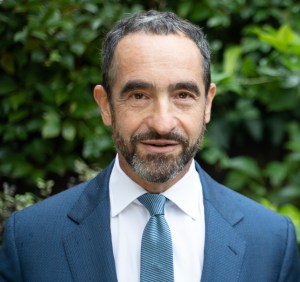
Michael Liebreich is a household name in the energy world. As founder of Bloomberg New Energy Finance, he has unlocked vast amounts of data about the energy transition and provided invaluable insights for stakeholders up and down the value chain. His opinionated style and trademark wit has earned him a major audience as an analyst, writer, and podcaster on all things energy. On this episode of Climate Swings, we dive into his early years fixing his mother’s car, crunching numbers on the UK’s nuclear industry over 14-hour night shifts as a McKinsey consultant, and later founding New Energy Finance while he was unemployed and “unemployable”, in his telling. He also provides his current thoughts on the energy transition, including some opinions that will certainly, in trademark Michael Liebreich fashion, ruffle a few feathers.
Notes and resources
- Michael Liebreich’s website
- Michael Liebreich’s Substack
- Michael Liebreich’s LinkedIn
- BloombergNEF
- Cleaning Up
Full transcript
Michael Ethan Gold (00:00)
Michael Liebreich, welcome to Climate Swings. It’s great to have you here.
Michael Liebreich (00:04)
Michael, it’s a great pleasure to be with you.
Michael Ethan Gold (00:06)
So I think a good chunk of my audience will probably be familiar with you and your work. Maybe they’ve listened to your podcast, Cleaning Up. But for those who aren’t, could you just provide a brief self-introduction, a high-level professional background, and a few key points that the audience should know about you?
Michael Liebreich (00:22)
Okay, I’ll give you the short version. ⁓ what I do is analysis, commenting on the clean energy transition. I have a podcast, actually a YouTube channel, probably more than podcast today called Cleaning Up. So I do a whole bunch of media work. I write for Bloomberg. By way of background, I’m the guy that started what is now Bloomberg NEF, New Energy Finance. Background is ⁓ engineering and a lot of thermo,
finance and so on. But the other thing I’m doing a lot of today is advising investors. I make some investments myself and also a whole bunch of NGO type stuff, a whole bunch of philanthropy and kind of ⁓ my, as my wife would call it, unpaid work.
Michael Ethan Gold (01:09)
Yeah, so I mean, I’d like to start way back in your childhood, well before any of those swings that you subsequently took. ⁓ Can you talk about what your upbringing was like? And I guess from a career perspective, what you wanted to be when you grew up?
Michael Liebreich (01:28)
⁓ gosh, ⁓ we’re going far back in history. ⁓ I’m an old guy now, 61 years old. But if I go back to childhood, mean, think ⁓ family background was pretty modest. So my dad was a mechanic. My mother was a nurse. ⁓ They were Holocaust survivors, very convoluted route to move into the UK. ⁓ But what it meant was that
I, they were very focused on my education. So I had a really, really top end education, sort of quickly started to win scholarships and, you know, which helped would have been otherwise impossible to do what I did, ⁓ going to Cambridge, going to Harvard, actually even the high school I went to, but I wasn’t, ⁓ well connected. So I didn’t know that one could become a lawyer or that one could, you know, go into business or that there’s all sorts of pathways that I had no idea. My dad was a mechanic. thought, well,
I’m going to have to go to university. I’ll become an engineer because what’s a mechanic with a degree? So that’s what I did. I studied engineering, got into Cambridge. There was also this weirdness though, also because of my background, my mother on my mother’s side, her father had been a very, very good skier in Czechoslovakia before and then to a certain extent after the war, the Second World War. And so I just started skiing when I was very, very young.
And that kind of for a while took over my life and I was a competitive skier. So I ran that in parallel with this sort of, you know, engineering and then business and trying to figure out what my, you know, what this, this thing called a career, which never really happened for me was, was going to be, but in parallel I was skiing and I, you know, it kind of ended up with me at McKinsey on the one hand doing this kind of incredibly pressurized, you know, I am a master of the universe McKinsey thing. And then for
how can I put it, for relaxation going and skiing in World Cups and in the Olympics and then for relaxation from that, because that’s pretty stressful, going back and working at McKinsey. So was kind of this wild time in my life.
Michael Ethan Gold (03:32)
Yeah, what did your father fix in his mechanic job?
Michael Liebreich (03:36)
Well, he was very much a mechanical mechanic in the sense that, you know, as, you know, trucks and buses became more and more electrical and electronic, his skill set was very much, you know, dropping the clutch, you know, dropping out the the engine, changing the clutch, doing and I helped him with a bunch of stuff. So, you know, we also will, you know, my mother’s car, which was always, you know, needing repairs an old Morris Minor. And we would sort of strip it down and build it back up. So my
my practical engineering really comes from very, this was pretty basic stuff.
Michael Ethan Gold (04:10)
Yeah, I mean, so energy mechanics, that kind of thing was in your mind basically from a young age. You kind of had a sense for how those things worked.
Michael Liebreich (04:18)
yeah.
Yeah, I was always taking things apart. I mean, so when I was 11, I wired the garage of my of what’s still the house that my mother who’s now 94 lives in, dug a trench, put in a fuse board, blah, blah, and I’m thinking, wow, you know, somebody let an 11 year old do that. That’s kind of crazy. But ⁓ but what I did at Cambridge was a lot of I did thermodynamics, nuclear, fluids, and mechanics. That was my thing. And actually,
because it was Cambridge and Cambridge was the sort of dreaming spires or whatever it’s called, these sort of very old university, what I got was a Bachelor of Arts in engineering. because it’s Cambridge and Oxford does this too, you pay, I think it’s like half a guinea and they give you a Master of Arts in engineering just like for free. So I have a Master of Arts in engineering, but really what it is, is energy engineering.
Right. Nuclear, thermo, mechanics, and fluids is a pretty good basis for a theoretical engineer. And what was kind of ⁓ nice a few years ago, I got ⁓ an honorary fellowship from the Energy Institute and it wasn’t just nice. It was immense for me. I don’t think the people there really understand how significant because I left engineering.
I didn’t go off to become a member of one of these kind of engineering guilds that with all of the initials after the name, the Institution of Mechanical Engineers or the Institution of Electrical Engine, all those things. I went off and became a management consultant and a ski bum, right? And what was fantastic after doing all of that. And then I did a whole bunch of stuff around the TMT boom bust, you know, you’ve got the dot com, you know, boom bust after McKinsey and after running a news agency and doing some crazy things.
And then I got back and I was blown out by the bust in sort of 2000, 2001, 2002. And I ended up starting New Energy Finance almost out of desperation. But what I actually did was a lot of engineering. I what I do now is a lot of engineering systems thinking. It’s like, well, if you want to believe we’re gonna fly a hydrogen plane, what else do you have to believe? Well, you have to believe
there will be liquid hydrogen in large quantities in all of the major airports of the world. And that’s an engineering problem. And then you think about, what is the energy requirement? ⁓ what’s the Joule-Thompson coefficient of hydrogen? And is that important? And you end up doing a lot of engineering ⁓ systems thinking. I’m not designing cryogenic systems for hydrogen, but I am
working on engineering issues all the time, all day long. And so it was just really nice to be recognized for that by the Energy Institute. So now, if you ask me what I am, I can say I am an engineer, right? Because I’m an honorary fellow of the Energy Institute, as opposed to somebody, I used to have to say, well, I studied engineering, but I did these other things.
Michael Ethan Gold (07:35)
Yeah, but you took a fairly circuitous route to get to that status now as an engineer, but what was at that time your thinking leaving engineering? That’s where I was going with my next question, which was you went to business. What motivated that swing?
Michael Liebreich (07:53)
⁓ Money, but not only. I’ll come back to that. What I want to say is that it was this sort of, ⁓ you know, the film Sliding Doors, where, know, there’s these sort of moments that change your life. And what’s incredible for me with this engineering story is that, you know, there was this sliding door moment where I went off into being a ski bum, ⁓ and then into management consulting, of which part of the rationale was money, and part was flexibility, not, you know, because if you want to be a ski bum, if you want to be a competitive skier,
Michael Ethan Gold (08:03)
Absolutely.
Michael Liebreich (08:22)
you need a lifestyle and a career that takes that into account. I couldn’t go off and run, you know, ⁓ a unit of Unilever, which was one of the jobs that I kind of considered, you know, a ⁓ career path as an engineer or a management trainee at a company because I kept on disappearing to go and compete in skiing. So management consultancy made sense. So I sliding doored over to do that or to do those things.
But what was incredible is I ended up, know, had I actually taken that engineering management route at that point, ⁓ I maybe would have gotten to be a member of the Energy Institute at exactly the same time, exactly the same point, but by this totally different route. So it really kind of, that was why it was so satisfying when it came together. I will say the other, if you go back to, you when I graduated from Cambridge, we’re talking 1984, ⁓
engineering jobs were in places like Barrow-in-Furness. I I’d never been like, you know, I’d been to Scotland. I’d very rarely been north of anything in London. You know, we tended to go, I’ve been to Wales. We’d been to the coast a lot because my parents were both keen sport divers. You know, Subaqua scuba divers. But I did not want to exile myself. I mean, it would, I would definitely have seen it as an exile
in a place like Barrow-in-Furness or in any of the great engineering companies in the UK. Of course now, engineers, you can be an AI engineer, you can work anywhere in London, there’s any number of places. There are lots and lots of tech jobs, not just in the Southeast, but within two miles of where I’m sitting in Notting Hill.
But that was not the case then. Engineering was something that happened outside London. And so there was this kind of fundamental mismatch between I studied engineering, but I wanted to live in London and I wanted to spend lots of time in the Alps. And it’s like, how do you square that circle? ⁓ hello, McKinsey.
Michael Ethan Gold (10:36)
Yeah, yeah,
I actually have the words sliding doors in my own notes about those what if moments and those times where maybe you could have taken this path or that, but I think that’s really fascinating. But during your time in your MBA and sort of entering your business career, was there a sense that you did want to continue the focus on energy in some way or how did that stay in your mind as you sort of swung through McKinsey and skiing and these other things that seem fairly unrelated?
Michael Liebreich (11:07)
So I think as a way of thinking about problems, physics and engineering were pretty deep ingrained. I was at school and high school, it was very funny because the top stream, it was an intensely competitive. I was at this St. Paul’s school, very famous, probably one of the best, always one of the best few schools in the country. But the top stream did classics. So I did ancient Greek and I did Latin. ⁓
And then I kind of switched and said, look, I want to study engineering because I didn’t know, I didn’t know that you could go and study classics at university and then become a top lawyer and earn lots of money and do interesting things. We just didn’t, I had no idea. So I was like, I’ll study engineering. This was very counter-cultural, but that, that way of that training in STEM and engineering, I think it kind of stay, well, certainly in my case, it is, it is in, my, you know, sort of thought DNA. ⁓ but no, I did not
think of engineering, I thought I had left engineering. There was this engineering brain drain quite famously in the UK around the time that I graduated where people went into finance or, you know, increasingly also went overseas. ⁓ I won a very prestigious ⁓ scholarship to business school. ⁓ It’s kind of like a Rhodes, it’s called a Harkness, but unlike the Rhodes,
⁓ it blew up, it still exists, but it doesn’t send people to business. It used to work across all subjects. So when I went there, there were about 20 of us. We had people studying violin, literally the management of pigs and ⁓ pig farming. Somebody went to Iowa to a specialist ⁓ institute to learn that. And a few of us went to Harvard and Stanford ⁓ and various law schools and on.
But it blew up, it no longer exists. So the most prestigious thing I’ve ever done in my life no longer exists, which is a real annoyance because otherwise it would have helped a lot. But I was not thinking about engineering and all through that kind of, I would say the TMT years when I was doing internet stuff and so on, again, it is engineering because I was working on…
on supply chains and how you move information up and down supply chains and those sorts of things. But I didn’t think of it as engineering. And it only really kind of burst back into my life after all of that collapsed and I was unemployed and unemployable after the dot com bust. So 2001, 2000, 2001, I worked for Bernard Arnault, the first of the billionaires in my life. And
and that’ll, you know, kind of, well, actually, I joined Arnault, I was working on these dot com things, but I knew that it was a bubble. I knew it was a bubble. I’m pretty good at spotting bubbles. You know, hydrogen fans take note, right. ⁓ But what I did was I wanted to join the balance sheet. I was very, I still thought this is transformational. The internet is going to change everything, but it is a bubble.
And I want to be on a balance sheet. I want to work with somebody who’s got a huge balance sheet. So Bernard Arnault and what he was doing with Groupe Arnault. And when he essentially pulled back from all things, technology, you know, technology, internet, telecoms, and so on. And I ended up having built the team for him in London doing those things. I fired everybody, fired myself and was unemployed and unemployable.
That was when I kind of went back to my basics. I went back to that Bachelor of Arts in engineering. I went back to even literally to talk to, I became quite intrigued funnily enough by the hydrogen economy. And I went back to talk to some of my former supervisors who had then become professors at Cambridge and said, look, can you really do this? Can you really do that? And I was already thinking about ⁓ learning curves because
before business school, I had the immense fortune, stroke of fortune, just luck. The company I worked at, was Braxton Associates became part of Deloitte & Touche or Deloitte. They did ⁓ learning curves. That was one of the things that we did. So I calculated learning curves for fiber optic cable and for printed circuit boards, but also for things like rock quarrying, because the point is, know, everything has a learning curve.
But not everything like semiconductors doubles the scale of the industry every 18 months and therefore halves the cost. ⁓ And so I had done a lot of that and I was already thinking about these things from the perspective of essentially I had become a technology futurist without even really acknowledging that. But learning curve is a way of pushing knowledge out into the future. And so I was doing that and
I started New Energy Finance, funnily enough, initially around hydrogen and fuel cells, but literally within a few months thought, uh-uh, this is going to be a, I mean, at the very best, it could be 20 years and at worst it could go nowhere, which is kind of an interesting journey I’ve been on.
Michael Ethan Gold (16:31)
Yeah, yeah, well, we’ll come back to that but but still in those kind of early days was there ever a sense that energy as a sector was something that you would basically make your life’s work? When you were at McKinsey, did you work with any energy companies? Did you have any exposure to energy as a as an industry during those later swings in your into the into the tech career that you had?
Michael Liebreich (16:52)
I did at McKinsey, I did two pieces of work that related to energy, but it was just random and I was in consumer goods. And I was this weird figure, right? Because I kept going off skiing and half of the office thought this was a brilliant thing. And half of the office, very senior people thought this was absolutely outrageous, disruptive, disrespectful, because here’s all these people committed only to McKinsey as like a religion. And here’s this guy who just goes off skiing and doesn’t take us seriously.
So I was a contentious figure at McKinsey, not intentionally, ⁓ but I did fall into, ⁓ well, three pieces if you include a bit of work on airlines, but actually I worked on the ⁓ privatization of the ⁓ atomic, of nuclear power in the UK. And it was being split so that the, in a sense, the
power stations would be, or the generators were being sold off, but the liabilities and obviously the military and so on pieces of it were staying behind. And so it was being split and I ended up building the economic model for, well, how do you value the bit that you’re about to sort of privatize and or sell? How do you value that? You’ve got a kind of, you know, just classic NPV cashflow modeling and so on. But that was really, and it was immensely intense.
And I did it with somebody who later became one of the angel investors in New Energy Finance, a very dear friend of mine called Michael Wilshire was the, I’m not sure if he was a partner or a senior manager on that. And we were doing overlapping 14 hour shifts for a while modeling the UK nuclear industry. So I would do the night and he would do the day or vice versa. And then an hour at each end of overlap to hand over the models, very intense.
The other thing that I did was also very, very interesting was some of the, so the, the electricity sector had been privatized and we ended up with all these, you know, what, still now we have the utilities, the electricity utilities. And there was one of them, their management had become like, they’d started off as civil servants and it’s suddenly become, you know, immensely wealthy, which was all very kind of Thatcherite at the time.
But one of the companies wanted to go and build power stations in India and Pakistan and so on and around the around what we now call the Global South or the developing world. And their theory was that instead of doing it, working with the World Bank and working with all these complicated sort of players and the multilaterals, you will take ages. What we’re going to do is because we’ve got all this capital, we’ve got this money from privatization,
we will walk down the steps of the aeroplane with a suitcase full of cash, which will enable us to get these projects done quicker. And Michael, could you tell us if you can make these projects happen in two years instead of seven, what is the value? What is your competitive advantage? And I thought, well, your competitive advantage is basically being ripped off because you’ve turned up with a suitcase of cash. And the reason that you make these projects complicated is
actually risk management. You want, you know, the politician’s family to be to have a piece of the project so they don’t nationalize it. You want the World Bank involved because people are scared of screwing over the World Bank. Right. If you turn up fresh off the plane from Heathrow, your suitcase of cash. I mean, we know where that ends. And so I actually tried to almost I wouldn’t say I was a whistleblower, but I did raise it with some very senior people within McKinsey. I said, look,
I think we should be telling the client this is a really stupid idea. But telling clients that their baby is ugly was not really a thing at McKinsey.
Michael Ethan Gold (20:53)
It sounds like you have a long history of telling people hard truths and you know we can get into to some of the more recent ones that you’ve been talking about a little bit later. So you obviously had some exposure to electricity, nuclear, through some of that McKinsey work. What got you interested in hydrogen? ⁓ you look like you had something else you wanted to go into.
Michael Liebreich (20:57)
Hahaha!
I’m just gonna say,
the biggest chunk of work that I did at McKinsey that is relevant today is actually consumer goods logistics. So I did things like specialty chemicals, flavors and fragrances, which is essentially a logistics challenge, bringing in all these things from around the world and then you sort of match them up, mmm, lovely. You make a nice fragrance for your bleach or actually even fine fragrances. I also did a lot of logistics warehouse work, restructured,
⁓ I almost technically, I would call it the closest thing to rearranging deck chairs on the Titanic. I ⁓ restructured Kodak’s ⁓ portfolio of warehouses, logistics, ⁓ about two years before the digital camera made everything that I’d done for them, which was enormously helpful, ⁓ totally irrelevant.
Michael Ethan Gold (22:05)
You should write
a whole memoir just about that, Michael, I think. ⁓ anyway, so, but back to the energy side of things, what specifically got you interested in hydrogen, especially at that time that, I don’t know, how many people, maybe three people in the world were talking about? I don’t know, was it a hot topic at the time?
Michael Liebreich (22:20)
No, no, no.
So what happened in 2003, there was, Jeremy Rifkin wrote this book called ⁓ The Hydrogen Economy. Everybody went a little not everybody. A lot of people went a bit crazy about hydrogen, hydrogen every 15 or 20 years. So 1970s oil price, Japan goes hydrogen crazy. Right. Around the turn of the century, you’ve got Jeremy Rifkin writes his book, but you’ve got Ballard in Canada and people get hydrogen crazy.
2020, hydrogen crazy. And I have absolutely no doubt that this current sort of cycle will end in, I call it the hydrogen souffle. It’s not the bubble popping because a pop would be like pop and then, you know, the European Commission would go, what were we thinking? We rewrite, there is no hydrogen strategy and, you know, we’ve got to decarbonize the hydrogen we use in fertilizers and petrochemicals and it can be done by
⁓ you know, fourth spear carrier in the Department of Industrial Chemicals or whatever, right? ⁓ So it’s not gonna be a pop like that. You’re not gonna have, I do call for, I have called for a year ago at the FT Hydrogen Summit, I called for a reset and the European Court of Auditors reflected that thinking also asking for a rethink because the ambitions of the European Commission and so on, the European hydrogen strategy is so, they called it, ⁓
not based on robust numbers, but on political will. But there won’t be a pop, there will be this souffle, the hydrogen hype will just, the projects won’t happen and everybody will sort of wake up to it over a bit. It’ll take five more years, it’ll take to 2030. But it’ll come back. I’ll guarantee you there’ll be another cycle of hydrogen hype around maybe between 2040 and 2050. People say, oh, it didn’t work in 2020 to 2030
because, and they’ll come up with some self-rational, the reason that I’m interested in it is I get the thermodynamics, I get the learning curves, so the mechanical engineering, I get the ⁓ microeconomics, the costs pictures, I get the financing. How do you actually, you a lot of this is, know, you’ll see project X didn’t happen in, I don’t know, Mauritania or Australia or ⁓ Teesside or
where have they failed in the US? And it’ll say in the press, in the news story, the journalist will say, the regulations weren’t ready or they didn’t sign an offtake agreement. It’s like, well, yeah, because the costs are wrong. It’s just too, it’s way too expensive. And by the way, it has no pathway for those costs to come down. I know this because of the work I’ve done throughout my career on learning curves.
The problem you’ve got with hydrogen is that it’s like five times too expensive today. This is now known. People have kind of woken up to that. We didn’t really all know that in 2020. I didn’t really understand how expensive, but now we all do. But people say, oh, photovoltaic, you know, solar got cheap, batteries got cheap, hydrogen will get cheap. No, hydrogen electrolysers will get cheap. But hydrogen plant, when you make green hydrogen,
it’s a chemicals plant with, you know, half of its cost is electricity and most of the rest is heavy engineering, right? It’s heat exchanges and compressors and pumps and tanks. And then it’s electrical engineering, right? A substation and all of the electrical controls. And then by the way, you have to have things like blast walls. So it’s civil engineering because you actually, you know, it’s an explosive gas, perfectly manageable, but not free. So what you’ve got is…
a chemicals plant with electricity as a feedstock and people think it’s going to suddenly become really cheap. I don’t know, like Moore’s law. It will be Moore’s, but it’ll be a Moore’s law that declines at, what can I say? It’ll go down by 20, 30% fairly quickly and then maybe five or 10% per decade. It will not go down 5X, not even by 2050. So anyway.
I just, why am I interested? I just sort of have this weird, my weird collection of sliding doors moments. I’m the guy that sees all this, number one, I’m not the only one, but I’m one of the very few who then doesn’t have a boss and doesn’t give a crap about, you know, I don’t have to, I don’t have a corporate, you know, I don’t have a board that has committed finance that won’t let me say the things that I really believe. I’m not vested in hydro, actually that’s not even true.
I actually have investments and holdings. I would make much more money if I was wrong than if I’m sadly and unfortunately right, which I’m going to be. So I just happened to be at this kind of confluence, this moment in history, I’m like, I’m the guy. And there’s a few others. There’s Michael Barnard over in Canada, and there’s Paul Martin, David C. Bonnet, Cambridge, ⁓ Tom Baxter, unbelievably good sound on safety issues.
Michael Ethan Gold (27:21)
You
Michael Liebreich (27:40)
So there’s a little sort of cabal of us. I shouldn’t use that word because I get death threats because people do think that there’s a cabal. There’s a… No, no, no, no, no. mean, it’s like, what can I do? it’s not… You know, yeah, there are people who think that I am doing this in order to trash and ruin the planet. There are people think that I criticize hydrogen
Michael Ethan Gold (27:49)
If you need me to, I can cut it out, but… Okay.
Michael Liebreich (28:07)
because I hate the element, which is so bizarre. I mean, it’s like, it’s an element on the periodic table, you know?
Michael Ethan Gold (28:13)
The most
common element in the universe.
Michael Liebreich (28:16)
Well, yeah,
exactly. If you’re going to hate anything, hate, I don’t know, hate like neodymium or whatever it’s pronounced. Hate something rare that you can kind of really work up a good hatred towards, not hydrogen. But no, I’m sorry. It, but yeah, but let me, let me come up, coming back to your question of why, why do I care? Because I’ve seen hydrogen used as an instrument of predatory delay.
That’s the biggest reason that there are people out there. I was on the board of Transport for London and we had, I don’t know at the time, 2016, 2017, we probably had, I don’t know, 50 or I think we had a hundred electric buses, but we’d been given some hydrogen buses by the, at the time we were still in the EU before Brexit. So we had some hydrogen buses and I told management, I told everybody that I, know, look, the answer is electric.
Shenzhen 16,000 electric buses. Moscow had more electric buses than we had, right? And it gets pretty cold in Moscow, so it’s not a question of temperature and so on. So I was like, we should not be giving contracts to bus companies anymore for anything other than electric buses. And management said, you can’t say that because it could be, the solution could be hydrogen.
And I said, wait, bring me the analysis, take a route, take a short route and a long route and analyze the total cost of service lifetime through, you know, whole cycle, seven years of owning a bus and running a bus. Show me diesel, compressed natural gas, hydrogen, and electric. Right. And then let’s talk. Cause I know what the analysis, oh no, you, you, couldn’t really do that sort of analysis because you wouldn’t know this. I’m like,
Michael Ethan Gold (29:33)
Okay, okay.
Michael Liebreich (30:02)
Please, I do this for a living. I’ve built the premier energy analysis company in the world. That’s why I’m on the board and that’s why you’re a fourth spear carrier. I mean, you know, the analysis, please, and if you can’t do it, give me the data and I will do it and my team will do it at Bloomberg New Energy Finance. We’re perfectly capable of doing it, pro bono for you. And tragically, truly tragically, within a few weeks of that conversation,
there was a crash on the Croydon tram and seven people were killed and about 60 injured, many of very badly injured. And that then led into a whole, I was on the safe, I was chairing the safety committee and I then had to take, I had to take on scrutiny of Transport for London’s response to that, which initially seemed to be very good, but it emerged over months and years that they had actually covered up
a long history of fatigue and driver working conditions issues. And that cover-up continues to this day. I mean, it’s, it’s, ⁓ it’s a, that’s become a hobby, but it also means that I had to leave the board of Transport for London. And I couldn’t, I couldn’t push through the electric busification of Transport for London, which means that even now you can come to London. Okay. You could see a bus that has a poster on it says a hundred percent of our bus
Michael Ethan Gold (31:17)
Okay, well…
Michael Liebreich (31:30)
are low or zero emissions. But the truth is that only 1400 out of 9000 buses really are zero emissions, electric buses. The rest are all diesels. With I think 20 of those stupid hydrogen fuel cell buses still driving around London, still absurdly giving cause for delay in ⁓ the transition.
Michael Ethan Gold (31:55)
Yeah. Well, you clearly have a long and well cultivated theory about hydrogen, but going back again to that 2003, 2004, I guess, similar to 2025, Michael, you didn’t have a boss at the time because you were unemployed, and as you say, unemployable. And you said that it was hydrogen in fuel cells that kind of inspired the whole germination of New Energy Finance. So clearly you were staying up nights thinking this just doesn’t pencil out.
Michael Liebreich (32:26)
So actually there’s a, you want a sliding doors moment. There was a company called CMR Fuel Cells run by an incredibly charismatic, wonderful guy called Mike Priestley, Priestnell, think. I’m sorry, Mike, if you’re listening, it’s 25 years ago, cut me some slack here, but it was, I nearly joined as CEO. ⁓ It was a really innovative technology. ⁓ You mix the air, the oxygen and the hydrogen,
Michael Ethan Gold (32:29)
Please.
Michael Liebreich (32:55)
and then you had differential ⁓ catalysis on the anode and cathode. Of course, now I look at it, I’m mixing the hydrogen and the oxygen. It’s like, ⁓ safety, hello? But anyway, ⁓ I couldn’t agree a CEO package with the venture capitalist in question, guy called John Bart, Conduit Ventures, ⁓ because I wanted to kind of boost this technology for a year or two and then maybe move on to other things and keep my options open, close brackets, ⁓
but he didn’t want that. So we never came to an agreement, but I could have spent the last 25 years trying to grow hydrogen fuel cell businesses. Oops. But what happened is I had collected all this data on what was happening in that space together with a very dear friend Bosca Idinolu, whom I had worked with during the dot com boom bust time at Groupe Arnault. And we had created
out of desperation, because there was no good information. We were thinking of raising a fund, you know, in parallel, all the other things I was thinking of is like, okay, join this company or raise a fund and become venture capitalists, you know, in this space. But we built some, we built data sets because nobody had data sets. So it was kind of all of the venture.
Michael Ethan Gold (34:13)
You built them for
fun. I mean like.
Michael Liebreich (34:16)
No, no, no, no, because I thought, we were both like, okay, careers gone, unemployed, unemployable, sitting in the front room of my muse house around the corner from where I am now in Notting Hill and thinking, well, if there’s going to be a hydrogen economy, then there needs to be financing of these businesses. So maybe we should raise a fund, but how do we go and raise a fund? What is our competitive advantage? Well, maybe, you know,
given that we’ve never raised a fund before, he’d been a venture capitalist, I hadn’t, but information. So we started to put together spreadsheets of companies and then a spreadsheet of investors. But then it’s really annoying because you want to link them and you need a relational database to do so. This investor has got five investments and this investment has got five investors. So, you know, how do you do that on a spreadsheet? Well, you try…
Michael Ethan Gold (34:42)
Data.
Michael Liebreich (35:10)
you know, Access Database at the time, you know, Microsoft Access. And then I thought, no, this is ridiculous. I went to something called RentACoder, which is now Freelancer.com. And I said, I’m looking for a coder to build a relational database. And ⁓ another friend of mine, Chris Hall, who’s a tech genius said, well, why don’t you build it in a language that you could
put it online so that people could use it remotely. And so I got the programmer to do that. Yatsik, whom I didn’t meet for about a year. I just met him online. We built this thing. We stayed up nights. He had a day job. And we built this relational database. But when we showed it to people and said, we want to raise a fund and
how are we going to win because we know more about all the deal flows. We know who’s investing, what they’re investing. We know who the lawyer is. We know the value edge. We know all this stuff that we’ve pulled out of the public sources, but we’d structured it. And they said, okay, great, great, great, great, great, great, great, You know, that database, can I have access to that? And so I realized with my background in media, I’ve forgotten the bit where I ran a television news agency between McKinsey and the dot com.
Michael Ethan Gold (36:26)
The price is right.
Michael Liebreich (36:35)
And I’d had sales teams around the world. We’d been collecting news video around the world, bring it into London, edit it, and then sell it around the world. So I thought, well, so that model of bring in data, structure it, add value to it, and then sell it was actually in a sense, cut and pasted over from the television news industry. Again, it’s just one of these weird pieces in my background that kind of the, know, Steve Jobs calls it the dots. You you join the dots looking back.
I didn’t join a news agency saying I’m going to build an information business about energy. But when I was building an energy information business about energy, was like, duh, you have a sales team, have this, you have editors, you know, the architecture is the same. And some of the issues are the same, right? What we were doing was ⁓ we would hear about a transaction and we were, we would send out the news, but we would extract, I call it extracting the DNA from the news because we would put in, you know,
who was the equity provider? Who was the debt provider? Who was the lawyer? Who was the banker? Who led the syndicate, et cetera, et cetera. And that data, we would then send out the news linked to the data. So you could say, that guy that came in to see me six months ago, he did close a deal. Who funded it? And you would click and it would tell you who funded it, right? But then what you could do is you could say, hmm, that’s interesting. Those guys, what else have they done? And you could click on them.
And it would then open up and show you all the deals they’d done. Right. And then you could drill into what, you could kind of almost, you could just, it was just like turning a Rubik’s Cube. You could just put different color on the top and you could just turn it and get a different, you know, see you could X-ray this whole evolving space at lightning speed. That was what we built. And, but, but that news story to do that, we needed to extract the data from the story at the same time as writing the story.
So when we did offshoring, everybody else was offshoring in Bangalore and India, we offshored to South Africa. A brilliant idea from my number two, Chris Greenwood. And why is it brilliant? Because ⁓ the same time zone, you’ve got the journalist working on the story and you’ve got the data person, know, coding the data, right? And by the way, also ⁓ South Africa, it was much cheaper to hire really well-educated finance professionals.
Michael Ethan Gold (38:42)
Same time zone.
Michael Liebreich (38:59)
⁓ So it ended up and it’s a great place to visit, right? So it was like win, win, win, win, win, do it in South Africa. So that’s what we did. But that issue of understanding your users’ time constraint, when do they want the story? How do they want to learn about the story? That’s straight out of what we were doing in the news industry, which was the first digital satellites moving news stories around the world
and a very visionary boss that I worked with there called Stephen Claypole, who understood that it’s content and process are completely, you know, user interface really matters. Roll forward to now. ⁓ I’ve just, I’ve just, ⁓ friend of mine has just bought another Tesla, despite deep misgivings about the CEO’s behavior. And I teased him about, you know, why he would buy another Tesla. And he said, it’s very simple.
The software is just better than any other electric car that I’ve tried. Maybe that will change, but user interface, even if you’re just like trading electricity, you’d think it should be nothing to do with, but it is. The Bloomberg terminal wins because it enables people to do their job better and faster. And it’s the same across so many areas of what we do. We think that it should be based on, people should buy a car based on cost or they should buy…
information based. Now, user interface, usability, how we integrate the stuff into our lives really matters. Heat pumps, same challenge, right? How do we make it easy for people so that it’s the obvious choice? How do we make it not sticky? And that’s a big challenge in the transition. So I’ve lived that from lots of industries.
Michael Ethan Gold (40:45)
Yeah.
Yeah, so hydrogen was the initial spark for you to put this incredible frictionless database together. But then it obviously became New Energy Finance and covered a wide range of sectors.
Michael Liebreich (40:53)
Yeah.
Michael sliding doors moment. I was looking for a conference to go to to try to say, hey, I’m doing stuff on hydrogen, who’s interested and there was there was some really crappy hydrogen conferences, because it was this it was all this sort of a subset of a subset of tech. And there was this thing in New York and I was, you know, I, you know, I was traveling, I was one wanted to go and find out what’s happening in the US anyway, and hook up with, you know,
Michael Ethan Gold (41:02)
Again.
Michael Liebreich (41:26)
previous friends from business school and goodness knows what else. ⁓ And I’m skirting around that I was a bachelor at the time. So I went to New York, I went to the renewable energy finance forum, ⁓ discovered that hydrogen was actually not part of renewable energy, who knew? ⁓ This was all new stuff. But what I noticed at this conference was that there were people wearing really nice suits.
Not all of them, but the wind industry lawyers.
Michael Ethan Gold (42:01)
That’s quite an observation.
Michael Liebreich (42:01)
And
I came back to London and I said, guys, we’re doing wind. Okay, hydrogen, are we gonna stop doing hydrogen? No, no, no, we’ll do hydrogen and wind. And it’s like, well, that’s an odd combination. So I’m like, yeah, you’re right. We should probably do like all of clean energy. Let’s do all of this thing called clean energy. What is clean energy? I don’t know. So Bosca and I sat down and over the next three months, we mapped every… ⁓
value chain in clean energy, biofuels, biomass, geothermal, hydro, hydrogen production. Hydrogen is a weird one because you can use a fuel cell to, you can take electricity and make hydrogen, but you can take hydrogen and make electricity. So it’s kind of circular. So how do you straighten that out and make sense of it? And then we started to hang all of the transactions that we had in the dataset. We started to hang them on this, you know,
taxonomy. Again, we started to do things like we showed people the taxonomy, and they’d be like, oh, can I have a copy of that? And now we’re talking 2005 2006. And we sort of started to realize that, although we were trying to sell newsletters, and we were trying to sell data, really what people wanted was this, it was the stuff in our heads, it was our understanding, it was the future. And at that point, a very key
was a guy called Ken Bruder and we called him NextGen Ken, Next Generation Ken, because he was pushing us to launch an insight service, future and modeling and so on. And I thought, you know, holy moly, I’ve got like, by this time, I already had, in 2006, seven, I had like 130 people
all hammering data in in South Africa or in London and salespeople going around the world. And it was just hemorrhaging money. And this guy wants to launch a new product. And I was like, I don’t think we’re going to do this, Ken. And he said, look, I can sell this. If you I can sell this for $50,000. You’re scratching around selling for $1,000 or $3,000 and three, maybe $5,000, if it’s a couple of seats. We could sell an insight service for $50,000. And I was like,
pardon my French, bullshit. And he said, I’m going to prove it. He went to the US, he went to New York and he sold to, I’m going to say Ziff Brothers or Och-Ziff, one of the hedge funds, big hedge fund, you know, sort of boom at the time. And he sold for $50,000 a product we did not have to start billing when we produced it. And he came back and he said, here’s the contract. We start billing as soon as we, and I’m like, I’m off to create, sorry.
Michael Ethan Gold (44:21)
Hehehehehe
Michael Liebreich (44:50)
Gotta go, I’m off to create the product. And that was our Insight service. And we launched it in, think, March 2007. And in…
Michael Ethan Gold (44:51)
Yeah
Michael Liebreich (45:01)
After the financial crisis and lots of other fun stories, we sold New Energy Finance to Bloomberg. ⁓ We closed the deal on the 12th of December, 2009, and we sold it. And I’m sitting in a big house in Notting Hill ⁓ as a result, and I have a ski chalet and all the other things have happened. So it was unbelievable speed that we developed that insight service and the commercials and customers and so on. ⁓ So next gen Ken.
Michael Ethan Gold (45:12)
Yeah, yeah.
Michael Liebreich (45:32)
I will send you a link to this. You will watch this. Thank you. Well, I thank everybody I’ve mentioned, to be honest. It’s just been an unbelievable sliding doors all over the place. Each one with amazing people ushering me through.
Michael Ethan Gold (45:43)
Yeah, exactly. And so it was that it was that time that really swung you firmly into the energy space that’s been your bread and butter, essentially for the last several decades.
Michael Liebreich (45:53)
Right, so when I sold to Bloomberg, I thought there was a decent chance that they would sort of pluck me out of clean energy and say, hey, why don’t you do a whole bunch of insight services and training services and conferences? Because we’d that point already built what is still one of their absolutely major conferences, the Bloomberg NEF summit. So I thought there was a chance that I would sort of surf out of clean energy.
But really, you know, but I was, my job was still to kind of mind, you know, mind the shop, grow the shops, which we did. And I was, stayed there running it until 2014 and then was kind of an exec chair role halftime for another few years. And I started to accrete roles, you know, with the UN working with Ban Ki-moon on the board of Transport for London, ⁓ you know, and making investments as an angel investor. And ⁓ by, I would say, you know, so by 2017,
when I left Bloomberg, I was doing public speaking. I had, you know, I would, I continue to write for Bloomberg. ⁓ and I’m, you know, it’s a, it’s the most valuable business relationship of my career, ⁓ you know, in terms of, you know, I sold the company, but I’ve continued to build, build that relationship and build on it. ⁓ so I write for them to this day, incredible because it’s whatever it is 16 years after the sale. ⁓
but it was clear that at that point I wasn’t going anywhere. I actually had a conversation, let me tell you another story, why not? I had a conversation around then, 2017, 18, with Fatih Birol, who’s the head of the International Energy Agency. And I hope he doesn’t mind my sharing what was a private conversation or an element of it, where he asked, what am I gonna do now? I’m out of Bloomberg, what am I gonna do? And he said,
and I said, well, I think I kind of have to continue, you know, commentating, investing, advising and doing my NGO stuff. ⁓ and he said, good. He said, because you’re the philosopher of the transition. He called me the philosopher, which I thought was of the energy transition. I thought that was just very sweet. ⁓ And he then put me onto the IEA had a commission on, it was called something like the commission on the
Michael Ethan Gold (47:56)
Ha
Michael Liebreich (48:10)
on urgent energy efficiency or the urgency of energy efficiency at the time. But it was the Energy Efficiency Commission and I was a commissioner on that. That’s one of the things I did on my pro bono side. And he’s another person who’s been immense in my career.
Michael Ethan Gold (48:14)
Mm-hmm.
Yeah, and as we’ve established, you are not shy about expressing your opinion about trends in the energy space, including some recent thoughts that you’ve had. How are you seeing things shaping up these days?
Michael Liebreich (48:35)
Hahaha
Well, so I think you’re referring to the storm that I’m sort of, I don’t know, creating, hoping to create. It sort of depends when this appears relative to things that get published. So the most recent thing that I wrote for ⁓ Bloomberg, for BloombergNEF, was really about the need for a climate reset, a climate and a clean energy and a transition reset. And the reason I sort of waded into that conversation was
that there were these narratives that were really getting quite a lot of momentum that the transition has failed. And you get ⁓ Dan Yergin published with a couple of other authors, something called the Troubled Transition. Michael Cembalest, a very, very good analyst, wonderful analyst at ⁓ Morgan Stanley. I’m gonna just have to fact check myself there, J.P. Morgan or Morgan Stanley. Sorry, Michael, I’m having a brain fade.
⁓ But a great analyst, but he’s got this, you he published something saying, ⁓ you know, the transition is linear. The problem is it’s not geometric. And then Tony Blair weighed in and said, we need a climate reset. And I was annoyed because I was about to write the climate reset. And then he stole my line ⁓ with a much bigger soapbox, clearly, ⁓ and suggested, you know, in Tony Blair’s case suggested that we should be doing direct air capture. And of course, funny thing is within a month, the
leading direct air capture company, Climeworks in Iceland, was revealed that they had captured less CO2 than the CO2 that was embodied in the machines that they had built. So that’s direct air capture for you. And nuclear, know, everybody who has a, ⁓ who’s got an issue with what’s going on, they’re always either, you know, we’ve got to be grown up. I think Dan Yergin called it a pragmatic pathway.
And other people, of course, just, it’s got to be nuclear and direct air capture and CCS and all sorts of other technologies. By the way, nuclear, I’ve got no issue with CCS. Yeah, let’s do a bit. Direct air capture will sort of, it will slit its own wrists financially, I suspect, over time. ⁓ But I weighed in because those narratives are wrong. ⁓ But then you’ve got to explain what actually should happen.
The reason they’re wrong is that clean energy is outgrowing growth in energy demand. Clean energy, ⁓ and you’ve got to do things like adjusting for this, this thing called the primary energy fallacy where, you know, Dan Yergin, by the way, and Vaclav Smil, and Bjorn Lomborg, and Tony Blair, they all say, ⁓ you know, renewables are pointless because they only do this little tiny bit of primary energy demand and they use IEA figures.
But the primary energy demand in the IEA is actually supply. It’s how much coal we shovel out of the ground and how much gas we extract and oil. Of course, the majority of which is wasted because it’s a thermal, well, first you have processing and then you have thermal waste. So you translate everything, not even into final energy. Even final energy is a fallacy if you use that because final energy is how much petrol did you put in your car?
But of course, 75% of that is wasted. When you put electricity in your car, 10% is wasted, right? So what you need to do is start at what does the economy need? And the economy needs energy services, right? It needs light, warmth, heat, motive power, the ability to go to New York for whatever reasons, and so on. So when you look at energy services,
already 30% of them are clean, not that 20% that Yergin claims, but 30%. You might say, well, what’s the difference between 80% fossil fueled economy and 70%? Well, hang on a second. So the difference between a 20% clean already and 30% clean already is a 50% delta. So that’s big. Now, if that 30% clean grows faster than energy demand, right? The economy grows, I hope it grows. That’s human progress.
Then you have energy efficiency. Thank you, IEA. Thank you, Fatih Birol for including me on that issue. And energy efficiency means that let’s say you’ve got, you know, three and a bit percent annual economic growth, but then you have energy efficiency. So energy demand grows 2% per year, right? A bit lower than economic growth, but it still grows. And that’s good, right? Because that is more people doing more things. Us in the…
in the developed world, but also people in the Global South. That’s real progress. I want that to continue. Now, if clean energy, let’s say clean energy grows at 5% per year, right? It starts at 30 and it grows 5% per year. So it’s outgrowing energy demand. What actually happens? Well, Michael Cembalest, I got news for you. In the beginning, you see nothing. You see nothing.
because the 30% growing at 5% is not enough to absorb all the incremental demand from the economy for energy services. So it tootles along, fossil fuels continues to grow to about 2035, right? Sorry, Greta Thunberg, you you’re gonna see fossils continue in the economy. They then drop a bit by 2045 and they die by 2065, right?
Just this is a four line model of the global energy system in which we just keep clean energy and by the way, clean heat. So for the ambient heat that goes into heat pumps as well. So clean energy and heat and a bit of bio energy and those things also, we’re gonna need that. If you just keep them growing faster than energy demand by that 3% margin, so 2% demand growth, 5% clean energy growth, you get a transition.
It’s a different way of thinking about the transition. It’s not the net zero 2050 and it’s not the 45% cut in emissions and it’s not demonizing oil and gas companies. It’s just saying let’s grow the good stuff, keep the foot on the accelerator and at some point, it’s like those models of how do you get to the moon just by accelerating very slowly off the planet and you keep accelerating, you will get there. ⁓
Michael Ethan Gold (54:52)
Ta-da.
Michael Liebreich (55:19)
or grains of sand on a chessboard, that kind of thinking. But then the question is, okay, that’s nice. That dismisses that nonsense about there’s no transition. But does that mean we can just double down on all of the narratives, one and a half degrees, and calling people climate deniers, and not allowing any gas? If somebody says gas is a transition fuel, treating them like a pariah. ⁓
and focusing on hydrogen for aviation because only hydrogen is pure and only hydrogen will be the answer for all sorts of things because it kind of feels, it’s like vibe transition, right? Where we think it’s going to be clean but we don’t look at the economics and so on. Or ⁓ ESG where somehow by ticking off boxes, we can make everybody virtuous and that finance by…
demonizing bad people in finance, we’re somehow going to get the real economy to be full of only virtuous people, right? And there’s all of these things. I, you know, even the one and a half degree target, we should just admit we are not gonna hit it. And the way it came into the, the way it kind of came about was without scrutiny and was really kind of unrealistic. And it’s great. I would say,
let’s celebrate that we spent 10 years really trying to almost like redline the, see how far and how fast we could go. But now it’s time to scrape off some of the barnacles, some of the nonsense and eliminate some of the political pushback that has been caused by just saying, do you know what? Two degrees, let’s get to that. Net zero by 2065. Maybe we have to do a little bit of carbon removal, which will be almost certainly biological and not DAC,
because I’ve already said that’s gonna slit its wrist financially, but we may have to do some of that, but let’s worry about that later. Can we just do sensible, cheap things today? The world is full of sensible, cheap things to do. Clean up electricity, clean up electrified transportation, electrify heat, electrify half of industry, stop losing methane because we don’t fix leaks, stop emitting soot, stop, there’s a whole bunch of things that are very cheap to do.
Let’s just spend, I mean, at the very least, while this political situation, you know, persists, why do impossibly hard things to hit a target that is unhittable as opposed to just, you know, there’s a feast of opportunity. Let’s just gorge on the feast of opportunity that’s right in front of us that moves us 70, 80, 90% of the way towards decarbonization, right? And so that’s the…
Those are the rocks that I’m kind of throwing into the pool and saying, come on, can we do this? Because the other stuff has reached a point where something needs to change.
Michael Ethan Gold (58:22)
Yeah, well, I’m sure there are plenty of people both in and out of my audience who will have lots of thoughts once that piece is published and once they hear your thoughts on my podcast too. But being cognizant of time and focusing again kind of on you and your career and sort of your reflections. There are a couple of questions that I like to lob at all my guests sort of to wrap things up. One is, ⁓
if you could go back to, I don’t know, an earlier stage of your career, maybe it’s your business school, maybe it’s your engineering degree, maybe it’s even before that, and you would tell yourself maybe two or three things about, you know, what you’ve experienced or ways to avoid pitfalls or things that you would want to know about the journey that you’ve been on, what would they be?
Michael Liebreich (59:07)
I think the number one thing that I would say to kind of young me is it’s going to be okay. ⁓ That’s actually a quote that I learned from Boris, Boris Johnson, when I was on the board of Transport for London. And ⁓ one of the very first decisions was we had to buy these Boris buses. Those people had been to London, designed by Thomas Heatherwick. They’re very beautiful. The idea was that they would have an open, they’d be open at the back so you could jump on and off the way we used to when we were kids in London.
⁓ And somebody at a board meeting asked, but doesn’t that mean you need to have a driver and a conductor, which means that the labor costs will double and where will it, is that in the budget? Have we budgeted for that? And Boris said, ⁓ he said, that’s a good question. I’ll give you the same answer I gave to a journalist. He asked me the same question. I said, it’s going to be okay. And you know, it’s classic Boris, ⁓ but it is.
That’s really important because I actually in that journey, now I’m in a wonderful place, right? I’ve been successful. I sold a company for a lot of money. I’ve made other good investments. I get to go on podcasts and bloviate and, um, and so, I’m, you know, honorary fellow of a, of an institute or the Energy Institute. And I get to sit on these great and good commissions. I was on the board of trade. I mean, amazing, amazing, amazing things in my career. Um, it makes it sound very simple.
You know, I did this, then that, then this, then that, then this, then look at where I am. It was really tough. I can tell you, leaving, first of all, not being qualified as an engineer, but not wanting to be an engineer and not knowing what to do. And then all of my peers from Cambridge going off and getting jobs and me becoming a ski bum, you know, it sounds great. It’s very stressful. Leaving McKinsey with not knowing what to do.
Very stressful and then I ended up at the international, that television news agency, the Associated Press Television. So it worked out okay. The boom bust, the dot-com bust, unbelievable. You end up unemployed and unemployable with a McKinsey background, a Harkness fellowship, which is like a Rhodes, with a first from Cambridge and a thermodynamics prize and a Baker scholarship from Harvard and unable to get a job. And the mental health issues,
around that, that you at that time couldn’t talk about. And I was, you know, I suffered, you know, now I probably would have been diagnosable as depressed, you know, not to put too fine a point on it, but you’ve got to get up every morning and you, you know, you put one foot in front of the other and then something happens. And then you sort of by mistake, you start this thing called New Energy Finance, because you created a database for your
fund and it didn’t, you know, and whatever. And you fall in. And then by 2005, I thought it’s going to be okay. Literally one year into New Energy Finance, I suddenly had carved out a Michael shaped spot. I knew more about flows of money into clean energy than anybody else in the world. And I thought it’s going to be okay. And if somebody had told me that earlier, and maybe a few, you know, tips about
maybe studying classics and becoming a lawyer. And maybe that would have been a better career. I’d be a QC now, maybe a judge, a KC, King’s Council now, and probably living, funnily enough, sliding doors, probably living in a big house in Notting Hill with a ski chalet in Switzerland and so on. Maybe I would be doing exactly the same things. ⁓ Maybe I would have been a commercial lawyer in energy and just simply on the other side of a table from this Michael.
Michael Ethan Gold (1:02:29)
On the side.
Bloviating on podcasts, yeah, exactly. And my last question is sort of casting your mind in the other direction to the end of your career, which of course, know, knock on wood is still a long way away. What would you want people to have remembered about you? What would you want your epitaph to be about, you know, your contribution to the things that you care about?
Michael Liebreich (1:02:56)
Who knows, who knows?
The hydrogen ladder without doubt. My mother is 94, she’s still running a business. If anybody wants to buy a wonderful antique print or map, it’s kittyprint.com. That’s kittyprint.com. And you know, 94, still running a business. I still don’t know what I want to be when I grow up.
Michael Ethan Gold (1:03:20)
Okay.
That’s amazing and a wonderful place to end. Well, Michael Liebreich, thank you so much for appearing on Climate Swings. This was a wonderful conversation.
Michael Liebreich (1:03:48)
Thank you very much, Michael. ⁓ It’s been a great pleasure talking to you.