

About this episode
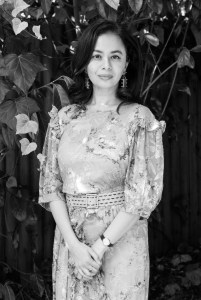
Neelambaree Prasad grew up in Mumbai the daughter of a mathematician and a nuclear scientist and later became both a pharmacologist and a practitioner of traditional Indian dance. For sixteen years she built a corporate career in biotech and pharma, until the pandemic—and motherhood—cracked something open. What began as a restless question about purpose turned into ClimArts, a global collective weaving climate science with performance and storytelling, from stand-up comedy in Jakarta to ballet about coral reefs in Madagascar. In this conversation, Neelambaree talks about how art can illuminate evidence, how purpose can evolve, and how imagination might just be climate’s most renewable resource.
Notes and resources
- Neelambaree Prasad’s LinkedIn
- ClimArts
- Climate Swings interview with Kamal Kapadia
- Climate Swings Substack
Full transcript
Michael Ethan Gold (00:00)
Neelambaree Prasad, welcome to Climate Swings. It’s wonderful to have you here.
Neelambaree Prasad (00:05)
Thank you, Michael. Thank you for inviting me. And I’m very much looking forward to our conversation.
Michael Ethan Gold (00:11)
So the way I usually like to start with all my guests is to ask you to provide a brief self-introduction, a brief professional history, and some key points that you would like the audience to know about you.
Neelambaree Prasad (00:23)
Sure. ⁓ So I was born and raised in Bombay, which is now Mumbai in India. And even though I was ⁓ brought up in the hustle bustle of that city, I in fact grew up on a campus, which was very quiet and very green. And I’m the only child of ⁓ two very academically accomplished parents, a mathematician and a nuclear scientist. ⁓ And so…
in my base plan, as you can imagine, would have been go into a very academic program, do a PhD, get into the lab, that kind of thing. But as it happens with many children, they don’t want to do what their parents are doing. And the same was the case with me. So I knew I didn’t want to go into engineering. My father is an engineer by training. I was surrounded by many growing up because it was the most common
profession that my friends and peers chose. And so I knew I didn’t want to do that. I did not also want to be ⁓ getting into mathematics. But what really, I think, grounded my thinking is the atmosphere at home, which was ⁓ very much encouraging of arguments and questions and asking the why. And I think ⁓
that kind of very naturally drew me to the empiricism of science, but I also very much ⁓ liked the precision and the precision, at the same time, the complexity of biological sciences. So I got drawn to biology very early in my education, and that’s what I chose to pursue.
And then for my undergrad, I did ⁓ pharmacy, which seemed like a logical landing for a mind drawn to systems and understanding of the body, but also not wanting to work very hard and go crazy like the way physicians have to. ⁓ So I had admission in biomedical engineering, microbiology, but I chose pharmacy. And then as it happens with many people, you really… ⁓
start to relish the subject that is offered by the most endearing and the best teacher. So I was drawn to pharmacology and I decided to pursue that for grad school in the UK back in 2004 when I came to this country. London is where I now live with my family. And so I did my grad school here,
after which I joined the pharma and life sciences sector. So my early days were in research and in oncology and diabetes type preclinical research, but quite quickly in that organization, is, it was called Nectar ⁓ Bio Pharma, which was a biopharma based company in… ⁓
the Bay Area actually, and they were opening a new space in India. So I went back from the UK and joined them, Nectar Therapeutics, and very early on sort of moved from research to program management, portfolio management, which is what I have spent ⁓ most of my 16-year career in. So that’s sort of the… ⁓
know, high level sort of professional trajectory if you like.
Michael Ethan Gold (04:13)
Yeah, so, that
doesn’t quite take us to the present day because that covers most of your upbringing, your education, your formal education, and then your quote unquote professional career, essentially up till pre-COVID times. And we’ll get into obviously what you’ve been doing since COVID and what you’re doing right now. But I’d like to go back to your upbringing, your childhood, because you, in addition to having that kind of science lens and that science focus,
have an interesting arts focus that not a lot of my guests and maybe probably not a lot of my audience are familiar with or really know about. So if you could get into that a little bit, that would be great.
Neelambaree Prasad (04:53)
Sure. So as a child, as a three-year-old even, I was quite used to going to these very long Indian classical music concerts with my parents, because as a three-year-old, you don’t have a choice. You just go where they’re going. And they still are connoisseurs of Indian classical music. And in those days, these concerts used to start at six in the morning and go on for like 17, 18 hours.
And so eating, sleeping, everything was there. So music and sort of Indian ⁓ culture, which is so diverse, I was brought up on a very omnivorous diet of music and dance and Indian culture. And I think ⁓ that ⁓ sort of early exposure and immersion
alongside this ⁓ curious mind that was nurtured at home, ⁓ rhythm, grace, et cetera, sort of became not just as disciplines, but as a way of seeing and being and knowing the world, a different way of knowing the world. And at the time, it was very common for ⁓ children where I was growing up
to take up some form of music or dance. So I wasn’t really an exception in that sense. It was par for course. And ⁓ my mother was fascinated by this particular form of Indian classical dance that comes from the East of India called Odissi. Fortunately, there was a ⁓ really, really renowned and very good teacher in the campus that I grew up in. So she took me there.
And I started ⁓ dancing at first at the age of seven. And then I started to complain about how my feet were hurting and my parents were not the kind to push. I wish they had at the time, but they were not the kinds they kind of believed in bringing up an independent thinker sort of child. So I said, no, they said, that’s fine. At age 12, I actually requested my mother to take me back to that teacher.
And then I’ve never looked back. So I started training in and learning Odissi at the age of 12 and it has been part of my life. And now it’s the thing that grounds me and gives me ⁓ sanity. Yeah, that’s the dance part of it. And it’s always been sort of two parallel lives until the pandemic when something changed. But until then it was, you know, I was dancing, performing, teaching,
⁓ on the one hand and then had this very corporate-y career on the other hand.
Michael Ethan Gold (07:40)
Yeah. And essentially neither were explicitly focused on climate or even implicitly focused on climate. There was not really a climate thread to either one of those. But your dance really very much felt like a passion, essentially a hobby too. And then you had your professional career in the pharmacology and the biology space. And then during COVID, as you just alluded to, something really changed. So could you get into that time in your life and go through ⁓ what changed in you that
put you on your current path.
Neelambaree Prasad (08:13)
Sure. ⁓ So the pandemic, I think, was a period of intense disquiet for many people. ⁓ Quite visceral for me because I was also pregnant with my first child. At the time, I was responsible for a ⁓ very important portfolio of emergency medicines that was front and center COVID response in over 50 countries.
And so on the one hand, I was being part of the solution, which was great because I had no time to think about what’s wrong with the world, what’s going on, et cetera. But for many years before that as well, as I was straddling the corporate world, ⁓ I kept questioning to what end and what is the purpose of all of this because
the revenue chasing, et cetera, does become quite purposeless for many people. But for me, the other thing was, why were my two worlds not intersecting? Why was the dance world so different? And at the core of it, medicine and health care is also about well-being. And so is ⁓ something like dance, especially Indian classical dance.
I couldn’t put my finger on why I was unsettled and with a lot of unease, but in hindsight, I was holding that ⁓ uneasiness for a very long time. And so ⁓ during the pandemic, which was, ⁓ like I said, this deep long-held unease sort of bubbled up finally to the surface.
And I started asking what kind of a world have I brought my child into and there must be something more to the pandemic than meets the eye. And that took me back to some desk research just out of curiosity and ⁓ walking up the inference ladder, it was quite clear that it has to do something with what we have done to our planetary health and that… ⁓
that there has to be something I can do, ⁓ in what way can I contribute? So I went in with that question and that curiosity, learned more about climate science and came across Terra at the time, Terra.do, which was a great eye-opener and also a great entry point into a community of people, all of whom were in a similar position of how do I use my skill set? How do I pivot? What do I do?
And the pandemic kind of precipitated ⁓ a lot of these questions in people’s minds and want, you know, move everyone from, okay, what can I do to what should I do and let me start doing it. So I think ⁓ that was, so the birth of my child in that liminal space really was the precipitating factor for me, I would say. And then I started to figure out ⁓ ways in which I could bring these two worlds together. And I think,
climate communication just happened to be a sweet spot. So what I’m doing today seems less like a job and more like a culmination.
Michael Ethan Gold (11:41)
Right, yeah, I I mean, like many of us before we took the swing into a climate career, you didn’t have any real professional exposure to the climate space, but you were like the rest of us, reading about it, thinking about it, worrying about it, and wondering essentially what you could do. And COVID, like it was for many people, proved to be that kind of break for you, both personally and professionally, that inspired your swing into ClimArts.
Neelambaree Prasad (12:09)
Yes, yes, absolutely, absolutely. I think working in climate has a very different texture almost ⁓ to it because the problem is wicked as it is rightly defined. It’s not, I I mean, to be fair in many sectors and walks of life, obviously we come across problems that are complex, but then
you start by, OK, defining the problem and then approaching the solution. The solution may be multifold. It may involve a cross-cultural team, which is what I was used to, et cetera. But there isn’t really a roadmap. ⁓ I I mean, there is always a roadmap that you can draw that can seem quite banal at the end of it by the time you arrive at that. Whereas working in climate often requires sort of systemic, imaginative leaps ⁓
much beyond the set frameworks. And that really got me quite excited because there was no sort of one approach, but there was also, it was clear that it can’t be solved by one set of experts or one field. So here was the place where you could actually bring ⁓ very different types of approaches ⁓ together
and see the complementarity in it, which is what I saw in the art and science for ClimArts.
Michael Ethan Gold (13:43)
Yeah, I I mean, I for a lot of us,
before we become climate practitioners, we’re familiar with climate scientists and maybe activists, right? People who are protesting, and obviously there’s a political and a diplomatic dimension to all of that. But you really decided to take a more creative approach. And as you said, you wanted to marry the science element and the artistic element, both of which were sort of in your professional or your personal lexicon up through the COVID period.
So can you explain exactly what the spark for ClimArts was specifically though and how you decided to found an organization dedicated to that?
Neelambaree Prasad (14:16)
I think there wasn’t like a single flash, ⁓ but rather ripples. It wasn’t even waves, it was like ripples. ⁓ Like I said, during the pandemic, I was ⁓ in a place of constructive dissatisfaction with my corporate career of 16 years. I also had the ⁓ newness and excitement, anxiety of motherhood. So it was like, you know, like a… ⁓
triangulation and then ⁓ I wanted to pursue my dance, but I wasn’t quite satisfied with just, especially living in the West and practicing a very ancient Indian form of dance. It’s not very satisfying if the audience just looks at it and says, this is all very beautiful and spectacular, but what are the layers beneath it? And how do you help them feel through that ⁓ by, how can we really stick to the framework of this form, to justice,
to its sanctity, but at the same time deal with topical issues. So there were those three things, you know, the motherhood really gave me the courage, I would say, and the motivation. The corporate life, you know, allowed me, ⁓ in a way, was pushing me out to say that it’s enough, you know, to something else kind of a thing. And then there was this pull to really want to do something with the arts.
And so ⁓ it was this triangulation. So it wasn’t really a spark, but I went into the program ⁓ that Terra offered, the Learning for Action program, with an idea and with a question. So a line of inquiry that said, how can I combine performance arts at the time? It wasn’t really arts in general. How can I combine that with helping make research solutions and insights more accessible? Can I
create stories. I didn’t know the how, the what, I needed to learn a lot, but I went in with that question and I think that was the turning point or that was the spark, if you like.
Michael Ethan Gold (16:22)
And then how did the ClimArts organization actually come together? I I mean, have to, you you tear, you turn an idea into a group of people all working together. What were the steps that you took to do that?
Neelambaree Prasad (16:34)
Sure, so ⁓ during the four months that I was with Terra, I really took this up as an assignment actually. So how do I, what do I do? What do I, this is my vision. How do I really bring it to life? The who, the what, the why kind of a thing. And ⁓ I convinced my friend of 20 years, a fellow dancer and an economist by training to come along ⁓ on this journey because she was going through sort of her own, you know
⁓ questions about her dance and generally about the world. And we decided that let us experiment. And so it all started with an experiment that then turned into a proof of concept where we were putting together a piece on rivers and personifying it, its journey and how it kind of encounters ⁓ all the challenges that humanity has thrown at them, that it’s dams or plastics, things like that.
While we were doing that, this was in early 2022. And while we were doing this, because I spent much of 21 ⁓ really immersing myself in self-learning and satisfying my curiosity, talking to a lot of people. So in 22, when we started to choreograph this piece, ⁓ the Indus River floods in Pakistan took place. Well, not took place, it’s not that floods don’t take place, but
you know, they happened quite ⁓ unfortunately. But that meant that we had to respond to that because we were creating this piece on rivers. And Indus, as you know, ⁓ you know, is a shared resource between Pakistan and India. So ⁓ we approached a floods researcher at King’s College London, whose area of research was ⁓ floods and droughts, a professor of critical geography. And we said how
how can we work together? So we really started to dawn the hats of artists to see what are the nuts and bolts of working with a climate expert? What does that relationship look like? What does the end product look like? What is it going to be? ⁓ How is it going to be received by the audience? Really, how is it going to land? And with that in mind, we said, let’s make this a launch event of ⁓ our vision. So we thought of the name. That’s how ClimArts came into being.
And let’s see how it’s going to be received. This is a proof of concept, and then we decide everything after. It was ⁓ quite a successful proof of concept. People loved the idea of juxtaposing technical information with performance arts. And from there, we spent about eight months figuring out the how and with whom and what kind of skill sets we need. ⁓ And we arrived at the answer, which is that it’s not about putting, you know,
pieces of dance or theater out there, but rather really enabling the storytellers whom we saw in two different categories. So the experts, whether it’s academicians or people with community solutions, are all experts in their own right and therefore also storytellers. Their method of storytelling, the way they tell stories is quite different from the creatives. And creatives are obviously storytellers.
The two have very complimentary things to bring to the table. One, the evidence and the data and the solutions and the meat, if you like. And the other, a very potent tool to communicate. So how do we bring them together for ⁓ making a story which could be ⁓ using any medium of art, but steeped in evidence so it’s resonant, it’s accessible, and it’s evidence-based?
And so these one-on-one collaborations is what we thought is going to be our differentiator. And not simply an artist being inspired by something and working off of some papers and that kind of thing, but rather both parties jointly owning a story and then using it to become better and more effective communicators. So it became about enabling existing storytellers
not about us reaching the general public, but empowering them to do so in a more impactful manner.
Michael Ethan Gold (20:54)
Yeah, and can you describe what ClimArts essentially looks like now? You’ve had a couple years of cultivating this and also you professionally, I you obviously are the head of ClimArts, you still have some professional connection to your kind of old life in pharmacology and biology, so if you could also just sort of weave in some of your own personal, what you’re doing now professionally as well.
Neelambaree Prasad (21:18)
Sure. So ⁓ what ClimArts looks like ⁓ now is, like I said, we are an organization on a mission to enable storytellers. And the way we do that is one through education. So we have learning programs for artists and creatives that serve as entry points for them to start to think about using their form of art for climate storytelling, but also taking away from that hesitation
to work with a climate expert. How do you meaningfully collaborate with a climate expert? So we have those learning programs for artists as a result of which we’ve had some very successful ⁓ stories being created that have traveled quite a bit. And I can obviously talk about some of those. And on the other hand, the experts, ⁓ the experts we really…
you know, it’s more sort of case by case where they come to us and they say that we are interested in converting this solution or this research insight ⁓ into ⁓ a piece of creative storytelling that we can then use and or generally experimenting to work with an artist. So those are ways we also take up projects. So we work on a project basis as well with other organizations who may have a project where they need
⁓ you know, artistic storytelling or like project management, things like that. And we do that. We’re doing one with the Energy Change Institute at Oxford right now for local communities that are making a low carbon ⁓ transition. So that’s a case in point for a project based sort of approach. That’s what, you know, ClimArts is all about. We are a team of, it’s like an ensemble of volunteers, ⁓ all bringing different types of skill sets
needed to make all of this happen, you know, program design, project management, obviously some fundraising. So, yeah, so that’s what it is. We are a virtual team. We are across three different continents, four different continents, I think. And we do have some modest funding that can cover our costs, but we mostly…
offer our time, ⁓ either it comes through projects, so it’s project-based funding, or it’s volunteer-based work. And I personally ⁓ also, or professionally rather, continue to ⁓ be available as a freelance sort of consultant, ⁓ because right now I’m applying a lot of the skills that I picked up in the corporate world also to ClimArts.
So for example, I’ve done some sort of sustainability training for a dance company and I’ve run facilitation sort of workshops where you need to unlock storytelling potential. So very interesting things that are going on. And yeah, I think the…
I would like to say that one thing that is so common ⁓ between any kind of work ⁓ that you do is it always involves people. And I think my dance really taught me how to be very sensitive and pick up body language cues, which helped me when I was in the corporate world, when I walked into a meeting or a board presentation.
So you pick that up, they are your audience and that’s how it is when you’re on stage as well. But I think, I I mean, this is not part of your question, but I think one of the things about working in the sort of climate world, because it’s so complex, it’s less about controlling variables, which is what… ⁓
project management, for example, looked like, ⁓ for the most part, in my decade of doing project management. In climate, it’s more about understanding the feedback loops at large, less about controlling variables, if you know what I I mean.
Michael Ethan Gold (25:45)
Yeah, can you get into that a little bit in a little bit more detail? What do you I mean exactly by the feedback loops versus controlling variables? That’s an interesting contrast.
Neelambaree Prasad (25:55)
Yeah, I think so the timelines in climate, if you look at it, right, for you may have you may be doing something and you can break it down into this is what the project is, this is what the task is. However, the timelines overall are are vast. The problem is at an enormous scale and it is overarching. It’s not something you can pluck separately and run with it. ⁓
The timelines are also invisible in daily life. ⁓ But yet the implications are immediate. And all of us are and existential. So that’s sort of the big difference. So controlling little variables to say, hey, if I move this, what will happen? If I move that, what will happen? Let me play around. ⁓ It’s not like a product launch, which obviously I have done. It’s not like
⁓ integrating a portfolio, the boundaries you have to really bring it and which is where I think the feedback loops. What I I mean by that is, of course, a climate science way, the feedback loops I mean ⁓ we all know what it means, ⁓ it’s really about constantly. So for example, right now, the macro environment in one country, in one giant country where you are right now,
are impacting everything. And so that feedback loop ⁓ has so many different impacts that you cannot not sort of, you know, think about, ⁓ think about it. You cannot not think about the floods in Texas and say that I am immune or so. So that’s what I I mean. It’s not about really you have to think quite differently and systemically
⁓ regardless of what your role in climate is. ⁓ And so I think it works really well when somebody has the ability to not lose the forest for the trees. You have to be able to toggle between the two constantly.
Michael Ethan Gold (28:07)
Yeah, I mean, like, you know, for different, for people working in climate tech and certain elements of certain aspects of the climate world, like clean energy and ⁓ sort of the more
kind of hard technology or more hard business side of things, there obviously is very much like a controlling, trying to control variables to the best of your ability, trying to project manage through your latest product cycle and whatnot. But obviously what you’re doing is very different, right? You have, as you described, you’ve tried, you’re trying to change narratives, which is not something that you can necessarily control every variable for. And as you discussed, it really does sort of feed into these feedback loops that
sort of amplify and feed among themselves. ⁓ And you don’t know where ⁓ the fruits of your work are necessarily going to trickle out to because the ripple effect can be so unpredictable. So with that in mind, can you talk about some of these specific ClimArts projects ⁓ and some of the specific sort of narratives that you’ve tried to promote through ClimArts? You’ve discussed a standup comedian in Indonesia before that
was quite interesting.
Neelambaree Prasad (29:14)
Sure, I can start with that. So this stand-up comedian really came to one of our learning programs with the idea that she wanted to create climate work. She was already quite established working with UN organizations, usually picking up themes of women’s rights, et cetera. And she’s based in Indonesia. She comes from a very traditional Islamic family. So doing stand-up comedy itself is quite bold, as you can imagine.
And she felt quite restricted to approach climate scripts because, especially with comedy, unless you have a good handle on the subject, you can’t make fun of it. ⁓ So she came to our program really to learn as to the basics of the climate science, what works, what doesn’t, what are the common ⁓ climate narratives, what is good climate communication, which is all ⁓ covered in these programs. And after that, ⁓
she entered what we call our studio space, which is where the artist remains with us for about 12 months to start to create a story on a specific topic and dive deeper into it, learn more about it. We make introductions to experts. We open some doors. We give them space for experimentation. And she wanted to create work on air pollution because it’s so real in Jakarta, close to where she lives in Indonesia.
So what she has done 12 months forward now is she’s literally, I think in a month’s time, her docu-film based on standup comedy dealing with air pollution in Jakarta, but also shining a light on some local solutions, including the bamboo house she lives in ⁓ is going to be ⁓ the main sort of thread in the docu-film.
And ⁓ in doing so in her journey, she’s also had the opportunity to experiment and interact with students at University of Boulder, Colorado, thanks to Professor Max Boykoff, who offered this opportunity through ClimArts to her, where she’s been sort of, ⁓ you know, not teaching, but really bouncing off ideas with the students in a two way process where her script is quite, you know, getting richer.
And the students have an opportunity to learn from her experience and her journey. And that is our way of making impact. So that’s one example. The other example, which is hot off the press, is a story based on coral loss and coral bleaching, where a ballet dancer, she’s part of the English Youth Ballet in the UK, a young dancer, again, someone who was established, she’s done…
the usual Swan Lake and Cinderella and came really with the idea to our learning program to want to use ballet for conveying well-being. She was coming out a long COVID so she had sort of a personal push really to do this and she was drawn to the topic of coral loss. She started to make this parallel between her own journey as a dancer and how rest and recovery are so integral to a ballet dancer’s life as it is to ⁓
to the life of corals for them to adapt and thrive. So that’s the first thread of the story that she’s coming up with. And we’ve really enjoyed the journey with her, you know, talking to experts together, storyboarding this. So we really storyboarded together with the artists. And she’s shining a light and working in collaboration with a lab at T.H. Chan Harvard School of Public Health, where this lab is working on the coast of Madagascar
to research a few solutions on ⁓ coral bleaching. So it also kind of, you know, spotlights some of their work ⁓ and personifies the coral through ballet. And this film was recently screened at the UNOC3 in Nice. And we are going to be constantly looking for opportunities to share the process behind it. How does the collaboration work? Screen the film
through the next 12 months.
Michael Ethan Gold (33:34)
Yeah, the main output that you tend to gravitate toward at ClimArts is docu-films of these collaborations, is that right?
Neelambaree Prasad (33:42)
Yes, so far the outcome has looked ⁓ like, you know, ⁓ basically docu-films. ⁓ We are also starting to build something around ⁓ for writers so that, you know, there’s another sort of place to land. But yes, so far you’re right. It’s been that. ⁓ And another interesting one is through puppetry, which was in Indonesia. That film has done incredibly well, ⁓ much to our, you know, ⁓
surprise, but it has done really, really well in film festivals. ⁓ I think it’s being used a little bit to educate as well, because it is about indigenous people and how do you work with them and create a profitable enterprise.
Michael Ethan Gold (34:34)
Where can the audience find these films if they’re interested in seeing them?
Neelambaree Prasad (34:39)
Yeah, so because they travel to film festivals, we cannot really, until that journey is complete, we cannot really put it out on YouTube for public sort of consumptions. The trailers are all on the website, but there are many film festivals that these films have been picked up at. ⁓ One of these, the puppetry based film that I was talking about in Indonesia, that was also shown as part of the Climate Storytellers Summit organized by Yale and UPenn recently.
⁓ So I guess these sort of forums is where usually we try and, you know, you can catch it. But ⁓ some of them will actually be available for public viewing soon because they would have done their whole film festival journey.
Michael Ethan Gold (35:28)
And you’ve connected with puppeteers and stand-up comedians and ⁓ scientists and Harvard and Oxford and all these incredible, bringing together all these incredible people. How do you build this community? How do you bring these people together? What is the formal criteria that you apply to both, I guess, the scientific question and the artistic expression, the project that you’re supporting?
Neelambaree Prasad (35:55)
So for the collaboration itself, we approach it like a matchmaking project. And we have a framework after the match is made, if you like. So there are two parts to it. If the trigger is the artist, like in the case of the ballet dancer, it was. She was quite keen to work on this topic of coral bleaching. Then we go shopping for the expert. ⁓
If the expert is the trigger, then we go shopping for the artist and we are connected to many. ⁓ And so we have like a repository of, you know, in the olden days, we used to have these, well, not olden days, I sound really ancient, but the yellow pages, right? So we have, you know, something like that. We have a network basically. And so we really try to understand, especially if the trigger is the expert.
We have a set of questions and a conversation pattern that we go through where we try to understand the motivation. Is it like a passion project on the side I want to try? Is it to really present at a particular forum so therefore there is a deadline? What is it that you want to convey and to whom? And then we go off and find the right medium because not all forms of art are going to lend themselves to
you know, all topics. So you have to really figure that out. ⁓ from there, we then find the messenger, which is the artist. So it’s sort of the message, the medium, and then the messenger. And then off they go for about ⁓ at least four months to work together. And we have a framework ⁓ within which, you know, first it’s to build trust
to have these open conversations, to respect each other’s perspective, try and be patient and explain things. And then it’s really the artists being in the driver’s seat to create the story. But at the same time, their first audience is the expert to really say, is this doing justice? Are you able to convey the nuance?
Is it boundless imagination? No, it should be bounded because now you’re talking about something specific, you know. So those types of, so we have a framework and we have a matchmaking process if you like.
Michael Ethan Gold (38:22)
Do you ever encounter situations where the kind of the twain did not really meet, you know, like where the science and the artists, because they come from such different world, like how do you kind of translate between them? Because it seems like there could be opportunities for misunderstandings or just kind of a lack of like lots of friction basically. Yeah, how do you deal with that?
Neelambaree Prasad (38:39)
Many, many.
I think the first thing there, again, it comes back to a lot of experience on the team, including but not limited to mine, of it is again coming back to team management and really figuring out temperaments and motivations and doing some exercises where they come to the conclusion that they are after the same common goal. So it’s much like
building a high performing team or partnership or collaboration, which we have ⁓ plenty of experience on the team doing. So it’s not really very different from what I would have done in the corporate world, where again, everybody has the idiosyncratic scientist to the finance guy. So it’s not really much different from that, surprisingly or unsurprisingly.
Michael Ethan Gold (39:35)
Yeah,
right, it’s just getting people together and helping find common ground. ⁓ And so talk a little bit about what your hopes are for ClimArts. What do you see maybe if we were to have this conversation again in three or five years, what would ClimArts look like?
Neelambaree Prasad (39:52)
Hmm. I think so for the scientists specifically, ⁓ there is that desire now to lean into creative ways, whereas when we started, it was less so. So I think this desire and seeing the potential and value in leaning into creative ways and
really understanding that because I was also trained as a scientist and I go back to that to say that scientists are not trained to talk to other people. They are trained to talk to their peers in the jargonized very technical language and that is a disservice to both the science ⁓ and the scientist because you do want it to travel far and wide. ⁓
So, and it also has to come with certain level of responsibility, right? Not to be too eager to run with a message. So I think three years, five years from now, ⁓ if we are able to build a real ⁓ pile of different kinds of stories through different kinds of art forms that do justice to the message,
does not lose nuance, but really shines a light on the solution where someone watching it learns something and finds hope or a way to act and does not go with anxiety or doom and gloom. If we can create this, including your writing about these case studies and creating more of these stories ⁓ and it becoming self-perpetuating, meaning that
one ⁓ expert saying, we had a really good time. I think this is great, very, very valuable. Why don’t you try it? So it’s more like a ripple effect that they become the messenger for their own peers, which we have tried to do a little bit. And that’s what ⁓ I would say would be a success story. And for people to look at art as a very potent way and a tool to communicate climate narratives and not something warm and fuzzy and to say,
this is a great piece of art and great installation, now what do I do from there? know, the so what is what we are trying to bubble up.
Michael Ethan Gold (42:29)
And do you see opportunities to kind of scale this thinking and this sort of model? Or is it sort of by nature almost more of an intimate, very person to person kind of, ⁓ kind of approach?
Neelambaree Prasad (42:41)
I think for now, it’s a challenge. That is one of the challenges we’ve taken up as to how do we think about scaling. ⁓ But there are ways in which we think we can scale, especially if we kind of build platforms to
⁓ create that learning experience that is for climate communicators, not for an artist, not for an expert, but really there are certain things that both need. ⁓ So there are ways in which it can be scaled, but also there are so many organizations coming at it from different angles, Our approach is this, and there are so many others who are also working to ⁓ add to the richness of this climate narratives, ⁓ know, tapestry and…
and really communicate with connection. So I think it’s not just us, right? It’s the whole sort of, and we hope to join forces with many others. And that’s another way to scale, because you cannot do it alone. So big believer in joining forces and collaborating and partnering.
Michael Ethan Gold (43:49)
Yeah, I mean, ecosystem development is something I hear again and again and again in partnerships and collaboration. I mean, that’s sort of like every, like a lot of climate practitioners, stock and trade for sure, for sure. And so, Neelambaree, just thinking about, you your journey, I mean, I can imagine that if like, you know, someone you knew maybe like seven or 10 years ago were to look at you, now they would think, wow, you’ve really taken a very sharp turn and a really interesting direction. And I mean, I guess the question is, how do you talk about
Neelambaree Prasad (43:59)
Thank
Michael Ethan Gold (44:19)
the journey that you’ve made and also provide a kind of a guidepost or pathways maybe to others who are interested because a lot of people who look at climate work, think, you know, what are the skills that I have that can contribute to this? And maybe they’ve taken, you know, the Terra course, but for you, it really was just kind of like, you know, COVID was a break and you kind of reinvented yourself in a very sort of dramatic way, it seems.
Neelambaree Prasad (44:42)
I I mean, you’re very kind. I feel like I’m still trying to find my space. And there are so many things that I can do. I would say, and I’ve thought a lot about it, be honest. And I would say maybe four or five things. I think firstly, ⁓ it is about listening quite deeply, not just to the scientific data, but also to the murmurs of the ancient
wisdom to what the frontline communities are saying. ⁓ It’s about listening. Then secondly, it’s about recalibrating your own relationship with the world that surrounds you. It’s very, very important. It sounds all grand and, you know, but truly, I I mean, if you are not examining
listening, examining, then recalibrating your own relationship, it’s quite hard to kind of ⁓ move forward, if you like. So I think ⁓ that’s what I did. And you’re talking about my journey. I did listen quite a bit. I have lost count of the number of conversations I had. And I want to actually take a little… ⁓
if you allow me a small sidebar here, which is that I’ve been very fortunate in having a motley crew of mentors throughout my career and who not just come from my professional life, but also I come from a very large extended family. I’m the only child, but I come from a very large extended family. So my aunts and uncles and I used to just watch and observe and learn. I think again,
for people who want to think about, first of all, perish the idea that this is going to be a linear path and this is my skill and how do I match it? No, it will be what you make it to be, which excites certain people who are comfortable with ambiguity and adventure. And it doesn’t excite certain other people. But they can also find something quite straight-jacketed ⁓ within climate. ⁓ But for me, think going back to that
really having these multiple conversations ⁓ with people served as a substitute for having, you know, set mentors. It was more about ⁓ exchanging insights and learning from, you know, like picking up different things. So that listening is very important, then sort of, you know, recalibrating ⁓ your own ⁓ relationship.
⁓ And then really confronting and knowing that you have to confront the inertia of systems, regardless of what kind of climate work you do, and also confronting the comfortable banality of inaction. And then finally, finding the signal amidst all the noise, because there is plenty of noise in ⁓ this sort of climate space. So whether it’s crafting new narratives,
⁓ you know, igniting empathy and imagination, which is what we are trying to do or, ⁓ you know, anything else. I think it’s that it’s for me, it was like a four step process if I were to think about it, right? Deep active listening to many different sources and then recalibrating ⁓ and then confronting, like I said, ⁓ and finally finding the signal amidst all the noise.
Michael Ethan Gold (48:30)
And you’ve obviously started following and maybe been following for a long time people who work at the climate and art nexus or the science and art nexus. And you’ve tried to incorporate some of their lessons and update it for ClimArts. ⁓ Can you talk about some of those people, maybe they’re mentors that you actually know personally, or maybe their other thought leaders in the space that you followed and you admire?
Neelambaree Prasad (48:55)
Absolutely, I think I want to call out a few. I definitely want to call out ⁓ Kamal from Terra, who is just an incredible, incredible giver, ⁓ teacher and thinker. She doesn’t know what she has given to many people, but… ⁓
but really she has. That’s one person. Also another person who was quite inspiring in ⁓ my early months of sort of climate introduction ⁓ was Alison Smart from Probable Futures. So they really work to democratize climate literacy and they have this incredible way of ⁓ exploring the world and climate around us
or the microclimates even through ⁓ maps and interactive maps. they, Alison personally, I I mean, she herself is an artist and ⁓ she’s done some great work with climate comedy as well. So she’s another person who’s been an inspiration, ⁓ I would say. And then there are some that don’t, they’re not explicitly working in climate.
But they have been sort of living it for so long through their art form. There is a very renowned and celebrated Indian classical dancer called Allarmail Valli in India who practices Bharatanatyam, which is a form of Indian classical dance. And really her work, she’s a scholar, she just reads…
a voracious reader of poetry and through that, you know, really distills a lot of our relationship with nature and how we are one with nature. And she’s equally, you know, well versed and capable to convey what, you know, a poem by Keats might do. So
She’s incredible. So there are all these, there is no dearth of inspiration. Wherever you look, there’s so much to learn. You in fact feel like you haven’t done anything. So, yeah.
Michael Ethan Gold (51:26)
I I mean, I well I can definitely attest to ⁓ the fact that Kamal from Terra’s is an impressive figure and I have a I conducted a great interview with her for for my podcast a couple of months ago I can I’ll put a link in the show notes. She has a she has a fascinating and really inspiring story. So ⁓ yeah, she’s she’s definitely someone to look up to in this in this kind of world. ⁓ So just sort of thinking about ⁓ given that we’re currently in a very kind of tricky political moment and a tricky social moment for for things relating to
climate and sustainability and you just hear a lot of, you do hear a lot of doom and gloom and maybe more now than you kind of ever have in a lot of parts of this space. But at the same time, you you have a lot of people who are still very passionate about it and just kind of plowing ahead. How do you maintain that sense of mission and purpose and also doing it for your team too, given all the headwinds that this kind of work is facing?
Neelambaree Prasad (52:20)
Yeah, I it is challenging, especially when you think of the practicalities of funding. ⁓ I think that that is quite real. The challenge is very real. But I think that people are, some of us are even more so motivated because climate is the story of our times and it is all of what is happening in the world has actually validated that thinking
as well. It’s even more important to think of ⁓ not just climate change, but how it fits into the the polycrisis and the inequities. ⁓ So I think it sometimes has the opposite effect as well, right, to your motivation, to your energy. You may face obstacles, but you may go at it with even more determination. So I don’t think I’ve had to do much work with the team
to be honest, it’s the sense of purpose that keeps everybody grounded. It’s not easy to run an all volunteer team because everybody has to pay their bills. But at times I’ve had to tell someone on my team, for example, to say, you said you’re only going to offer 10 hours, please go to sleep. So it’s really that sense of purpose, I think. ⁓
And that is also special about people who come into climate. You mentioned Kamal, for example. People just look different. If you’re not satisfied with surface level solutions, then definitely get into climate work. ⁓ If you think of a problem in 10,000 different ways and frame it in 10,000 different ways, then please come,
find your sweet spot within climate. So I think I haven’t had to do much work because there is a certain kind of DNA in the people who entered climate work quite, you know, it’s still early days, isn’t it, for it to be at scale. So… ⁓
yeah, I think it’s that sense of purpose, I would say. But the challenges are absolutely real. There is no denying it, especially when it comes to funding. I’ve had these conversations with even sort of large organizations. We are quite small. But even with large organizations saying, this year, it’s OK. But next year, we really have to think about, or for next year, we have to start thinking this year as to how we pivot, how we adapt, how we do things. We’re not going to close shop. But how do we really ⁓
respond to this and pivot if needed. So I think everybody is asking that question because it’s the reality. Funding is a big, big challenge.
Michael Ethan Gold (55:18)
Yeah, and sometimes being tested and having your feet to the fire really does, makes you stronger in some ways, right? And sometimes the harder you’re punched, the harder you wanna punch back, right? So the more purpose you show as you were kind of alluding to. ⁓ So we’ve talked on now for almost an hour and I wanna be cognizant of time, but just a couple more questions about you and your reflections and your journey. If you could go back to an earlier version of yourself,
maybe you’re just starting out on your career in medicine, career in pharmacology, and you could just tell a handful of things, three or four things to that version of Neelambaree about your journey and maybe how to avoid certain pitfalls or things to watch out for, what would you say?
Neelambaree Prasad (56:02)
I think patience, which as a young person, everybody lacks, but also I think some people ⁓ are less patient than others. And I’m obviously more patient now than I was when I started out, especially when you become a mother, you just have to have it in, ⁓ you know, huge supplies. But patience, I think patience is one thing that, and patience also to…
to let things ferment. I think one of the things that ⁓ my early childhood ⁓ taught me, but I didn’t realize quite ⁓ then or when I was in my early 20s, but I do now because I miss that space. Because I grew up in a place that was really very, very green and it was a time of no internet, no phones, you know, when we were younger.
There was this beauty inside of idleness, right? Just looking out of the window and let thoughts go by. And what I now like to call the process of fermentation. And to see the beauty in that and to have that patience for that process to do its thing and see things on the other side. As a young person, you don’t have that. So that I would definitely say patience.
And then coupled with that and quite linked to it is then listening. ⁓ And yeah, I I mean, just listening more deeply.
Michael Ethan Gold (57:40)
Yeah, having that space to let your thoughts kind of germinate a little bit rather than always feeling like you need to go go go do do do essentially.
Neelambaree Prasad (57:49)
Yes, also sort of really listening to ⁓ things being said and also things not being said.
Michael Ethan Gold (58:01)
Yep, and casting your mind in the in the other direction, know toward the end of your career, which is of course knock wood a very long way away, but what would you want your epitaph to be? What would you want people to have said about you and the contribution that you made to climate and just generally the things that you care about?
Neelambaree Prasad (58:22)
I think she made the science sing and the data dance. ⁓
Michael Ethan Gold (58:32)
Wonderful. Wow. That’s that how what a fitting way to end a podcast episode about the combination of climate and arts, right? Data data data dance and science sing that’s, how poetic. I love that. Yeah. Well, anyway, Neelambaree Prasad, thank you so much for appearing on Climate Swings. This was wonderful.
Neelambaree Prasad (58:47)
Thank you.
It was indeed. And thank you for having me, Michael.