

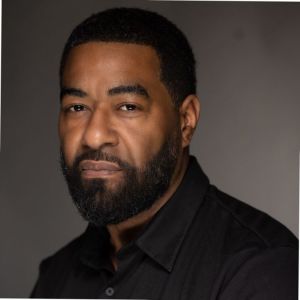
About this episode
Climate change and racial inequality are problems that demand system change on a massive scale. Kory Murphy is working at the intersection of both. As program officer at The Lemelson Foundation, he empowers Black entrepreneurs in climate who are righting historical wrongs and creating a more liveable planet for all. His story starts in college, where his time on the football team helped him think strategically and holistically about how to maneuver and make change. Having swung through various roles managing critical infrastructure and child welfare services in Portland, Oregon, before landing at Lemelson, Kory has a sharp vision for how to move the needle on big, intractable problems in climate and racial justice.
Notes and resources
Full transcript
Michael Gold (00:01)
Kory Murphy, welcome to Climate Swings. It’s great to have you here.
Kory Murphy (00:06)
Thanks, Michael. I mean, it’s great to be here.
Michael Gold (00:09)
So the way I usually like to start with my guests is to ask you to provide a quick self-introduction, a high level of your bio and your background, and just a sketch of what you’re up to now.
Kory Murphy (00:26)
Well, thank you again. Such a pleasure to be with you.
I think I’ll start with the fact that I’ve always had an interest in taking things apart and building things. And it sort of led me from Portland, Oregon, to going to the University of Oregon on a football scholarship, getting a bachelor’s degree in sociology there,
not quite the direction I wanted to take, but because of the want and need to play college football. And at that time, there wasn’t too many college football athletes majoring in architecture and engineering. However, I worked at various social service organizations after college and it really landed
and just really started to have an attraction towards systems. And I think this is sort of one of the themes I want to bring out today is I just had this fascination about how things work, right? And so that led me to spending 15 years in public service, case management, social systems and policy analysts,
organizational development, management, HR. I I started doing everything in a large public service social system. So eventually I landed at County Assets in 2015, managed in that group managed critical infrastructure for all the programs in Multnomah County. So, you your libraries to your health department and your
your jails and such. And this particular small team of 500 people or so manage the critical infrastructure, the facilities and the technologies and the fleets and all the stuff that, the energy, all that stuff that you sort of, you’ll forget about that’s critical.
And so really I just had not just a great time there, but also learning about how systems work and how the types of resources that are necessary to manage and develop these types of systems. Also, you know, through that time, I really understood the impact of capitalism and racial disparities on our country and the impact of that on these systems
was very evident and the fruit of that was sort of these racial disparities in all of these systems, particularly in child welfare, human services, which I’ll get to a little bit later. But in 2021, I left the county time, my county role, and started, I helped start the Northwest Accelerator
because we realized it was a critical need for structure and in Black and underserved communities straight up. And the reality was that, you know, all of this sort of understanding these systems and talking with people and understanding the needs led to this creation of a nonprofit entrepreneur support program for Black and marginalized climate-tech founders. We realized
that there was a huge gap and we wanted to fill that gap. And so now I am an advisor for the Northwest Accelerator. And for the past 18 months, I’ve been started as a program officer at the Lemelson Foundation focusing on, check it out, developing regional inclusive innovation ecosystems. It’s just an amazing path and I could never have chosen it.
And it’s been a pleasure, but also very, very challenging and rewarding work. More to that, but I’ll just sort of stop there.
Michael Gold (04:54)
Wonderful, wonderful. That’s a great, ⁓ encapsulation of the path that you’ve taken. And I think there’s a lot that we could dig into kind of earlier on in your life that set you on this road, but I’d like to sort of start in the present actually, and ask you to sort of deconstruct a little bit some of those terms that you were using. So when you talk about a climate tech, ⁓ accelerator as sort of climate tech founders for Black and underserved marginalized communities,
What exactly do you contain under that schema? What is climate tech in your conception?
Kory Murphy (05:31)
Yeah, so it’s such a great question, first of all. And I would simply say that there is a urgent need to mitigate and adapt to the negative impacts of climate change, especially when people who who have already been subjugated to systemic
injustice due to race, gender, income, so on
who would feel the brunt of the negative impacts of climate change, for example, living in and close to wasteland, having access to low or less than quality water and air, and I won’t continue. So climate tech to me,
are the things that we need, all of the pieces of the puzzle, including infrastructure that require people or allow people to live healthy and safe in a sustainable way now and in the future. So there’s technology, hard and soft and infrastructure that we all must develop together. And there’s also the…
also has to be done in a certain way where your public will adopt the technologies. Because that, to me, is half of the problem around the climate tech industry. So I’ll pause there and maybe we can kind of pick that up.
Michael Gold (07:21)
Yeah,
Yeah, there’s a lot we can say about the local impacts and communities. Can you just, just drilling down on that, what is an example of something that you’ve worked on at Northwest Accelerator that can kind of just bring this to life?
Kory Murphy (07:39)
Yeah, so it’s. Perfect example here is that there’s two of them. I’ll give you two of them.
One is that
there are many folks who recognize that energy generation is important for everyone right now. And there is one company that we…
have helped to sustain, support
that is helping Black farmers understand the power of…
solar as well as energy storage and distribution.
And so, well, and again, it’s, everyone sort of thinks that sort of the technology that we use or might use is the cool stuff. That’s not the cool stuff. The cool stuff is the relationships and the decisions and the ownership that gets built and how we get to use those things to create the right types of communities and economies.
Michael Gold (09:16)
I see. So it’s really like bringing the technologies needed to address climate change into communities that otherwise would not be able to access them, would not even think about them. Is that kind of one way to put it?
Kory Murphy (09:31)
Maybe,
maybe, but what about it? What if it was the other way? What if it was recognizing how climate has impacted people in different communities and those individuals leading the identification of the technologies that are necessary that they need in order to, you know,
be healthy, be safe, build wealth, get food, get cleaner water, get cleaner air, so on and so on. So it’s not bringing technologies in, it’s developing them from within.
Michael Gold (10:11)
I see. They are, you mentioned say, energy storage, these kinds of terms are familiar across the climate tech landscape, of course. It’s a big category, right?
Kory Murphy (10:18)
Yeah.
Absolutely, right? So if I go talk to a farmer, If one of the companies, they go talk to farmers, they’re gonna talk about energy generation. They’re talk about storage, right? And so again, it’s identifying those solutions that meet the needs of the folks that you’re working with. So it really comes down to relationship. So everyone wants to talk about the tech.
Michael Gold (10:36)
Mm-hmm.
Right, right.
Kory Murphy (10:50)
right, but you don’t have the tech unless you have the people.
Michael Gold (10:53)
Right, right. Yeah, I mean, again, there’s more, there’s much more I feel like we could dig into about the specifics of that work itself. But I wanted to flip a little bit over to the other big term that you use to describe what you’re working on, which is the regional inclusive innovation ecosystems that you really, you hit on each of those words very emphatically. So can you discuss some of, some of the examples behind that and bring that to life a little bit for the audience?
Kory Murphy (11:06)
Hahaha.
Yeah, it’s fun.
Yeah, I think, you know, systems are are everywhere, right? And, you know, if there are many examples of I guess if you were to say innovation ecosystem that already exists, they may not be very functional or they might not serve your needs. You might not recognize, but.
What I would say is one of the best examples of an ecosystem that I ever heard. Shout out Fay Horwitt from Forward Cities, but she said that an ecosystem is like an airport
right? Where the airport’s full and sole purpose is to get the traveler from where they are to their destination. And even before you pull up to the airport, there’s signage, they’re communicating, they’re letting you know where you should go. And once you get there to the point that you, you know, get off the plane, your destination,
the idea, I mean, maybe it’s a tough analogy, you know, as of late, but the idea is that you get to where you’re supposed to go. But the amazing part is not everyone does the same thing.
People are in a relationship, an agreement to make sure that there are different parts of the system. And these things work in concert together to, again, get you from where you are to where you want to be. The system in any region, we believe, you know, is good for everyone, but it doesn’t work well for everyone. In other words, if I take our region in the Pacific Northwest,
I believe that we have all these ingredients to create a strong system so that an inventor, an entrepreneur or an innovator can have an idea and also commercialize that idea with less friction. Even especially when we’re trying to solve really important problems, right? Like mitigating and adapting to climate. And so
The way I look at the system is sort of these financial systems that are connected, right, within innovation systems like universities or national labs, accelerators and incubators. Right. I think about the policy pieces. Right. The governance and I think about the sort of workforce parts. I also think about one of the most incredibly excluded groups of
folks who are out of the innovation system and that are the community-based organizations. The community-based organizations are the ones who have relationships and trust with the communities, the ones who are closest to the problems of the negative impacts of climate change. So when you have trust, you know, some of the business professionals will call it, you can sort of understand your market or your customers.
in a very, very intimate way so you can design things and build things that your customer actually needs. So, no, continue.
Michael Gold (15:00)
So, I was going to ask, what
is an example of a specific outcome that you’ve achieved through this ecosystem building?
Kory Murphy (15:12)
Well, so let’s let’s let’s let’s level set here, right? This is this is the long game.
This is the long game. We’ve been playing this game for a long time. So we’re talking about outcomes. We’re talking about getting stakeholders from those individuals, the folks that we were just sort of talking, those groups of folks we were just talking about. Stakeholders, bringing them together.
Michael Gold (15:24)
Mm-hmm.
Kory Murphy (15:44)
Building legislation, for example, building innovation systems to support entrepreneurs, building the financial systems, right? That takes time and work, right? And so what I, what, what, one of the examples is actually setting up Northwest Accelerator. Cause that one in itself, you have to bring in the different groups and people together to wrap around an entrepreneur and support them
Michael Gold (16:04)
I see.
Kory Murphy (16:14)
so that they can be successful in their climate technology journey. And again, let me just be clear. I focus on building entrepreneurs and that system that is necessary. That journey has been quite, it’s not simply just about the
Michael Gold (16:24)
Mm-hmm.
Kory Murphy (16:43)
the companies, the exits and the follow on funding and the different measurements that we all want. And again, what I would say is,
the specific outcomes that I’m looking for. One are, when you bring those stakeholders together and folks understand, they agree on their roles that they want to play in that system, then that system can help generate a transition to a regenerative, just economy and grow the type of
of technologies and businesses and innovations in a given region. Right. I’m not looking just to, you know, take one type of tech and get it out into the world. That’s wonderful. Yes. But I want to see that. I’m a systems thinker, right? Like that’s sort of what, what I see as success. So it’s more long range.
Michael Gold (17:44)
Mm-hmm.
Gotcha. Yeah, and I think there’s still definitely more we can get into in this specific work, but I do want to sort of rewind the clock now a little bit and go back to some of those formative stages for you because this is really a podcast about people and the journeys they’ve been on entering climate. So you talked about at college, you were on a football scholarship and you got a sociology degree.
Kory Murphy (17:58)
Hahaha.
Yeah, sir.
Yeah. Yeah.
Yeah.
Michael Gold (18:20)
was not the direction you necessarily wanted to take. And you mentioned architecture and engineering. Can you discuss that process a little bit more and that experience?
Kory Murphy (18:26)
Yeah.
It’s funny. I actually in high school, I went to a technical high school, Retson High School in Portland. Yeah. Shout out 1991, right? But what’s interesting is that there I had a architecture. I can’t remember the dude’s name, but I had an arch- architecture teacher
Michael Gold (18:35)
Here in in Portland?
Kory Murphy (18:53)
that was a jerk, to be honest with you. I loved, I kind of loved it, but he was a jerk. And I was like, I don’t want to do this anymore. I was also a decent athlete. So ended up, you know, playing ball and in college and, and in order to stay eligible in college, typically they nudged many student athletes like myself toward easier majors in college.
Like, you know, whatever. So my easier major was sociology, but lo and behold, I got exposed to systems thinking and looking at problems from a different perspective. And so, you know, so I say that maybe as I thought, maybe I would take a business direction or more of an architecture engineering direction when I got to college.
You know, it turned out that what I was exposed to, just sort of gave me a different way of thinking. So now, fast forward, I sort of get to use my interest in building things and breaking things and, you know, and sort of the systems engineering, you know, type of interest and passion and expertise in creating the types of
know, structures and cultures necessary for innovators to succeed, especially ones that look like me.
Michael Gold (20:33)
Do you recall those early formative moments with the idea of systems thinking? Because it’s definitely not something that a lot of college students, regardless of their background, acquaint themselves with, let alone want to become experts in.
Kory Murphy (20:43)
Yeah. Yeah.
Interesting.
Yeah, yeah, it’s interesting. It’s sort of like, you know, I do remember understanding criminology from a systems perspective, for example, early, early when I was, you know, in college. And so because because it was sort of behavioral. So you got some of this behavioral. So when people people start talking about market behavior and an impact, you know, you know, impacting
you know, be, you know, consumer behavior and all the right. It’s really where it’s it really is. It’s sort of the same stuff. It’s like understanding, you know, human behavior and then understanding how people, you know, are connecting within a given environment. Right. And what is happening within the environment that, you know, interplays with behavior. And so I think, you know, I think that if you’re, you know, what I would what I would say is that if you’re if you’re
if you have a ability to sort of zoom out and look at the sort of area from a higher point of view and look at how things connect, your brain thinks that way, I would say if you’re thinking of urban planning, for example, if you’re thinking of, again, as I was saying, systems engineering is the same, it’s sort of a parallel
in the sort of software world. It’s a parallel sort of way to think, looking at the different pieces in the nodes that create value for people. But that’s kind of how it all sort of started to formulate, I believe, in college. Then actually, so here’s the other thing, I’m a football person, I’m a sports person, right? So I love sports and it’s not just a physical part of it, that’s okay.
But it’s the systems, it’s how the plays work. It’s how the plays work to accomplish a goal. And I think that’s the part that I like as well. So if your mind thinks about those things, moving and getting through certain barriers, I would say that that would be a huge…
way to transition sort of into systems thinking around climate, you know, regional ecosystems, because we need to innovate. That’s the key. And innovating together is quicker and better. And it’s and it’s and it creates stronger results. You know, but we’ve we’ve got,
you know, there’s got to be some systems in place forever for it to be done in a way where we don’t repeat the same historical inequities here in the future.
Michael Gold (23:56)
Yeah, can you talk about some of those historical inequities? I think my audience probably has a conception of what you’re referring to, but I think it would be good for you to kind of elucidate how you see those and how you started thinking about what’s needed to make sure we don’t repeat that, especially in those early days when you were starting to think about systems thinking.
Kory Murphy (24:09)
Mm.
Mm.
Whoa.
We would need a lot more time. But I guess I would say that.
Michael Gold (24:28)
You
Kory Murphy (24:36)
If I’m not here to teach anyone about systemic racism, you know, or to convince anyone that, you know, the United States made its wealth based on the backs of other people. If you don’t know that, then I would suggest, you know.
You know, I don’t know what to tell you really, right? There’s enough out there that you can search, you know, and I would suggest maybe to go talk to people that, you know, if you’re that curious, go talk to people that, you know, that look like you and some people that you trust. In particular, though, you know, I believe that we have lived and participated in an extraction economy
both here in the United States and abroad. And I believe that our world is groaning because of that. And so our planet is groaning. So what I would say is the way to correct that is to transition to a just and regenerative economy. One that is that
that requires participation and collaboration. So, you know, we’re in a really important time right now. And I would say that this is not about, you know, it’s not about race or gender or any other social sort of, you know, descriptors. It is
largely about economics. And so I would say, for me, I pursue this sort of climate career, if you will, because of survival and because of the past, because of the current situation and because of my future, my kids’ kids. Because again,
we can’t continue to, we can’t make the transition to a safe and sustainable and healthy economy and survive the impacts of climate if we continue to behave and develop systems of economic extraction.
You know, compared to collaboration and developing what our planet and our people truly need. And so, you know, the truth is that, you know, there’s a level of urgency, there’s a level of a long range vision to have a long range, you know, idea of success, but at
right now, right? There’s sort of this, you know, duality, if you will, we’ve got to have a collective mindset. We can’t we can’t we got to stop being greedy. And yes, that’s to everybody, all of us. Right. Including the billionaires and whoever mainly have a millionaires or whatever. Right. Like the greed is killing us. Right. So we’ve got to find this willingness to
push for the change while we sort of navigate all this drama sort of around us. So, again, I probably didn’t answer the question directly, but I I have spent a lot of my years explaining to people that the sky is blue and I just don’t do that anymore. I’d rather
work with the people who know that it is and get to work collectively so we can build the stuff that we need for all of our families to survive in the future. Straight up, that’s what I’m looking for.
Michael Gold (29:01)
No,
think, and I think that’s perfectly valid and 100% justifiable. I wanted to drill down on the when and how the notion of climate specifically entered your lexicon. Because there’s a lot of ways to engage in systems thinking also from a perspective of righting historical wrongs. But how did climate
Kory Murphy (29:17)
Yeah, love it.
Michael Gold (29:27)
Was it during college? Was it after that? How did that enter your…
Kory Murphy (29:27)
Yeah.
Yeah, it
was way it was way after that.
Michael Gold (29:32)
Okay, so after college you worked in the county of, that Portland is a part of, right? And you worked on critical infrastructure, so was that part of the formation?
Kory Murphy (29:38)
Yeah. Right.
No, so it’s well, yeah, it was part of the formation really. You know, so again, being around Portland, we pretty progressive, we’ve been recycling forever, you know, so that’s sort of, you know, you kind of grow up, you know, with a little bit of that. So but it was around 2015 when I started working in the county infrastructure and my background really coming from
the child welfare side recognizing again environmental conditions really were large causes of the reasons why kids were in foster care. And so looking at it from the infrastructure side and from the county side zooming out again, recognizing how infrastructure or the lack thereof plays a part in many of these areas. And so
⁓ around 2018, though, somewhere around there, sort of, there were many sort of fires and that, that became, that started to sort of become evidence. So that word climate started to become a little more, ⁓ recognizable, started to kind of put the pieces of the puzzle in my brain together. ⁓ and really, ⁓ it got, it got real serious during the pandemic. And, you know, once we started looking at, ⁓
you know, the murders, you know, of George Floyd and others. And the middle of that pandemic became really urgent for me, for my family members, for many folks in the community across racial lines. But in particular, like, you know, it really started to become again
very, very urgent to do something and the real realization that no one was coming to save us, right? But it was, that’s where climate started to really, you know, seep in. It was sort of this realization and then more folks that I started surrounding myself around were talking that way. It started to make sense to me.
I came across a few folks, Rajan Kasetty from the 22 Fund, Tracy Gray from the 22 Fund out of LA, shout out to them, put me onto a book called Accelerate This, and it just opened up my whole world. And so Ryan Kushner’s, you know, and others, that book really just
made it make sense to me. And so and then 2021 is when we jumped full board into climate infrastructure from a Black startup, you know, focused again, not exclusive to but targeted around. Right. What I mean by that is that we don’t just only serve Black people. Right. But
everything we do is for and with and you know, and of the flavor of Black people. So if you don’t like that, that might not be the flavor that you choose. So it’s all good. But we find that, you know, if there’s a way that we’ve got to sort of contextualize, you know, startup development.
As well as on the technical side, the creativity and the protecting the IP. There’s just such an importance on what I would say controlling and managing and owning the resources that you need in order to create the types of systems that are healthy for a community.
That’s sort of where the climate and the systems and sort of all that stuff came about was that. And it’s amazing what urgency does right? It’s amazing what? When what people what happens when your backs against the wall for some right and and I believe that we have a critical mass In the sort of industry now that we can do a lot of things that maybe we couldn’t do back in 2015. You know or or you know even five years ago
Michael Gold (34:28)
And what’s your kind of day-to-day like now? You wear a number of different hats, but they all kind of coalesce under a cohesive umbrella at least, right? So what’s your regular just kind of work cadence like?
Kory Murphy (34:32)
Mm.
Yeah.
Yeah. Yeah.
Yeah.
I have, you know, shout out to the Lemelson Foundation. I have an incredible role there and I get to participate with an incredible team of folks who really want to use invention to impact people’s lives for the good. And, and there’s, you know, focus around, you know, the inventive and, you know, and
entrepreneurial and innovative mindset, right? So the education part of this and the identity part of it is important to make sure that all people have access to those resources as well as the systems that enable
you know, innovators to succeed. And so my portfolio is around developing those regional innovation, inclusive, innovative ecosystems, starting with here in Oregon and looking across the country. 50% of my role is based here in Oregon, 25% in the U.S., in broader U.S. And then 25% supports
a colleague of mine, Maggie Flanagan, who also works in India and she’s based here, but where her portfolio is in India and in Kenya. And so my day to day is amazing because I get to explore ways to to empower and enable a regional system of those stakeholders to to come together and to
to strengthen parts of the system and to identify ways to create bridges in, you know, and some of those systems, but to really work with so many people that are so much smarter and so much like, it’s just incredible the types of people I get to meet in the finance world and in the policy world and the innovation spaces.
Right, in the workforce development spaces and the community organizations. So, you know, really my day to day is identifying ways that we could use a few of our dollars at the foundation to leverage and bring other foundations and other capital providers to the table to support not only the system development, but, you know, but the different nodes and the different organizations and companies involved in the systems. So
that’s how you sort of bring, you sort of, you know, we’re trying to create a big old party, right? And everyone, everyone brings what they have to the table so that here in Oregon, for example, that we can create a strong, inclusive climate innovation economy in Oregon. We have an opportunity to do that, especially with, you know, the existing timber industry
and the existing growing battery industry, there’s opportunity. Our sort of political climate is ripe for it. Oregon just has not made that really strong significant investment in climate innovation, particularly around R&D and manufacturing. We get an opportunity to do that
but to build a case that all across the state, there’s a need for it. But let’s figure it out because it’s an opportunity for us to really, truly build an economy where we can, where we could actually
you know, right, some wrongs, some social wrongs in the past. Right. And save our save our planet, help save our planet and decarbonize sort of the in the process as well as, you know, help some folks build some wealth. So again, you know, it’s a systems approach. It requires people, but it requires a deep care
of you know sort of both planet and people and less about the profit and and that’s a tough thing these days.
Michael Gold (39:26)
Yeah. And you work with people who are right on the ground in local communities. I’m sure you go into a lot of the local communities where this, this work, this on the ground work is happening. How do the climate messages land? How do you have to change how you talk about climate depending on who you’re, who the audience is, who you’re talking to? Cause I hear that a lot from people who work with local communities on climate programs that
it can’t be one size fits all when you’re talking about climate to folks on the ground.
Kory Murphy (40:02)
Yeah, I agree. I mean, it’s certainly not. It shouldn’t be one size fits all to anyone, you know, truthfully to, you know, to that point. But I do feel like there’s a level of. Of one not. It’s there’s a there’s a level of speaking about climate in a real time right now manner, not something that is future off
or far away like in some other country, right? And so I think that in order to get there, it’s not about pushing a program, it’s about identifying a need and helping to solve that need, you know, you know, whatever that might be through some of the programs that might be out there. So I think, you know,
we’re talking about solving real immediate problems, right? Identifying those real immediate problems that takes conversation, that takes listening, that takes all this, takes the people stuff, right? And so I would say that, you know, it really means identifying energy costs. What are you struggling with? Food insecurity. Like I said, clean air, clean water, right?
I would say that disaster preparedness is on people’s minds.
You know, so I would, know, transportation, housing, right? Like I would be, that’s how I talk about it anyway, because it’s real.
Michael Gold (41:42)
A lot of people, climate feels very vague to them. Climate feels too big almost to fathom. So bringing it down to the issues that everyone deals with in their day to day, right?
Kory Murphy (41:46)
Yeah.
Absolutely. Yeah.
Michael Gold (41:55)
Yeah, yeah. And it sounds like from what you’ve been describing that you have quite a bit of optimism. There seems like there’s a lot of momentum around the work that you do. You talk, you discuss that there’s kind of a critical mass in the ecosystem compared to 2015. It seems like every day we’re just seeing headlines about climate and about, you know, causes that people on the left care about. It just seems like everything is sort of slipping away.
Kory Murphy (42:15)
Thanks
you
Michael Gold (42:22)
What is your view on that? How do you maintain that optimism despite the larger environment seeming like it’s just getting darker and darker by the moment?
Kory Murphy (42:32)
That’s funny.
So one.
Dare I say this isn’t hasn’t been the darkest.
I mean, yeah, it seems like it, feels like it.
But it kind of seems familiar too.
And so I guess in a good and a bad way, I’m kind of used to it. And because I’m used to it, it allows me to stay focused on the stuff that matters. While maintaining an incredibly and directly honest view of of I mean, I get it, I understand what’s happening. And if we don’t
create the solutions locally and regionally and come together when we can, then who will?
So for me, I’m used to, know, especially in sports, you’re to sort of fourth and long or third and long, right? Or you’re used to, you know, having the ball in crunch time or, you know, whatever the analogy is. And so I feel like what I’ve been through has prepared me for these times. But I can’t do anything by myself. Everything we’re talking about is with groups of folks. So we rely on
ecosystem builders rely on good information and communication and the right storytelling, understanding the whys, remembering the whys of sort of why we got into this. And I would say also, I’m excited with the Lemelson Foundation because, you know, our hope is really to grow that community of impact investors who see
not just climate, as innovation, as an opportunity to, you know, as a charitable opportunity to invest in. Right. And so I do, I do. You know, I think that the surrounding being surrounded by many folks who play really important roles, especially in the region that we’re in now again, I’m
I’m also saying this in Oregon in a nice little sort of bubble here, right? And part of my role is also understanding how other people experience, you know, the situation across our country and maybe even globally. And so it’s not the same. I mean, there’s a, you know, so some of the hope that I think that I’m sharing with you, I’ve shared with a few of my, you know, of my colleagues across the country and
they also are very encouraged by that. And so what I guess I would simply say is let’s surround ourselves, continue to surround ourselves with people who are working and wanting to accomplish the same things, maybe come at it with a different skill or from a different perspective and begin to, know, ideate and work on something that is local and achievable.
Michael Gold (45:56)
Yeah, just because the occupant of the White House changes doesn’t mean that the people you surround yourself with, the people in your community, the people working on the problems together will change, right? Yeah.
Kory Murphy (46:05)
Yeah, yeah,
I mean, yeah, if we we we depended on that, we’d never get anywhere, regardless of who’s in the White House.
Michael Gold (46:11)
Right.
Yeah. What’s some advice that you can give to people who kind of just want to do what you do?
young folks or Black folks, anyone really who is inspired by the work you do.
Kory Murphy (46:24)
Soon. Yeah.
Yeah. Yeah, let me say too that.
Again, I didn’t choose this. I had to work when I was young. So, you know, I worked because I had to work. And then it took me a while to really see the play open up for me. It took me a while to give yourself some time to see, you know, what you’re really interested in and what you want to, what you get excited about. Because I get excited about winning and winning with a team and helping other people win.
And that’s why I got, I really started seeing how the systems really start to really be the way I wanted to go. And again, affecting systems means a lot of relationship work, a lot of, again, connecting dots and you can’t control where the system
goes so you don’t have any control over it. You sort of role is to maybe spark this or maybe, you know, tweak this little, you know, screw over here or right. Like you just it’s it’s it’s more sort of a zoomed out, you know, sort of blow out of of an electrical panel if you think if you think about it. Right. So what I would say is to seek the impact first. Right.
If you want to sort of look at, you can take any other systems out as I mentioned, I started out in a child welfare system, right? So you can take any system that you’re in, education system, right? It can be as small and big as you want. But if you seek impact or improvement of that system, right, and really understand the pieces of it, then the money will follow. Don’t chase the money, is what I’m trying to say.
Michael Gold (48:26)
Yeah. And your ability to integrate climate, to make that swing into climate, even coming from a not a typical climate space, right? I think is also something that a lot of people are interested in, like working in child welfare and critical infrastructure in a county. Obviously there’s a climate underpinning to it, but it’s not necessarily climate at the top of the headline.
Kory Murphy (48:37)
Mm-hmm. Mm-hmm.
Mm-hmm.
Mm-hmm.
Right, but you still need policy, you still need finance, you still need governance, you still need things that work. Right. So the components are simply are the same. A lot of the components are still so you still need community organizations. Right. It’s just how those things work together and what agreements those things make, those components make in order to create a airport that allows you to get you where you need to be. Right.
And so that’s kind of how that that sort of transition. It’s like taking taking the system and sort of, OK, now let’s let’s if we saw. So here’s an example in human services. There is an example of what they call wraparound services. Right, you may have heard that before. Now, when you when you go talk to accelerators and incubators, the most successful ones
have wraparound services for entrepreneurs and innovators.
Right? A big model is the community health worker, the community health work, a nurse model. Right? And so it’s sort of the same process, right? But it’s supporting a different group of folks to be successful in a different way.
Michael Gold (50:12)
Yeah. And you working in ecosystems all the time with lots of different types of people and coming up through your career, you must have had a lot of experience with mentors, people who helped pull you up, helped guide and shape and inform your decisions. And I’m sure you’re paying it forward quite a bit now. Can you talk a little bit about your experience with mentorship?
Kory Murphy (50:27)
Yeah.
Yeah, we need more of it. In every way, every day. I need it. I need more of it every day. I need to give it. And, you know, it’s it’s sort of the the the oil to the engine. These networks have to be built and intentionally built to to to
to support any set of innovators, climate tech innovators, right, in any region. And so, you know, I can go on and on about mentorship, but I now find myself in many more informal roles of mentorship, supporting folks that I just, you you get to know and you…
You’re a champion for them and you want to do anything that you can to connect them. And so I’m excited to play those roles again. Maybe I was carrying the ball before, but now I like to block. And so I’m good with that role 100%.
Michael Gold (51:50)
Yeah, I don’t know the football metaphors as well as you do, but I’m sure some of my audience will get it. They’ll get it, they’ll get it. And just a couple final questions I’d like to throw out to all my guests. If you could go back and talk to that college student or that young professional just starting out his career, what are a couple things that you might tell him that you would want to know now, about
Kory Murphy (51:53)
Yeah, I figure I’ll throw him out there just in case, you know.
Thank you.
Michael Gold (52:18)
you know, the direction that you take and working in climate and the challenges you face?
Kory Murphy (52:29)
Alright, so I would say one, I would say.
Climate work is economic work and it’s justice work.
So I would tell my younger, it’s one thing I would tell my younger self. They’re all interconnected.
I’ll also say that the change is slow though. So be patient, right? But it’s important, it’s essential. It’s absolutely critical.
I think the last thing I would say is a little bit of Tina Turner. We don’t need another hero. What we need is collective action. We need to be together because that’s where the power comes from. So I would probably sing a little bit of Tina Turner to my younger self.
Michael Gold (53:33)
If that could be the first of many Tina Turner references on Climate Swings, I’ll be happy. First one, but shout out to any of future guests. Bring in your Tina Turner, you’ll be good. Yeah. Yeah. And as a final question, if you could sort of on the flip side of talking to your younger self, if you could sort of cast your mind to the end of your career, and of course we’re nowhere near that, what…
Kory Murphy (53:43)
Come with it.
Yeah.
Michael Gold (53:57)
What would you want people to think about the contribution that you made to climate, to justice, to the causes you care about? Like, what would you want your epitaph to be?
Kory Murphy (54:07)
Thank you.
Yeah,
I have so many jokes in my head right now that I’m trying to resist, but… No, you don’t want hear these, but what I’ll say is, I’d say something about like… I built those sort of bridges so that we could all win, that we could all cross. I wanted to…
Michael Gold (54:20)
Jokes are great too.
Okay.
Kory Murphy (54:45)
I didn’t want to win without everyone else, right? And I was tired of losing, right? So, so it’s like, you know, really, climate action is something that I believe we just need. We need better systems, and that means that we have to work together to
you know, own and control those resources, to create those systems. And so I would just say something about, I mean, I am from Portland, so I would say something about, you know, building bridges to, you know, so that everyone else can cross, you know, something like that.
Michael Gold (55:36)
That’s great. That’s great. Well, I think we’ll wrap it up there. Kory Murphy, thank you so much. This was a wonderful conversation.
Kory Murphy (55:44)
Yeah, appreciate it.