

About this episode
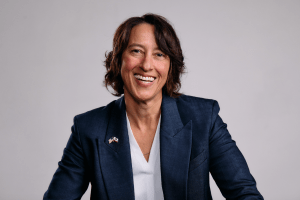
From small-town Pennsylvania to the halls of Stanford Law, from EPA environmental attorney to mayor of Sausalito, Janelle Kellman’s career has put her at the heart of the climate-community nexus—and could even see her become the next Lieutenant Governor of California. Join Janelle as she takes us through her “intellectual buffet” of roles—law firm partner, EPA Region 9 attorney, renewable energy consultant, planning commissioner, nonprofit founder, e-commerce entrepreneur, and elected official. Her secret sauce? An unshakeable belief that resilience beats sustainability every time, and that communities know best how to solve their own problems. Whether she’s securing $2 million in grants to flood-proof her waterfront town or hiking California’s watersheds to understand dam removal impacts, Janelle proves that the most effective climate leaders are those who listen first, act second, and never stop building coalitions. Her mantra is “community leader who took action” and she’s living it at every level from city hall to state politics.
Notes and resources
Full transcript
Michael Ethan Gold (00:00)
Janelle Kellman, welcome to Climate Swings. It’s great to have you here.
Janelle Kellman (00:05)
Thank you, Michael. ⁓ I am so excited to hear all about your travels and share mine and just be a part of this conversation. Thanks for having me.
Michael Ethan Gold (00:13)
Wonderful, wonderful. So the way I usually like to start with my guests is just to ask you to give a very brief self introduction to the audience who may not know you and maybe just a couple key points that people should know about you and your professional background.
Janelle Kellman (00:27)
Sure, good thing I’ve been traveling and listened to a bunch of your episodes. So I was prepared for this. So I am a land use environmental lawyer, a small business owner, a former elected official, a nonprofit leader. I call it an intellectual buffet. So I grew up on the East Coast in a small town in Northeastern Pennsylvania. I did an undergrad back there at Yale and then I did a master’s
environmental management at Oxford actually got to see a little different perspective on things and then headed out west to Stanford for law school and landed here knowing I wanted to do environmental law and blown away by all the opportunities to focus on that and the Stanford campus is gorgeous. You feel like you’re in a national park anyway and so it’s really inspiring. So I stayed in California. I moved to Sausalito in 2001
and very quickly got involved with my local planning commission. Because I grew up in a family, we had a philosophy of volunteer work, ⁓ of trying to to give back and be a part. And so I saw these vacancies and I wasn’t even quite sure what it was at the time. But my law firm colleagues said, no, that’s exactly the law you’re going be doing. So join the planning commission. I served on and off for about 10 years, started a company in between all that.
And then got tasked with working on the general plan updates. So every California community, every 25 years does a major update on their general plan. And it has these different programs and elements and objectives. And I noticed that ours didn’t have very much on sustainability. We didn’t have disaster preparedness. We didn’t have any DEI measures. And it was like, okay, wow, we just need the big overhaul. And so I started to ask a lot of questions, particularly around infrastructure
and flooding because Sausalito, I’m looking at right now, on Richardson Bay, immediately adjacent to San Francisco Bay. We’re waterfront, we flood, and we’ve been flooding for a long time. King tide, high tide, storm surge, sea level rise, all of it is here. So I became very concerned and asked a lot of questions. Didn’t get a lot of great answers, a lot of, I think someone else is handling it kind of thing. And I became so interested, I thought I need to start a nonprofit
because I’m gathering all this information, how do I share it? That led to folks saying, you should actually run for office. You should actually be on our town council and city council and try to remedy that. So I did. I ran for city council, I got elected. I was the mayor in 2022 and sort of simultaneously my nonprofit and my political career began to take off. But all sort of pulling on the same threads of coastal resilience, climate risk, ocean health
⁓ education and community engagement around those things. And so that’s what I’ve been doing for the last five, six years. I think I told you, I am now also running to be the next Lieutenant Governor of California, which is a role that ⁓ really focuses primarily on education and climate and ocean health. So my background dovetails directly to that and I’m super excited.
Michael Ethan Gold (03:41)
Yeah, and I mean, you can go back to kind of your law, early law days, perhaps, and start there and kind of think about what your sort of main motivations were around what you wanted to do with law at the time. Obviously, you were thinking about kind of how you wanted to use it in a community context, I guess, also sort of with regard to environmental conservation.
What were kind of the main threads that you were hoping to pull on with law in those very early days?
Janelle Kellman (04:13)
Yeah, such a great question, Michael, because we often those of us in the climate space, which I think is probably everybody listening right now, we think, how can we make the biggest impact? And as a young person growing up playing every sport you can imagine and being outside through all the seasons and watching things change and shift, even in my youth, particularly in an old coal mining community, which is where I grew up, you begin to pay special attention to the environment and the changes
and really the habitat. And so I thought that law could be the most efficient and effective avenue for me to learn how to really express myself and learn how to write and communicate. And then also work within, outside, and above or below the system of regulatory mandates. And it turns out, given what we’re facing today from the federal government, I think that was the right call.
⁓ But I never, I didn’t really love ⁓ the sort of limited window of the focus of law in the way I practiced it, meaning, you know, sort of one issue at a time. I really love seeing multiple issues at a time and try to connect the dots on those things. But I did have a really wonderful law career. I was at two different law firms. I was at EPA Region 9. I did a lot of tribal water endangered species work.
I work for an energy company focusing on environmental due diligence for renewable energy projects. I sat on the board of San Francisco Baykeeper. I helped launch a renewable energy school called Ecotech in Colorado. You know, I’ve been able to kind of parlay the law and really the ability to communicate ⁓ into various areas in the climate space.
Michael Ethan Gold (06:01)
Yeah, I mean, like, you know, just looking through your LinkedIn and looking at your background, have so you’ve worn so many different hats and had so many different kind of swings in somewhat adjacent, but also kind of like somewhat disparate spaces. What was what was your theory of change? Or what were the levers you’re trying to pull around, say, conservation, specifically, and environmentalism and sustainability specifically? When did that kind of start to become a major guiding focus for you?
Janelle Kellman (06:31)
So I will tell you, ⁓ I think a lot about the word resilience, more so than sustainability. So I think about sustainability as our ability to live in balance with nature, earth, and one another. ⁓ In Hawaii, they call that harmony. They don’t use the term balance, harmony. ⁓
But I think about resilience even more so, which is the ability for us to respond to changing environments or changing outcomes. And a lot of that comes from my lifelong experience as an athlete. I’m now an ultra runner. I run very long ultra marathons. And you have to be resilient to get through mile 10, mile 40, mile 50. You have to be. And so
for me, the idea that we could bring different people together with expertise, science-based, with a theory of change and various pathways that ⁓ really put nature first, gave an opportunity, I think, to make lasting impacts on community. So, again, I think about those two things, not just sustainability, but how do we make communities more resilient? And so that dovetailed really well with my planning background
as planning commissioner, as a land use environmental attorney, because you could ask yourself, well, how do I make this community, how do I help plan this community in a way that could respond to natural disasters?
Michael Ethan Gold (07:56)
Yeah. So we’ve already kind of gotten like pretty big and sort of theoretical, which is usually a place I go a little bit later, but I felt like it was, it was kind of the right time to at least start this conversation. But I would kind of like to get more back into the nuts and bolts of your journey, because when you did your self-introduction, you, did your planning work and then all of a sudden you’re essentially a local politician in Sausalito, but you’ve had tons and tons of swings since then.
Janelle Kellman (08:17)
I’m
Michael Ethan Gold (08:21)
Can you talk about some of the more impactful roles that you’ve had? They’ve been all essentially in the Bay Area, but what kind of spaces? I mean, you alluded to some of the law work you’ve done and this and that company, but like, can you just sort of walk us through in a little bit more detail some of the swings you’ve taken?
Janelle Kellman (08:35)
Yeah, so I’ll put my hat on of sort of mentor slash, if you’re trying to figure out like how to use your wisdom in the climate space, sorry, my cats really love podcasts. So the thing I loved about being at a law firm is that you learn how to write. You learn not what to think, but how to think.
Michael Ethan Gold (08:47)
Okay.
Janelle Kellman (08:58)
And that analytical capability can be applied across any problem set. In law school, they call it IRAC, Issue, Reasoning, Analysis, and Conclusion. And it’s a really great framework for unpacking difficult issues or even simple issues. Also the art of negotiation and mediation and how to bring people closer to the middle. There’s a saying that
when both parties are slightly unhappy, it’s been a good negotiation. And so learning how lot of those skill sets, I think, have been fundamentally important. ⁓ Moving over to EPA Region 9, that was really a dream for me. I had promised myself that I would sort of ⁓ put some money in the bank and private practice, but really get to the public sector as quickly as possible.
It was during the Bush administration, so it was a little difficult to pursue some of the things, not like today, which was almost impossible. ⁓ But I did get my first opportunity to look at ⁓ EV and hybrid vehicles. I worked on that a little bit at EPA. Working with the tribes was really important to see the disparity in our resources ⁓ across
you know, Region 9, which is California and the Western States, and to really understand like, hey, we’re not all coming from the same place. What’s missing in certain communities? Why is our infrastructure aging in such a massive way? And how do we fix that? ⁓ And then I got really sort of interested in renewable energy. And I actually had this really great job. I was moonlighting for a company called Solmetric. They later got acquired, but they were taking old Blackberries
and they were refurbishing these PDAs as personal delivery assistant or something like that. So they were taking these and created, because they had fisheye cameras, they were creating solar shade analysis tools using these refurbished Blackberries. And I got sent to a renewable energy conference in Milan
Michael Ethan Gold (10:49)
Yeah, we don’t use that anymore, but yeah.
Janelle Kellman (11:09)
to sell this into the European market. And I became just a huge fan of renewable energy and the opportunity there. And so each of these pieces were like, how do we become more resilient? How do we drive collaboration? How do we start to fix problems around financing, technical capacity and infrastructure? And so by the time I finally got to city council,
I had those skill sets kind of baked in, ⁓ but then I really got to explore them when I was the mayor. Really got to hit what I like to call my ikigai. ⁓ Your passion, your purpose come together.
Michael Ethan Gold (11:47)
So tell me a little bit more about that experience at the EPA. said you had an EV kind of practice that you working on. You worked with tribes. To what extent was climate a consideration at the time? Because this was still, I mean, was sort of like pre and sort of around that time of Inconvenient Truth. What was your thinking around that? What was kind of the general thinking in the EPA at the time, especially in the places where you were focusing?
Janelle Kellman (12:15)
So now I feel old. So yeah, so, no, no, no. But you make a great point, which was I do climate work. Today, I do climate work. Early on in my career, I did environmental work. And it’s a great question to the extent to which they are the same or different today. But we called it environmental law. The work I did, I was in the environmental group,
Michael Ethan Gold (12:17)
That was not my intention.
Janelle Kellman (12:41)
⁓ you know, endangered species, water was about the environment. And people were still adjusting to the idea. We’d already accepted the ozone layer was under attack and were, know, CFCs were getting banned and you you’re no longer spraying hairspray that has CFCs. You can probably tell I don’t really use hairspray, but yes, conceptually. And so we still saw it as the environment. And keep in mind,
The National Environmental Policy Act or NEPA, and the California equivalent is the California Environmental Quality Act. ⁓ These are regulations that didn’t come to light until the 70s. And they really took time to gain traction. And I mentioned NEPA because when I worked for federal EPA, part of NEPA is a federal consultation with the tribes on certain projects.
And so these become full circle, but it was always couched as an environmental issue, not necessarily climate.
Michael Ethan Gold (13:41)
Right. And the main driving consideration was essentially environmental conservation, like conservation of natural spaces. Is that right? Presumably though, in the EVs practice, it was a little bit different, right? Can you talk a little bit about what you did with EVs specifically?
Janelle Kellman (13:56)
Well, let me just back up and just remind us all that the Environmental Protection Agency, right? It’s not called the Climate Protection Agency. Like, really, now you’re putting me down a rabbit hole, and now I’m really like, existentially interested in this conversion or this, uh, this evolution really of environment to climate, because that was our job, Environmental Protection Agency, to do work that would protect the environment. And that feels almost like…
very reactive, like, we have a polluter, let’s stop the polluter. We have a species under attack, let’s stop the attack. And so it was a very different, I think, framework for change, which was reacting to things that were coming towards us. ⁓
The EV stuff was really cutting edge at the time and it was intended to be a corollary to some of the emissions work that was happening. And so I was part of a task force that looked at how do we create emission standards and what does that look like for both federal and state.
Michael Ethan Gold (15:04)
Was the emissions work at the time more along kind of an air quality lens? Or was the climate impact also being considered like and and was there kind of like a sense that one was more important than the other or that one was going to become more like how did that sort of come together?
Janelle Kellman (15:22)
It was, I would say 80-20 on an emissions perspective and less around a changing climate. There wasn’t as much conversation, this is like 2004-ish, 2008, there wasn’t much conversation around connecting the dots, right? Like these emissions are bad. Yes, we know they’re bad. Now today we’d say those emissions directly lead to XYZ, right? And we have all sorts of data that show that.
Michael Ethan Gold (15:50)
Yeah, and presumably working in California, you’re surrounded by kind of greenies, right? You’re surrounded by people who share like, productive, generally a similar mindset as you. You mentioned that the Bush, under the Bush administration, things were like a little bit challenging. But did you feel like your environmental work was like, was you were really getting the outcomes that you were hoping for at the time?
Janelle Kellman (16:14)
Well, yeah, so because you you’re joining EPA, you’re you join an echo chamber, right? You don’t go to work there unless you kind of have this perspective that the environment is worth protecting. And there are things that we can do. But I would say from a California perspective, and I’m interested in your thoughts because you you just left here after some time. There’s a libertarian streak in California, and it’s a real balance of how do you really make change at scale?
Um, you know, and I think that’s just an anxiety a lot of people feel generally, which is here I am today. I’m just one person. What can I really do? And I’m always reminded of the Margaret Mead quote, never doubt the ability of a group of committed citizens to make change. In fact, that’s the only thing that ever has. Um, I’m sure that’s a paraphrase not a direct quote, but
that idea that each of us together collectively can take action. So I never take for granted where I am and assume that everybody here in California is going to see it the way I do. I have a very moderate sort of collaborative personality and so I think that’s served me well.
Michael Ethan Gold (17:18)
Yeah. And it’s interesting because you worked on one side on these kind of conservation aims, but on other side, you said you worked with EVs, which seemed to set you up for a lot of the things that you would do subsequently, like with the renewable energy and some of the other positions that you would hold. So was there an intentional sense that you wanted to focus more on the futuristic stuff or how did that element of it enter your professional
lexicon?
Janelle Kellman (17:49)
It definitely whet the whistle for innovation. What are we not doing today that we should be looking at? Where can we innovate? Where can we drive change? What does cutting edge look like and how do we push the envelope on that? And so in the state of California has a renewable portfolio standard that’s trying to achieve certain amount.
of renewable energy in its electricity grid. What does that mean? How do we create more opportunity for that? Some of that is regulatory, some of that is incentive, some of that is construction or transmission or distribution, but there’s lots of avenues. So yeah, I would say it it started me on my more entrepreneurial journey, which I don’t take to mean that I have to have a tech startup, although I do have an e-commerce startup. I take it to mean creating something,
and then driving theory of change through that, which is, think ultimately what led me to start a nonprofit a couple of years ago.
Michael Ethan Gold (18:45)
And the renewable energy sector at that time, sort of in the early days when you were, you know, recycling Blackberries and whatnot, also kind of, I mean, it looked pretty different than I guess it does today. Can you describe kind of what the vibe was like? I guess people at that time would have, or maybe not at that time. Nowadays, looking back, you would have called it climate tech 1.0, right? Is that kind of the term of art?
Janelle Kellman (19:06)
Yeah,
here’s my ⁓ missed connection story. So I was reading, gosh, I think I read like TechCrunch pretty regularly and just felt really inspired by it, even though I have this climate environmental background. And I read this tiny little snippet about a company called SolarCity. And SolarCity was started by two brothers. They had Infusion of Capital from an entrepreneur named Elon Musk. We all know now.
And that was their cousin and they were located somewhere like in San Mateo or Burlingame, somewhere south of San Francisco. And they had this whole idea for how they were going to deploy solar ⁓ for distributed generation. So residential rooftop solar, and they were going to create a marketplace for it by developing a leasing model and a financing mechanism. And I read about them again, tiny little like four sentence snippet. I somehow found them, ⁓
marched myself down to their offices, interviewed with them and they said, well, we’re not really sure what it’s gonna look like, but if you wanna run our West Coast sales, we’ll hire you. ⁓ And ⁓ they offered me a job that was 90% commission-based ⁓ in a nascent market and I had a mortgage. And the base that they offered me wouldn’t even cover like half my mortgage. So I ended up…
having to decline. And I think back on that because ultimately, as most people may know, they IPO’d, ⁓ they really set the standard for how you could finance and basically lease out distributed generation for residential solar. And so I got to be kind of in that space and watching this market ⁓ come to fruition. That’s kind of an exciting reflection.
Michael Ethan Gold (20:59)
Yeah, but you didn’t work at SolarCity, but you did have other ⁓ sort of hats on in the climate-tech space, essentially, right? Can you talk about your time at the EcoTech Institute? I’m curious what that was about, because you put eco and tech together, that sounds pretty much right up your alley, right?
Janelle Kellman (21:21)
Yeah, so at the time I was working, I seem to always like to have a side hustle, I guess. I like to have multiple things going at one time. So I was working at a utility and I had been hired away from EPA to do all the environmental due diligence in the law department for this utility around the renewable portfolio standard. Meaning anytime a project was promoted to us, ⁓
maybe it was solar thermal, ⁓ solar PV, maybe it was wind. I was the attorney looking at the feasibility. Could it get permits? What was the take of species going to look like? Would this be held up in a regulatory environment such that we couldn’t count it?
Michael Ethan Gold (22:03)
And by utility, you mean PG&E, is that right? Yeah, right, okay.
Janelle Kellman (22:05)
Yeah.
And so in the day, they were actually focused on doing more renewable energy. So I was doing that work and somebody, a mutual friend called and said, hey, what would you think about joining the board of a school that wanted to teach young people how to be solar or wind operators? And I thought, well, absolutely. Right? Like this marketplace doesn’t make sense unless you have people who know how to actually do the work
with that expertise. And so this came out of, think, the Education ⁓ Association of America. It ⁓ was a school brand that had other types of schools out there for sort of apprenticeship and vocational programs. And so I joined the board. And for a couple of years, I got to see the school really grow and flourish and teach young people how to become a turbine installer or maintenance
⁓ individual, like very specific technical roles, which I think is really exciting because it opens up so many opportunities in the workforce development space. And that was a great sort of compliment to the law work that I was doing in renewable energy.
Michael Ethan Gold (23:16)
Yeah, so we’ve we’ve pulled on the threads of your law work, and a little bit of your I mean, quite a bit of your sort of community and conservation work and ⁓ some of your tech tech kind of ⁓ innovation work as well. And then you also worked at Project Drawdown, which I think a lot of my ⁓ listeners will know probably follow their work pretty closely. What was that experience like?
Janelle Kellman (23:43)
So I, like I said, I on the planning commission here in Sausalito and Paul Hawking came in one day to get a permit for his building because they were located in Sausalito. And we just felt like just very, like it was a great vibe of communication. Even just as I was in the dais, he was explaining the program and he reached out to me after and I ended up having a coffee and we talked for hours about the Fibonacci sequence and about naturally occurring structures in nature and what this
sort that nature has this bigger plan for us and we’re just, we’re along for the ride, right? And we have to respect that. And so he and I kept in touch and years later he started Project Drawdown, which as many of your listeners know was premised on the idea that it’s not enough just to mitigate what is happening or change our
behaviors, we need to actually draw carbon dioxide out of the atmosphere. And it came up with a hundred solutions to do that. And so I had the pleasure of the honor of just for a short period of time, around six months, getting to consult with that team and helping to understand where our biggest opportunities for drawdown really are. And it was really, again, like this dovetail, like everything I’ve done has just sort of built one thing upon the other. It turns out, as you probably know, that concrete is a very big…
emitter of carbon dioxide. Well, could we reduce emissions and have sort of eco-concrete, which is an actual company that exists today? What happens if we begin to build more large structures with wood? What are the impacts of that? Now, you have trade-offs, obviously, with fires or maybe with cutting down trees. So looking at all of those trade-offs and trying to understand where that might play in ⁓ for being able to pull carbon dioxide out of the atmosphere.
Michael Ethan Gold (25:29)
Yeah, and then in the meantime, you started an e-commerce company as well, sort of on the side. I mean, is that related to your other kinds of work? How does that kind of fit into the broader picture of Janelle? Okay, let’s go. Let’s do it. Let’s relate it.
Janelle Kellman (25:35)
Yes.
I’m going to relate it. Yeah. I’m going to relate it here because yeah, here I go.
All right. I played four sports in high school, and two, ⁓ division one sports in college. I love team frameworks. That is always sort of the basis for how I work together. I’m not going to walk in room and tell you, I have all the answers, but I’m probably going to tell you is, you know who we should bring into this conversation is, and then name five other people that I’ve met and try to bring everybody to the room.
I consider myself oftentimes somewhere between a, I’m a leader and a translator who can help people together so we can listen to one another more effectively. And so when I started my e-commerce company, it was actually grounded on this idea of micro e-commerce sites for team and group clothing orders. And at the time I was finished with collegiate sports and I was a competitive cyclist and I was leading a hundred person cycling team.
And we needed a more effective way to be able to organize our clothing order based on our team. And so, you know, I don’t just do one little thing. I decided I would do a multi-tenant SaaS solution so that I could sell it to thousands of teams. And that’s what we ended up doing. We work exclusively in cycling and triathlon space. It’s called kitorder.com. Kit being the sort of the European slang for cycling gear. Put your kit on, we’ll go for a ride.
And so that was really grounded in the idea of innovation. How could I take a problem that I am experiencing and solve for that? And also collaboration. How do we build team and community and bring people together?
Michael Ethan Gold (27:25)
So thematically, there was not really an overlap with the other work that you were doing, but kind of in terms of process and in terms of sort of the ⁓ principles, it felt like it was of a piece.
Janelle Kellman (27:38)
Yeah, it was same sort of governance structure of decision making and bringing people together. It was a little bit of a detour in terms of it wasn’t, you know, global carbon emissions and it wasn’t protecting endangered species. But the whole time I was still working on the Planning Commission. And so I was really able to give back in that manner and continue to plug into my local community as it pertains to planning and land use and climate.
Michael Ethan Gold (28:05)
Yeah, so now I think we can sort of get properly into your time in elected office, ⁓ which is another realm, I think, from what it’s connected, obviously, to your community work that you were doing. And you were obviously on the Planning Commission and deep into local governance, I would say. And now you’re really in local politics. So talk about what motivated you to
go for mayor of Sausalito and what that experience was like.
Janelle Kellman (28:37)
I would say, first of all, ⁓ politician has become a very difficult word. So I actually prefer elected official. And I like elected official because it’s a signal for me that I am in service. And that is a big part of this. I mean, public service has taken a real, ⁓ sideways turn. I think if you look at DC right now, what does that really mean to have a public service ethic? Who are you really serving? ⁓ And so I like to keep that at the forefront for me.
And it’s really about community engagement, being a representative for people who maybe don’t have the skill set or don’t have the time or the bandwidth and try and represent their needs and their ideas and so the direction of the community in a cohesive way. And so I ran for office because as a planning commissioner, I was working on critical issues like disaster preparedness, sea level rise, infrastructure, housing.
⁓ And I felt like, okay, well, wait a second. We have a historic working waterfront here in Sausalito. One of the last remaining historic working waterfronts in the country. We made 93 ships for the Pacific theater during World War II. It was like us and Long Beach. We’re talking like 300 foot ships, legit ships. And they were cargo ships. And that area was built on fill. And so fill over time begins to sink in a process called subsidence.
And so this area begins to sink. We have high tide, king tide, storm surge, sea level rise. So now it’s sinking and the water’s coming up so it’s flooding. Some of the area’s on bedrock and doesn’t flood, but for the most part, we’re seeing significant flooding in that area. And we also were hit with a very big mandate from the state around housing. And so this question of where do you put housing and how does that overlay in areas that are potentially very vulnerable to climate change
came to the forefront for me. And so I ran for office to be able to examine those issues more deeply and to also be able to help my community plan for the future. ⁓ And so really one of my, I think, greatest achievements and my time in city council and as the mayor was I became very, very concerned about our flooding. I led a sea level rise task force. We have experts here in town. I’m so lucky to have this information.
We prepared a 17 page document, 20 recommendations, short, medium, long-term. Went to my city council. I did the presentation and everybody said, well, what’s the likelihood it’s going to happen? I don’t know. Maybe we should spend money on something else. And so hit with that, I thought, okay, I’m going get the money. And so with help with some mentors around here locally, I drafted
a couple of grant, not even grant, ⁓ just really like requests to my assembly member. And I got a million dollars for the city of Sausalito to develop a coastal adaptation plan of vulnerability assessment. And I still have my check. I feel like Austin powers, cause the check says $1 million from Cal OES. So exciting. But once you come in, you come in with the money. So political will, a champion and the financing that really changed everything. And then I ended up getting another million. ⁓
Michael Ethan Gold (31:49)
Very symbolic.
Janelle Kellman (31:58)
or helping lead and support another million in grants to do more work in Sausalito.
Michael Ethan Gold (32:04)
Yeah, so it felt like you identified or were trying to dig into this problem that Sausalito was facing around its port and its physical infrastructure and kind of the resilience question that you had talked about. But obviously, as an elected official, as you say, you really have to represent your constituents and you have to respond to their needs. How did that interplay work out when you were mayor? Were people right along there with you? Did you have to bring them along?
How did you interact with your constituents around that issue specifically?
Janelle Kellman (32:37)
So that issue specifically is viewed as an incremental issue. Now we accept that we have high tide because mariners for centuries accept that there’s high tide, low tide, king tides. But now we have them with more severity and more frequency because of the storm events we have that I believe are due to climate change. ⁓ Yes, I believe in science. So I’m gonna rely on science here. ⁓ And so when you bring an incremental flooding problem to a hillside community, you do have some challenges.
And so initially, it was hard to get people’s attention on it. A lot of the feedback was, hey, that won’t happen for another 20 or 30 years, and I live on a hill. ⁓ Why should I care? And so this taught me such valuable lessons in community engagement.
I had on my task force a woman who was a GIS mapping expert. She actually wrote two books on Esri and she just happens to live here in Sausalito and it’s always one of best hotels here In Above Tide. Just a little shout out for In Above Tide. And she built me an interactive map. So the state of California was using NOAA and USGS data. It came up with six scenarios based on different timeframes. So by 2050 X amount of water by
you know, 2100, Y amount of water. And so she built me out a map or us, the community a map with six different scenarios. And then because she had done so much mapping in this area, she was able to access key infrastructure points like water pump stations, like substations, like storm drains. And so she overlaid them onto the map. And what it showed is that even at the very low risk level,
our key infrastructure was flooding. And so I then was able to take that map back to the community and said, let me try this again. I don’t want to talk with you about sea level rise. My understanding, we may not be on the same page. I’m going to ask you personal question. Do you flush your toilet? Are you currently reading by candlelight or do you use electricity? Okay.
Michael Ethan Gold (34:43)
Right.
Janelle Kellman (34:49)
If you said yes to at least one of those things, let me show you a map and show you how vulnerable we are. And that really brought people along and it’s been just tremendous to be able to say my community gets it now. And people are really interested in ways for us to plan.
Michael Ethan Gold (35:08)
And so you said that when you’re talking about sea level rise, it might be a tricky conversation. Is this because the idea of sea level rise is this kind of like massive global climatic shift that is for someone else to deal with? It’s like it’s too far in the future. I presume that the people of Sausalito get that climate change is happening. I mean, it’s a highly educated town. It’s in Northern California.
What was, what, just digging in a little bit more about the actual disconnect there.
Janelle Kellman (35:42)
Yeah, that’s such a great question. ⁓ I think a lot of it was the timeframes and the predictability. So one of my favorite quotes is Yogi Berra, I think once said, the problem with the future is it’s difficult to predict. And that creates a lot of climate anxiety because people like certainty. We want to know when will this happen? And then I will plan for the thing that will happen. But here it’s like this could happen.
And it’s dependent on like 10 other factors. And it also may not happen all the time. It may only happen 30 days of the year. And so that uncertainty made it somewhat difficult for people to really wrap their heads around it. And this is a real lesson learned. Climate narrative, and you know this, given your work, Michael, climate narrative is really important. The storytelling is really important. And so I realized that it’s actually really important for me to talk about infrastructure.
Right? And, you know, as an elected, we all want to make sure that we clear roadways for ingress and egress in case of a disaster. You want to get your kids to school. You want to get to hospital. You want to get to the grocery store. ⁓ Let’s talk about infrastructure. And if you and I want to differ around ⁓ when it’s going to happen, that’s okay, because we have a starting, we have a shared starting point.
Michael Ethan Gold (37:02)
But something needs to be done, essentially. Is that kind of the message? Like, business as usual is not going to cut it.
Janelle Kellman (37:10)
yeah.
I’m someone who takes action, right? So for me, I’m happy to explore other narratives and meet people where they are, but we have objectives that are clear. This is aging infrastructure. It is flooding today. It will flood worse in the future. I’m here to help take action.
Michael Ethan Gold (37:32)
Yeah, and what action was actually done? Like what kind of amelioration and how much can you do? I mean, it was only a couple years ago, right? How much can you do in a couple years?
Janelle Kellman (37:41)
Yeah, so I think the money settled in our account in 2023. We did two really big things. A million dollars is a lot of money for a town like Sausalito, where our general fund is around 22 million. And so in that first year, we hired a resilience officer, very talented individual with a background in estuary work, who understood hydrology and water dynamics. So now we had somebody in city hall to spearhead this, not just a council member who
was an elected person. And then we put out an RFP and eventually hired an interdisciplinary team to conduct a vulnerability assessment and develop a coastal adaptation plan for us. And that’s at least a year, and we’re underway. That’s a sort of a year long process because you have a lot of community engagement and you do a lot of scenario planning. If I…
put a nature-based solution here and a seawall there, what happens to the area in between? Water goes where it wants to go and it’s gonna go somewhere. So you can’t just imagine you put a wall and it doesn’t have impacts elsewhere. And so those are clear actions that are a direct result of me being able to bring ⁓ financing to this project. And then once you have initial financing, the way the grant space works is that you then can build upon it. So then we took that, we applied for SB1 money,
which came out of the Ocean Protection Council here in California, is a non-competitive grant. We got 250K from that. That was intended to help communities plan. We went for it. That’s awesome. And then we got some economic development and administration monies to help us plan further for a specific area in town. And so all told close to $2 million. And we have planning underway that will eventually lead to specific projects. ⁓
I’m trying to push very hard that we don’t spend too much time planning, that we actually get things shovel ready and start to make some change.
Michael Ethan Gold (39:37)
And you’re no longer the mayor of Sausalito? That’s right, right? Yeah.
Janelle Kellman (39:41)
That’s right. Yeah, I didn’t
run for reelection to city council because my time is spent primarily running for lieutenant governor.
Michael Ethan Gold (39:49)
Right, right, right, right. But you feel like the work that you put in place is in good hands, like all that resilience work is progressing apace.
Janelle Kellman (39:57)
Absolutely. And in fact, the current mayor very kindly said, if you’re still around, we’d love to have you do something. What would you want to do? And I said, put me on the disaster preparedness committee. So I’m still on our local disaster preparedness committee because I think, talking about narrative, when I think disaster preparedness, I think flooding, I think sea level rising infrastructure, I think wildfires. And all of those things have climate.
Michael Ethan Gold (40:08)
Got it.
Janelle Kellman (40:25)
causes underneath. And so that’s a way for me to talk about climate without talking about climate.
Michael Ethan Gold (40:31)
Yeah, so Janelle, we have swung our way through the thicket of your resume up to the present day. And you now and you now currently wear essentially two hats. Is that right? Like two main hats. One is as the head of the Center for Sea Rise Solutions, which seems perfectly ⁓ adapted from the work you did in Sausalito. And the other is as a candidate for Lieutenant Governor of California, which also is an adaptation of what you’ve done, but you know, definitely another level up. So ⁓
Janelle Kellman (40:35)
yes. Now what?
Michael Ethan Gold (40:59)
Talk about both of those and what your day to day is like now. mean, I can only imagine it must just be, you’re just wall to wall, huh?
Janelle Kellman (41:03)
Yeah.
Well, look, here’s the, I’m gonna call it the trick. Here’s the framework. Find the things you’re super passionate about and then create a life, design a life where you get to pull on them all of the time. So I love community engagement. I love sort of that collaborative team environment. I love talking about coastal resilience, innovation, blue economy, ocean health. I get to do all of that with my nonprofit work and with my campaign work.
So originally when I launched the Center for Sea Rise Solutions, I designed it to help other elected officials who wanted to take action around coastal resilience, who maybe didn’t have the resources that I have here in Sausalito. And so the very first year we conducted a series of discovery sessions. We did 100 person workshops in Tampa, Florida,
Savannah, Georgia, Providence, Rhode Island, and then Sausalito. Because we wanted to understand why were communities not taking action in some places that seemed so obvious that they needed to. The low hanging fruit is to say, lack of political will. But I was the mayor at the time. And so I got to say, I’m in the room. Let’s push ourselves to find some more answers. Three main things consistently came up. Community engagement, oftentimes just not adequate or
you know, not performed in a way that allowed equity to be at the core. Some people can’t get the bus at the right time or they don’t have access to Wi-Fi if it’s a Zoom type of meeting. So community engagement, really, really important. The second is technical capacity. You know, we don’t have consistent technical capacity across communities. Not every community has a resilience officer, sustainability officer. How do you develop grants? How do you figure that out if you don’t have that same resource in city hall?
And then the third was financial resources and tech and capacity around that. And that actually led me down a very interesting field of study around insurance and risk. And it all sort of came to a head again, pulling on these points. ⁓ Two years ago, Sausalito got dropped from our insurance pool. And part of that was because we had a massive landslide in 2019 and we were having other litigation matters that
the underlying piece of it, you know, storm drain or outflows could be related to climate. And when we got dropped from our pool, I had to help our community and help our city manager figure out how do we replace that and how do we do it differently in a way that has a disaster preparedness component to it. And I decided I, and I convened a hundred person workshop here in Sausalito called the Economic Impacts of Climate Change on California Communities.
And we had insurance companies, reinsurance companies. ⁓ I partnered with ⁓ Carolyn Kuski from Environmental Defense Fund, ⁓ Stanford, UC Santa Cruz, Ocean Science Trust. And we explored these issues, or what are the big issues and how can insurance play a role in mitigating this risk? And now we’re continuing that. We actually have another session, June 23rd in San Diego with Darby Berry, who leads the San Diego Climate Collaborative, called Risk and Insurance
for Southern California Communities. And then we’ll do another one for maritime ⁓ industry here in San Francisco in October. So all those threads enabled me to kind of pick up these issues that were ⁓ really in the moment and then of most importance, I think to Californians. And at the same time, bring in key partners like insurance, like the ports. I have great relationships with the ports on the West Coast. And all of that dovetails into the Lieutenant Governor role
because the Lieutenant Governor serves on the Ocean Protection Council, which is seven people, the California Coastal Commission, which is 12 voting, three non-voting, and the State Lands Commission, which is three people, would be me, the state controller, and a political appointee. Well, most of our ports sit on state lands. And so now you begin to see how these things all overlap.
And in fact, you’re in Barcelona and last year ⁓ I gave a presentation at the UN Ocean Conference in Barcelona and we partnered with the city and the port of Barcelona who are doing amazing things around the blue economy to develop a blue glue ecosystem, a way to bring partnerships around ports to highlight workforce development and equity and ⁓ climate resilience.
And then we did that again at the Sustainable Oceans Summit in Barcelona in November. So you see these threads continually. It’s about resilience. It’s about economic resilience, climate resilience, partnerships like ports, ⁓ education around these opportunities. And they just keep building one on the other.
Michael Ethan Gold (45:51)
Yeah. So what’s it like running for Lieutenant Governor? I you’re going from a fairly small political stage in Sausalito to an extremely large political stage in California. And the election’s not until 2026. So obviously we have time, but how do you put that together and run on the platform that you’re running on, which is probably somewhat different than I think a lot of politicians’ typical platforms, right?
Janelle Kellman (46:16)
Yeah, so ⁓ the way I like to say is ⁓ if this were the private sector, I’d get hired for this job. My background and expertise is directly related to this work. And I could plug in today and be quite effective. And so for me, just got back yesterday, I was in Denver on a panel at the Urban Land Institute Resilience Summit. And I thought, well, in some ways, Lieutenant Governor is kind of like the Chief Resilience Officer
of California, if you allow it to be. If you have somebody who is an expert in coastal resilience, climate risk, knows how to bring the right people to the table, we can be extremely effective in making sure we stay economically resilient and climate resilient at the same time. And so for me, it feels like I’m just scaling up my work.
But I’m not changing it in really any way. I’m just applying it to more people. And so my role right now, we designed listening sessions, which are really five, four day hiking and meeting trips around the state. The first one was at the end of April. We were in ⁓ Humboldt County in the Klamath River watershed. Klamath Dam removal, largest dam removal in the world. We went to the dam removal site with Cal Trout.
With a fish biologist from the Karuk tribe. We met with the Siskiyou Economic Development Council. We floated down the Klamath River with a Yurok tribal member. Really just being in the communities that I wish to serve and looking how these themes that we’ve talked about today of economic and climate resilience go hand in hand. And I just got back. I was in Ventura, Santa Barbara, and Monterey last week doing the same thing. We met with the Ventura Chamber of Commerce.
And then we went with Surf Rider and the Ojai Valley Land Conservancy over to the Matilohut Dam site, which is really impacting the Ventura River watershed, which in turn is impacting the beaches, which are losing sedimentation and disappearing from erosion. And so you’ve been to see, wow, man, these rivers, they really connect us around the state. And so it becomes very powerful. Our next trip is going to be July 21st and 22nd
down the coastal trail in San Diego County. We’ll start in Orange County and go down through San Diego County.
Michael Ethan Gold (48:38)
And you feel like there’s a coalition and a constituency that you’re discovering or that you’re building around these issues of water and water resilience in particular, kind coastal resilience in particular.
Janelle Kellman (48:49)
Yeah, the themes really are local community members taking action. And that is what I see in every community. And I got to say, I have been blown away on the campaign trail with the individuals who are working no glory, no fame, very little money, sometimes for 20, 25, 30 years
to achieve resilience around a particular issue that impacts their community. Just blown away by these community leaders and they don’t know each other.
They feel a real sense of alienation and will I ever be able to do this? And I feel like I am getting to meet all of them and this coalition is organically a part of what California is looking for. Local community leaders who take action, who prioritize community resilience.
I think that’s really all we want, right? We want to be safe. We want our families to be safe. We want to be able to put food on the table. We want to clean drinking water. We want to know our food is healthy. Those are shared. That’s a bipartisan ⁓ outlook, I think.
Michael Ethan Gold (49:59)
Yeah. Yeah. So Janelle, I think one of the main aims of my podcast is to impart practical lessons for people who are interested in working in climate. Maybe they come from a diverse background or they’re trying to figure out how to orient their career in a climate focused direction. And I would not deign to ⁓ say that you should advise people on how to run for lieutenant governor of California, but
Janelle Kellman (50:20)
Yeah.
Michael Ethan Gold (50:22)
What are some what are some things that you would tell people who are interested in kind of following in your footsteps, you know, and doing, know, irregardless of all the swings that you’ve made in your career?
Janelle Kellman (50:33)
Okay, so great. This is where I get to do book recommendations. Well, let me say I’ll say this the having a yes mindset and saying yes to meetings as much as possible or meeting new people as much as possible. You did that for me, right? And I’ve done that with other people throughout my career. You just never know the conversation you’re gonna have the opportunity and and being open to the idea that something might not seem
Michael Ethan Gold (50:36)
Great.
Janelle Kellman (50:59)
directly relevant to what you’re doing or directly related, stay open-minded because four years from now it might be. And so when I was the mayor, I finally realized my ikigai. So ikigai is a Japanese philosophy of finding your passion and your purpose. And so imagine it’s four concentric circles and that passion and purpose is in the middle. And the idea is what the world needs, what you’re good at, what you want to do and what you get paid for.
And if you can find that, you will find your ikigai and your passion. And so as the mayor, I found that because I found that all of the different threads that we went over today came to a head. I understood infrastructure, I understood renewable energy, I understood urban planning. ⁓ And I, as a lifelong team leader, as captain, you know, of everything in high school and the captain of the field team in college, like I knew how to bring people together
and to listen. And so finding that ikigai and realizing that maybe today you only have a piece of it, but be open to it all coming together is really important. There’s no one field ⁓ to say like, this is it. But if I had to say a place where I think we can make the biggest climate impact, it’s our oceans. We need to care for our oceans in a much bigger way. Oceans need to be our partners. They’re massive carbon sinks.
But the problem is with all the plastics and the acidification, we’re reducing the ability of the ocean to absorb carbon. And that’s having a massive detrimental impact to all of us. And so being able to really live in harmony and prioritize ocean health, I think is a ⁓ really great use of time and energy.
Michael Ethan Gold (52:46)
Yeah, and sort of switching the perspective from advice to others, kind of working in looking to get into the space now to advice maybe to yourself at an earlier stage of your career, maybe the law school Janelle, and you’re looking back and thinking, well, if I had known that things, you know, I might have been able to maybe avoid this pitfall or do this a little bit more smooth way. What are some of the things you might tell her?
Janelle Kellman (53:10)
Yeah, patience is a superpower. I am known as being a very patient person, but here’s a secret. Wasn’t always that way, right? This happens when you have type A athletic people, maybe sometimes you go to go, go. Patience is a superpower and being able to sit in a moment and give space to others and hear what they’re going through and then reflect on it. I mean, there’s so much power in the pause.
And so slow down, see the moment around you and put yourself in the room. You you and I go to climate weeks all around the world. Go to those places, go to those spaces, be in community with others, but also open your heart and your mind to hearing other perspectives, right? Because sometimes you get little echo chambery and we forget to hear and we become a society where it’s been very difficult for people to hear
other points of view and I think maintaining that open mind is really important.
Michael Ethan Gold (54:09)
Yeah. And my last question that I like to ask everybody is if you could cast your mind to the end of your career. And of course, you know, that’s, that’s a very, very long way away, you know, God willing. ⁓ what would you want people to think about the contribution you made? What would you want your epitaph to be about, you know, your contribution to climate change or resilience or just the things that you care about in general?
Janelle Kellman (54:31)
I would be very happy with an epitaph that said community leader who took action. That, you know, that action piece of it is really important to me. And there’s a lot of planning and they sit on the shelves and there are a lot of workshops where we get together and we say, oh, we’re so smart pat on the back. That was a great idea. That’s never enough for me. Anytime I can be in a workshop, I tell my partners, we have to have
action items. We have to be able to have a measurable impact. If we’re going to bring people together, we have to move the needle. ⁓ Because our time is too valuable just to sit around and think about it. Let’s start doing. And so what is that adage? ⁓ Paralysis by analysis. ⁓ Let’s start being the party of action. Let’s start being the people of action. Because we have no time to waste.
Michael Ethan Gold (55:24)
Also the community element as well, I presume, is equally important too, that you work with people where they are in their world essentially, ⁓ and you don’t necessarily presume that you have all the answers for them, but you’re part of their community too, right?
Janelle Kellman (55:41)
That’s right. I’m like an ombudsman, right? If there was a feminine version of that ombudswoman, ⁓ I love bringing people together to hear disparate ideas, find the commonalities, and then understand a path forward. I once had a fellow council member say to me, he said, wow, how do you change your mind in the middle of a meeting?
And I said, what do you mean? He said, well, sometimes we’ll come in, there’ll be something on the agenda and ⁓ I think you’re going to vote one way. And then we’ll have all this public comment and you sort of evolve your thinking. How do you do that in the moment? I think that’s called listening. ⁓ I don’t know. I think that’s what you’re supposed to do.
Michael Ethan Gold (56:22)
Yeah, called listening and being a human being, suppose. Well, anyway, Janelle Kellman, this was such a fabulous conversation. Thank you so much for appearing on Climate Swings. It was wonderful.
Janelle Kellman (56:31)
Thank you, Michael, you are so good at this and your leadership and your ability to help others tell their story is so valuable. So anything I can do to help, let me know. I am a big fan.