

About this episode
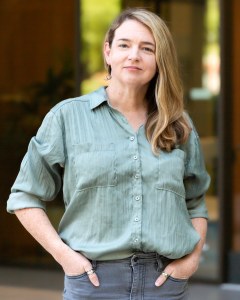
Astrid Atkinson has a story that should inspire even the most jaded climate hawk. Growing up in rural Australia, she first got online when an internet-enabled train arrived in her village. She then decamped to the United States, dropped out of college to work for Google, and swung through a variety of high-impact roles at the search giant before founding her own company when the itch to do something about climate change got too strong to ignore. Now as the head of Camus, which provides digital solutions for the energy grid, she serves as a model of what it means to leave everything on the field when it comes to pursuing a climate career that can truly make a difference.
Notes and resources
Full transcript
Michael Ethan Gold (00:02)
Astrid Atkinson, welcome to Climate Swings. It’s so great to have you here.
Astrid Atkinson (00:06)
Thank you, it’s great to be here.
Michael Ethan Gold (00:08)
So the way I usually like to start with my guests is just to ask them to give a high level introduction to themselves, a little bit about their background and what they do professionally.
Astrid Atkinson (00:18)
Yeah, absolutely. So my background was in the tech industry. Prior to co-founding my current company about six years ago now, I was at Google. And I worked there for about 15 years from 2004 until about 2019, about a week before leaving to start Camus. And my area of specialty was
predominantly reliability for large scale systems. So I started out in their reliability engineering team, thinking about how to build highly reliable globally distributed software systems. When cloud computing was brand new in the industry and not yet in wide use from any technology companies. So it was part of the team that developed Google’s internal cloud platform
and rolled that out in the 2004 to 2006 timeframe. And then went on to go lead up a lot of Google’s process and policy work around basically thinking about how do you take software that used to run on one computer and run it on a million computers and have it work. So that was really exciting. And it was a really cool opportunity to be involved in and help to shape the early development of cloud computing in the industry as a whole.
And went on to go lead up infrastructure teams in different parts of Google, including search, which is always fun. And then product infrastructure that was building common large scale infrastructure development platforms for all of Google’s public facing and internal products. So that was fun. And it gave me some opportunities to think about what I wanted to do next.
I really wanted to work in climate. It’s something that I had gotten deeply interested in and started to dig into probably five or six years prior to leaving Google. And ultimately made the decision to go ahead, leave, start my own company in the grid and energy transition space. And try to spend, direct my actual professional efforts towards tackling this problem, which I still feel is kind of the…
defining challenge of our era as humans.
Michael Ethan Gold (02:45)
And can you give just a high level of what Camus does? What Camus is and what it does?
Astrid Atkinson (02:49)
Yeah.
Yeah. So we build software primarily for utilities, but now also for developers building stuff that needs to connect to the grid. And that does a couple of things. Firstly, provides the kind of common data fabric to bring together data about what’s happening on the grid and what’s happening with the stuff getting connected to the grid so that you can think about how to get it to work more effectively together, get more out of the grid that we’ve built.
and get more stuff plugged in. And then in particular, one of the things that we’ve really started to focus on in the last year or so is around that challenge of like, how do you actually get stuff plugged in? Historically, our focus has really been on getting all the things that are connected to the grid to work together. But one of the things that we started to realize was that it’s really hard to orchestrate lots of stuff if nothing can connect.
And in particular, just really focusing on that challenge of how do we get stuff connected seemed like a place that we could be really helpful.
Michael Ethan Gold (03:54)
Okay, so now that we’ve level set on the professional side of you, I’d like to go way back before you even started at Google, before you were even in the workforce. You’re originally from Australia, is that correct? But you’ve lived in the United States long enough that your Australian accent is not quite as noticeable as it used to be, I guess?
Astrid Atkinson (04:04)
I am from Australia.
Ha
Yeah. So I’ve been in the U S about 25 years. ⁓ I moved here when I was actually still in college, ⁓ married my husband, who was a Santa Cruz, California native, ⁓ still live in Santa Cruz County. and, ⁓ basically ended up in California in the Bay Area, ⁓ during the first dot com boom.
Michael Ethan Gold (04:36)
What were your personal and I guess maybe budding professional interests as a young person in Australia? What was your life like at the time?
Astrid Atkinson (04:47)
So I lived in a lot of different places in Australia. My mom was a teacher and then principal for elementary schools. And so as part of her work, we ended up moving around to a lot of different rural communities and very remote areas of Queensland, which is where I’m from. So I was born in Brisbane, but ended up growing up in a series of
basically like kind of middle of nowhere rural Queensland communities with kind of minimal access actually to any of the infrastructure of civilization. The internet came to my town on a train in about 2014 as part of a, it was a government initiative to like bring this new technology to people and rural communities across the state. There’s literally an internet train.
Michael Ethan Gold (05:32)
Wow.
So you said in
2014 this was obviously well after you had left.
Astrid Atkinson (05:46)
I’m
sorry, not 2014, 1994. I’m sorry. Time blurs, 1994.
Michael Ethan Gold (05:48)
1994, oh okay, alright, alright, okay. Gotcha,
gotcha, no worries, okay. So you were still there at the time.
Astrid Atkinson (05:57)
Yes. Yeah. So I was 14 and I was aware of the internet as a phenomenon and I had a long list of internet content that I was looking to access as part of this train trip. So I showed up to the people running the train and was like, can you, I have some websites I want to visit. The web was very new at the time.
I would like to visit a bunch of newsgroups. I had been doing my homework. They were like, what’s a newsgroup? So they were amenable to helping me out. We later got access in the rural towns where I lived to just dial up internet. But as a then young teenager in a town that had very, very, very little
in the way of services or kind of public life. That was a pretty big game changer, right? Like these are towns too small to have a cinema. They had libraries and that’s really fortunate because there’s nothing to do but read. But it’s hard to like kind of convey how remote they are.
Michael Ethan Gold (07:10)
Yeah. So Astrid, you literally jumped on the internet train in the 90s. You can’t really say that about a lot of people. You had to go onto a train to use the internet. That’s amazing. That’s amazing.
Astrid Atkinson (07:13)
That’s right.
Yes. Yeah.
And then by like 1998, 99, I married my husband in 99. I was in Silicon Valley. And it was like just at the kind of just just past the peak of the first dot com boom. Like the web was suddenly a thing. My husband was actually contracting for Netscape at the time. So we sort of went from internet train, not
not years before to internet rocket ship. And their offices were in Mountain View in California.
Michael Ethan Gold (07:49)
to internet rocketship.
So was the novelty of the internet and the novelty of those kinds of technologies when you were a teenager, do you think that that inspired you to go into that space as a career because everything was just so exciting to this person who had never had it before, right? And unlike a lot of us who took it for granted, even in the 90s, I I grew up in the Bay Area and it was everywhere.
Astrid Atkinson (08:23)
Yeah, I had been interested in the tech world in computers and technology from a pretty young age. My mom’s schools had, you know, it’s like really big push at the time for like getting computers into schools. And so my mom’s schools would always have like an Apple IIe, sort of the Mac predecessor. And you could play like tech space games and like little games and stuff on them.
I was really interested in that. Also, I spent a lot of time at the school because my mom was a teacher and teachers do a lot of work outside of work hours. So I just had a lot of opportunity to play with the school computers and I was really interested in them and really excited about this technology area. At the same time, up until I applied to college, I was pretty sure I was going to be an archaeologist. I actually applied to an archaeology degree program.
Um, before at the last minute, kind of changing my mind, um, and swapping it out for application to, uh, uh, program that was basically, um, I think of it as like a digital art. It was like a multimedia degree, um, which, uh, was the best avenue that I had to move into the computing space, given that I didn’t study sufficiently advanced math in Australian high school.
You have to do the math in high school if you want to do the degree in college. I did not have access to doing a computer science degree in college at the time. So actually went back to school after I moved to the US and tried to sort of trying to bridge the gap.
Michael Ethan Gold (09:58)
Was the move to the US you came for college or was it? ⁓ so you came for a romantic pursuit.
Astrid Atkinson (10:02)
no, I met my husband on the internet.
Indeed. Yes, we are still married for what it’s worth. We have a 12 year old.
Michael Ethan Gold (10:12)
Well, Mazel tov to that.
You came to the United States in the late 90s to Silicon Valley, essentially. You hadn’t even gotten a college degree at that point, is that right?
Astrid Atkinson (10:24)
No, I
was in college, I actually started college when I was 16. There is literally nothing to do in rural Queensland towns. And I was doing high school by distance education, which is like a proper state school, but they like mail you stuff at the start of the year. And then you work through the box of things they sent and send them back. And if you don’t have anything to do other than school and reading, it doesn’t take very long. So I graduated in two and a half years. So I was actually in college and
Michael Ethan Gold (10:28)
I see.
Mm-hmm.
Astrid Atkinson (10:54)
was a year away from graduating when I came over here to come visit my husband and then we ended up getting married.
Michael Ethan Gold (11:01)
And then you re-entered college in the United States and you decided to study digital technology, essentially, computer programming, is that right?
Astrid Atkinson (11:04)
Mm-hmm. Yeah.
Yeah, so because the US and Australian systems are rather different, I didn’t have any of the kind of general ed prerequisites that are required for US degree programs. So was kind of starting over for the general ed piece. So I went to community college. I’m a big fan of the community college system. I think it’s one of the great engines for social mobility in the United States. So I was taking classes at Cabrillo College in Santa Cruz County.
And actually now I sponsor a scholarship there. So I always, I have a lot of respect for the work that they do. And I always kind of promised myself that like, you know, should I ever be in a position financially to give back to that community, that that was something that would be really meaningful to me. So I went to Cabrillo, I did some art and I studied math for quite a while. Just went back and redid my entire kind of math foundation.
And it was while I was still doing that, ⁓ and also working part time, ⁓ for a, was like a CRM company, a software company in San Mateo. I got a job offer from Google, so I never finished that degree. I quit school immediately.
Michael Ethan Gold (12:27)
You’re one of the founder dropouts, although you didn’t drop out to become a founder, you dropped out to work at then I guess what was a fairly small company, right?
Astrid Atkinson (12:36)
Um, so it was in 2004, um, and they had just IPO. It was actually the day of the IPO, um, was when I went to go and have lunch with one of my former colleagues who had moved over to Google and was hiring. I was a technical writer at the time. So you and I have a background in common there. Um, and they were, they were looking to hire into a technical writer role. So I went to go have lunch with my colleague. Um, and it was.
Michael Ethan Gold (12:38)
Mm-hmm.
Mm-hmm.
Astrid Atkinson (13:05)
September of 2004. I hadn’t been paying attention to the news. So I had no idea that Google’s IPO was literally that day. So I get there and there’s helicopters, there’s helicopters overhead. There are press bands everywhere. Like I went to sit in the lobby to wait for my colleague to pick me up for lunch. And the cover story on the newspaper sitting on the table was about Google.
Michael Ethan Gold (13:17)
Interesting lunch.
Astrid Atkinson (13:32)
And I was like, that’s sweet. They kept it from when it was the cover story. And I looked and it was today’s date. And I remember thinking, is this what it’s like to work for a company that people have heard of?
Michael Ethan Gold (13:44)
Wow. You started drinking from a fire hose of technology, digital. Obviously, Google has its own vaunted, very well-known corporate culture. How did you see your career progressing? Did you have your own five-year plan at the time?
Astrid Atkinson (14:02)
So when I was a teenager in Australia, my life plan consisted of a job that paid a salary so that I could buy a small gray hatchback and live in the city. I am pretty sure that this dream came from watching a Hyundai commercial. I exceeded that long ago and we’ve been kind of off script since then. When I was starting out working in the
Michael Ethan Gold (14:25)
Right, yeah.
Astrid Atkinson (14:31)
the software industry, whilst going to school at the same time, I started working as a technical writer because I could write and it was a job that like people would pay for. And I understood technology pretty well and those are that’s kind of the core components. So when I was hired at Google, it was as a technical writer and I expected that that’s kind of where my career would would go. But I was hired as a writer to document
like this fundamental transition and how the computing industry was going to work forever. Like that transition to like distributed and scalable computing is still what’s powering the AI revolution today. Like it was just a fundamental step change in how computers and software work. My role turned out to be really, well positioned in the sense that my job was like to work with the people who are building this, like,
when it was being invented. And one of the key people who was leading that up was Jeff Dean, who is also the father of all of modern AI from a like kind of LLM and DeepMind. Like all of this work that Google start originated was his. And I was working on that project with basically the best of the best in Google engineering. And I was just like the time 24 year old technical writer. And they were like,
hello, what do you do? And I’m like, well, you tell me about what you’re building and then I will write about how it works. And that’s what I did. And it meant that ultimately I was one of the few people who really understood how this new cloud technology worked and what it was built for and how to use it. And was pretty involved also in the process of helping the team
kind of match up their requirements with what the broader community of software developers at Google was going to need. Because they were like, oh, we built this new cloud system. Go tell everybody how to use it. And so I went to go talk to the other engineers at Google. And I’m like, OK, well, you need to use the thing. What do you need to know? And they were like, does it do identity management? Does it manage persistent always on
⁓ serving software requirements, like, does it meet this requirement? Does it meet that requirement? And I’d be like, I don’t know, go back to the team. I take it back to the engineering team and I’m like, okay, they needed to do these things. ⁓ if they’re going to put web search on it. ⁓ it seems like, god damn it. And so there, ended up being like a role that was a little bit of a, it’s a little bit of a technical writer, a little bit of like a project manager, ⁓ sort of little bit of like a sort of product interface role.
And so I ended up knowing a lot more about this technology than pretty much anybody else in the industry at a time when that was a really significant differentiator in terms of like opportunities. Google was so desperate for anybody who could even slightly work in this new distributed systems model, cause they couldn’t hire anybody who had ever worked in this space. They just invented it. Right. ⁓ you know, people who are coming in from outside of Google, it was good if they’d worked on 10 computers at once.
And we had just built systems that were suddenly managing hundreds of thousands. And so they actually put in place this incentive within my reliability engineering team to incent people to move over from the software engineering side and like actually like learn about how all of this distributed stuff worked, where they gave everybody a 10% pay bump if they would transition to the team in a technical role. And so I remember the day that I went to my boss and I was like,
cool, I work in this team. And to make it fair, they gave a 10% pay bump to everyone who was already doing that job. I went to my boss and I was like, well, I’m in a technical role. Do I get a 10% pay bump? And he was like, Astrid, we had to draw the line somewhere. And I’m like, ⁓ right in front of me then? And he was like,
Michael Ethan Gold (18:34)
You
Astrid Atkinson (18:52)
And so I told him, I did not at that time. So I went away and I thought about that and I went back two days later and I was like, look, I’ve been thinking about transitioning to a technical role as a systems engineer. And I’d like to do that. Like I had always thought of my job as being like kind of separate, but equal. Like I was also contributing to the technology that we were building and
Michael Ethan Gold (18:52)
So did you get the pay bump?
Astrid Atkinson (19:19)
that that was a role that was different but equally valuable. And I felt that the organization had made it very concretely clear that that wasn’t really true. And I still don’t think that was particularly right or fair either, but I was like, OK, cool. I see how this is going. And he was like, well, I think that you could probably make it to a senior systems engineer
which by the way was the highest official level that existed at the time. But we have a need for managers in our team and maybe you’d be interested in doing that. I was actually already managing a team of writers and it wasn’t really what I’d had in mind, but like I was smart enough to not say that. So I was like, ⁓ okay, I hadn’t really thought about that, but I’ll think about that and I’d like to get back to you.
And so went and thought about it and I chatted with some of my colleagues and went back to him a couple of days later and I was like, okay, like I’d like to take you up on that. Like, I’d like to look at moving into a manager role in a reliability engineering organization as a manager of a technical team. And here’s the one that I want. I want the one that works on the web servers. And he was basically like, that’s not what I meant.
But he ended up agreeing to it. And it was like a whole thing, but ultimately that’s what I did. And so I transitioned from being a technical writer and a leader of a technical writing team in that organization to heading up the reliability engineering team that was running Google’s web servers, which was growing, it grew in
responsibility over time, but ultimately was responsible for Google’s global homepage presence, all of their web serving infrastructure, search front end. And it was a, that was fun. It was a good run.
Michael Ethan Gold (21:22)
It sounds like it was a lot of learning by doing on your part.
Astrid Atkinson (21:27)
Yeah, I learned really quickly and I enjoy communicating and that it can be a superpower. I think that it’s always really helpful from a career growth perspective as well to get in early in a space that is high potential and unformed but growing and it’s hard to tell which ones those are going to be. But I certainly benefited from being
being an early expert in a space that had no experts yet. And I was really successful just in terms of career growth and the things that I got to do and work on during my time at Google. I loved my time in site reliability. I transitioned to the software engineering space after about eight years and ended up leading up software engineering teams. By the time I left, I had been promoted probably six or seven times.
I left as a senior director of software engineering. So from having started as a junior technical writer, it was a really significant career growth opportunity for me.
Michael Ethan Gold (22:35)
Yeah, and it sounds like you have also cultivated and maintained a sense of humanist concerns, I guess, for lack of a better term, and that you wanted to be an archaeologist when you were younger and you studied art for a while. And I know that in a lot of technical roles, you do kind of need to marry the two, although oftentimes technical people, you know, it’s not always the, it’s not, they don’t always reach that ideal of having both kind of a humanist
background and interests as well as the technical skills. Did you maintain your interest in art or archaeology or any of those kind of humanist pursuits like as you rose up the ranks at Google?
Astrid Atkinson (23:14)
Yeah, absolutely. And I’ve always been a little bit of a kind of oddball hybrid within the tech space. Like I have worked with technology through my whole career and have had the opportunity to do some really exciting work in that space. But you know, you’re right. Like I have always kind of come at it from a little bit more of a humanities background. And that is not typical for
⁓ folks, particularly in the core engineering functions of a company like Google or in the tech industry as a whole, think perhaps to his detriment. ⁓ you know, I was able to be successful there partly because I had technical skills and understanding, but also because I’m good with people. And, ⁓ that combination was something that Google was really, ⁓ really needed. And I think also the industry kind of needs, but yeah, like I, ⁓ have a
stack of history and archaeology books sitting on my dining room table like now. I’ve remained really interested in history and archaeology and culture kind of expanded into anthropology and thinking about like how human cultures work. You know, I still do art in my own time. You know, I paint, I draw. And that’s remained really important to me over time. Because I think like
technology ultimately exists to serve us as humans and in our work together in civilization and culture. And thinking beyond the tool itself to the outcomes that we want is really important. I think we see a lot of places where that maybe isn’t as evident in the work of technologists as one might hope. Because ultimately, a tool can be used to build or to break
or for any number of things in between. And I think that as technologists, we have to be responsible for the impact of our work in the world. It’s not always controllable, but at least intentions matter and being informed and deliberate matters.
Michael Ethan Gold (25:27)
Is the painting behind you, is that by you? The one of the sun over there? No?
Astrid Atkinson (25:30)
No,
it’s actually by a local artist in Felton, whose work I thought of, Local Cafe, and it’s really loved.
Michael Ethan Gold (25:42)
Fabulous. So I’m asking about the humanity, the humanist interest as a backdoor into climate in a way, right? Because in one way of looking at it, climate is as much a humanist problem as it is a technical problem, sort of 50-50 split between the two in a way. And so when you decided that you wanted to go into climate,
what were the main motivations that drove you? You said you started developing an interest in it a couple of years before you left Google, so this was, I guess, the mid-twenty-teens. What started spurring that?
Astrid Atkinson (26:19)
I, when I was at Google, ⁓ I remember one specific, you know, they had an internal social media thing at the time and I actually worked on it for a while. ⁓ I remember a post from a software engineer that I worked with who talking about the physics of climate change. And that was, that kind of hit me, ⁓ in a, in a really concrete and specific way.
Um, where I, you know, I’ve been aware of this as a broader issue before, um, you know, I grew up in Australia and that hole in the ozone layer era, and I still have the like, you know, low key skin cancers to show for it. But, um, that post was like, remember reading it and thinking like, Oh, this might not be a problem that we’re equipped to solve right now. And furthermore, it might be material like not in a couple hundred years, which I guess is what I thought before, but like in my lifetime.
Um, so that was like, that sort of started me sort of thinking about, and to some degree, like kind of worrying about the space. Um, but it wasn’t really until my son was born and he was born in 2013 and I was about 34 at the time. Um, he was going to be 37 in 2050. Um, and I remember like thinking about the timing and thinking like, oh, you know, I remember
friends and colleagues sort of joking, like, oh, you know, our kids are the generation that will solve climate change. And I was sitting there with my baby doing the math and I’m like, at 37, he’s going to be like kind of peak career and have a, you know, hopefully like the opportunity to do work that he cares about that’s meaningful and influential and all of these things. But like, if we haven’t solved climate change by then we’re kind of screwed. And I was like, oh crap, that’s my generation. Like that’s me. Um, if I want
a livable future for him. And I want grandkids, which very, very big on grandchildren. I definitely want grandchildren. But I started to realize that like that was maybe something that I was going to need to be personally involved in and do what I could to be personally responsible for and helpful in.
Michael Ethan Gold (28:42)
And you mentioned meaningful and influential work. Obviously, a lot of people in a company like Google see themselves as doing very meaningful and influential work. And even if climate started to take up a greater, more and more mind share for you, did you consider staying at Google or staying in big tech and trying to pivot your career in a direction that would help you satisfy that or even to work on climate in a big tech company like that?
Astrid Atkinson (29:07)
Yeah, I mean, especially early at Google, there was a tremendous sense of mission within the company. We generally felt like we were building something that materially improved people’s lives, specifically search in the area of connecting people to information. But also, that was a goal more broadly within the company, was to honestly try to do good and do things that were going to really positively impact the lives of people around the world.
Um, and so there was a really strong, like mission driven ethos for the company through most of the pretty much the entire time I was there. Um, although in the last couple of years, I felt like the culture had really started to shift. Um, but I loved that aspect of my work and it meant a lot to me. Um, at the same time, I didn’t, there was a, there were areas where Google was working in the climate space. Um, but
they weren’t necessarily necessarily areas that I felt particularly well equipped to help with individually. ⁓ my expertise was in large scale distributed systems and like software for managing them, right? Like they were doing work with nest. They had some work in the data center energy space. There’s more overlap in those areas with, you know, my core expertise now than there was at the time. But the other thing is that a lot at Google had, you know, they’d started
multiple energy efforts. And then they started them and shut them down on about a two year clock. And I think they were on version four by the time I was thinking about this seriously. I was going to reach out to Google Access and Energy to look at roles over there. And by the time I’d found the right contact, the announcement came out that Google was shutting it down. And I would love to have stayed at Google. I enjoyed my time there. They were good to me
and I was incredibly well paid, which I miss every day. But I also didn’t feel like it was really going to have the path to the kind of work I wanted to do and the kind of impact that I wanted to have, at least in the short term. I actually do think there’s a lot of really important climate work being done in the tech spaces at the moment that’s going to be absolutely pivotal to where we end up with all of this.
Mostly because we have this kind of fork in the road with how we think about supporting load growth and whether that becomes an enabler for renewables or that becomes the reason for a lot more fossil build out and how we think about and manage that. But at the time, leaving to start my own company was…
Honestly, with the exception of basically going from being incredibly well paid to not being paid at all for the first two years, seemed like a better bet.
Michael Ethan Gold (32:01)
What inspired the initial spark of Camus?
Astrid Atkinson (32:07)
So I had started out thinking about working in the climate space from the perspective of basically like, where’s there a meaningful overlap between what I’m good at and what I have like sort of industry leading skills and versus what would be helpful in climate. And I had reached a point in my career where because I’d been involved so early in cloud and I had led up teams that were doing like
truly world leading work in this space. We were 10, 15 years ahead of the rest of the industry. We weren’t allowed to talk about it for most of the time that I was there, not at all in any way. Now, we were, we were in a space where, you know, my day-to-day job was managing services deployed globally across probably somewhere near a million machines. And the industry conferences around like large scale computing at the time were like,
talking about managing like 10 or 20 or 50, nobody needed the skills I had for some years, nor could they relate to the problems. And then when I was thinking about where that overlapped into the cloud space, or sorry, into the grid space, there’s some real parallels with the grid, how we manage it and how we need to think about it as a network for connecting supply and demand
to the ways that we had been sort of thinking about re-envisioning the role of networks in computing, which connects supply and demand, users to servers in that case, and the grid is generation to consumption. But there are a lot of technical similarities between those spaces. And I was interested in using my skills from the software domain to try to accelerate that transition.
Michael Ethan Gold (33:59)
And what was the day-to-day like of getting Camus off the ground? You’re actually really the first kind of climate tech founder who’s built a fairly decent sized company right now that I’ve spoken to. So I’d love to get some of that color.
Astrid Atkinson (34:15)
Yeah, it was interesting because I hadn’t really gone into this wanting to be a founder. I have met plenty of people who are like, I want to found, I want to be an entrepreneur, I want to be a CEO. And that hadn’t really been a strong original function for me. Originally, was in a career position where going to be head of engineering for something was probably the next move or CTO for something.
And so I knew that I had a lot of gaps in terms of my understanding of like, you know, what’s it take to build and run a company, um, even some really foundational ones. Um, so I was talking to people, which, um, think is kind of underrated as it is cold networking, um, was never my favorite thing. And it’s still not something that I feel really comfortable doing, but
boy, just reaching out to people and talking to lots and lots and lots of different people is the best way to learn about a space. And so I’ve been talking to a lot of people. I’ve talked to probably 100 or more people in the broader climate space, people in the VC space, pretty much anyone who would take a call. I remember when I was starting to think about starting a company, asking myself, who do I know who has an MBA and won’t mind dumb questions?
I thought, hmm, my husband’s ex boss. He has an MBA and he won’t mind dumb questions. Um, so I reached out to him, um, Michael Ryan, and I, I remember the first time I met with him, um, I talked with him about what I was thinking about doing. He was like kind of consulting at the time. Um, we sat down and at the end of the meeting, he’s like, okay, well, by the next time we meet, here’s what I will have done. Here’s what you will have done. Like when, like what day next week is good for you. I was like, oh,
⁓ shit, this could be really, this could be a thing. This is really helpful. ⁓ so he was actually really helpful in the early formation of the company, and brought that kind of business side experience, which, you know, I have a lot of experience in some parts of business, but had little in others. ⁓ so, you know, starting the company was the first time I’d really had a lot of contact with like things like incorporation paperwork, contracting processes. ⁓
I accounting those sorts of things. Cause it was something that like Google had really good infrastructure to support. I didn’t do any accounting in my Google job, except in the form of like very large scale, like headcount budgets and salaries and stuff like that. Like, and I really needed people who could help me fill in the gaps in my experience.
⁓ because I, you as the CEO and founder, like your job is not to be able to do all the things yourself. Your job is to make sure that they get done. And so a lot of that early process was around looking for people who felt, you know, could help with those, you know, kind of round out the skill set of the team.
Michael Ethan Gold (37:19)
At what point did you realize, wow, I’ve really got something here?
Astrid Atkinson (37:25)
I had been talking with a lot of people in the space, including folks who were already working with utilities and grid software and folks who did VC in the space and had been like kind of bouncing ideas off and doing like kind of idea formation to try to understand like what could work, what could be fundable, what could be commercially viable, those kinds of things.
Um, and so that was, it wasn’t like a, there was sort of no, I think single light bulb. It was more like kind of a process of going in and sort of refining like, okay, I’d like to do software in the utility space. Like how could you do that in a way that could potentially be successful? Um, I was thoroughly warned. Um, most people I talked to were like, don’t try to build software in the utility space. Um, it is a terrible place to start a company. It’s nearly impossible to fund.
Um, it’s very difficult to be successful. I have a, a former boss’s boss, um, and mentor who is a partner at Sequoia, one of the kind of leading VC firms, maybe the leading VC firm on the tech side. I used to talk to him periodically whenever I wanted advice about something. I went to go talk to him about this and he was like, Astrid, do literally anything else.
Michael Ethan Gold (38:50)
Great advice.
Astrid Atkinson (38:52)
He’s like, start a different company and we’ll fund you. He’s like, are you sure? And I was like, no, no, I actually think there’s really something here. And I was talking to him about it. I talked to him a bunch of times. And eventually, we were sitting in a meeting and he looked at me and he kind of leans back and he’s like, you know what’s going to be really hard though? And I was like, oh, hey, that was a yes.
And it wasn’t a yes in the sense that he was going to fund us or anything like that because they never actually, we’ve not been in a good position to be a sort of well-formed high tech sort of target until probably pretty recently. But that mentorship and like kind of advice and guidance from folks like him was really helpful.
The other one that was really meaningful was a early conversation with folks at Congruent who are now the same VC I was talking to there. Abe is on my board now. And they were also our first institutional check. They were, they having had a lot of experience in the sort of first clean tech bubble, had a lot of perspective on building companies in the space and where there were opportunities, you know, how you could have
try to avoid some of the difficulties of the past. And they were also, Abe in particular, was very, very helpful in sort of helping me refine early thinking about what we were looking to do and what we were looking to build. But I think the thing that really kind of like, tipped it from like, OK, I’m thinking about this to, all right, let’s do this, was I’d taken a month off because I’d never taken a sabbatical at Google. They offer the opportunity to do that. I had always been busy and I never did.
⁓ so I finally took a month off, ⁓ in 2018 to just like, it’s like, okay, I’m going to do this. I’m going to take a month off, go talk to people. Cause it, that has become like a large enough portion of my time that I didn’t really want to be doing it while also working and kind of cut into my work time. ⁓ and I’ll figure out if I’m really going to do this or not. ⁓ and it was right at the end of that time that, ⁓
one of my former colleagues texted me and was like, hey, do you have any jobs in your team in San Francisco? And was like, and this particular colleague was someone that I had pitched multiple times on co-founding a company with me. I was like, should just start a company with me. It’d be fun. He had been my first office mate at Google. Our desks were pushed up against the wall in the corridor outside our tech lead’s office.
And we’d been friends and stayed in contact since and worked together on and off for most of the 15 years we were both there. And so when he texted me, I was like, maybe I have, I have roles in San Francisco, but I have a different idea. And you should like, let me pitch you on it. And he was like, where are you right now? I was actually at my son’s elementary school, watching him play like in the playground after school, because I had the time.
I actually talked to one of the other parents. I’m like, look, can you look after my son until my husband can get here to pick him up? I’m going to work. So I left my, I left my child with, ⁓ other parents who actually are really close friends of ours now. ⁓ ditched him, went to go meet with my now co-founder, ⁓ to pitch him on starting the company. And he was like, okay, so like, what’s your timeline? I’m like, I w like, when are we doing this? Okay, I guess, months,
a couple months? It took me like three months to transition out of my role at Google because I was running a pretty big team. But we started the company not that long after that.
Michael Ethan Gold (42:43)
Cool. In terms of the mission-driven side of things, how much did you lean into climate, energy system, decarbonization, those kinds of messages? Grid software can go in many different directions. It can have many different guises. Climate, as you described, is something that you cared about, but it’s many steps removed and not everyone else does care, right?
Astrid Atkinson (43:09)
⁓ it’s not that removed. ⁓ I see the grid as being a critical enabler. I mean, if you look, if you look at the broad strokes plan for decarbonizing our energy system, which is about 66% of the decarbonization challenge, depending on how you run the numbers, it’s basically a two-step plan. It’s not complicated. It’s, ⁓ electrify everything and decarbonize the grid. The grid is the critical component for that working. ⁓ which means that we needed to do
a lot more work, maybe somewhere between three and 10 times as much more work in a pretty limited timeframe. Certainly not enough time to make it 10 times as large, nor would that be a good way to solve that problem. So if we want to decarbonize, we need the grid to be the platform to do that. And that was baked into our earliest thinking about what we were trying to do. The original chat room that I had with my two co-founders was called Save the World and Get Paid,
which remains, think, informally, kind of the broader goals of the overall work. To have the kind of impact that we wanted to have, we needed to build a company that was commercially successful. Commercial success was not necessarily the first goal. It was really thinking about like, how do we build transformative technology solutions that
can be successful enough to have the impact that we want them to have. And I still kind of think that that’s the right order. The world doesn’t necessarily need more billionaires, although I wouldn’t turn it down given the opportunity. But we desperately need transformative climate solutions that can help us to bridge the gap between where we are from our current carbon and technology perspective to where we need to go.
The way that our ecosystem works. There are ways to do that that are non-commercial, but I didn’t have any experience in that. I don’t have a nonprofit background. And so for the kind of work that I felt like I could do and meaningfully to contribute to, building a successful company was gonna be an intrinsic part of that.
Michael Ethan Gold (45:24)
The world looks pretty different now than it did when Camus first got off the ground. And you’ve seen lots of turbulence, to put it lightly. How do you maintain that sense of mission and purpose? And how do you frame Camus as a continuation and with the continuity that you want in a sense of mission and purpose when, you know,
the political backdrop changes dramatically as we’ve just seen. The market conditions change dramatically as we’re potentially currently seeing.
Astrid Atkinson (45:59)
I mean, I think in a lot of ways, the sense of mission and purpose is the answer to that, at least for me. Part of my motivation for starting the company, quite frankly, was not that I just had an abstract desire to do some good. It was the fact that I was really worried about climate change to the point where it was genuine ongoing anxiety. I was really concerned about it. I hate sitting around worrying about things that I can’t do anything about,
partly because I had had such a significant opportunity to do globally impactful work in my Google role. I had also kind of internalized this idea that globally impactful work in an adjacent space was within reach. And so I was like, well, I hate sitting around worrying about climate change. Why don’t I just go help?
So in part, like the reason I did this in the first place was like to kind of answer that anxiety and help myself feel better about the fate of the world. But at very least, like, look, I don’t know if I can materially help to improve the outcome or not, but I do know that I feel really peaceful and really motivated around trying to do that. And that’s been a really big support for me. And I think many of the people that I work with as well
through what has been a very turbulent few years, right? We started the company just before COVID. It was in the middle of the first Trump administration, which wasn’t climate friendly. The current administration is in the process of undoing a lot of the clean tech funding incentives and local manufacturing and funding incentives and IRA work, went on under the Biden administration. I think all of that is potentially in doubt at this point, although I hope that it remains in force.
⁓ but you can’t necessarily, there’s so much of the world is outside of our control. You know, you can choose your own work. You can choose what you spend your time on. ⁓ and at least for me, having made the choice to spend my time on climate and trying to help, it’s easier to let go of the stuff that I can’t control. ⁓ it doesn’t mean I don’t worry about it, but it’s very focusing and kind of grounding to have a real sense of mission in my work. And I think that that informs almost everything else that we do.
Michael Ethan Gold (48:23)
Do you feel like the broader climate tech community is maintaining the same or similar sense of grounding and feeling like they just don’t want to sit around and worry. They want to keep the trains running, keep the momentum going as much as they can.
Astrid Atkinson (48:39)
Yeah.
I think, you know, by and large, one of the things that I loved about transitioning into the climate tech space was that it was full of people who were already very profoundly mission driven, right? Like, especially when I moved into this space, like no one was going into climate work to get rich. They were moving into climate work because they cared deeply about bending the curve and building better outcomes. And that has been really lovely.
And I think that that spirit is still like really core to the climate tech piece of the climate space as well. I would say that practically external political changes and differing incentives really disrupt people’s ability to get things done. It’s hard to build a company when…
The business environment is swinging around wildly. The government environment is swinging around wildly. Instability is bad for business, regardless of what your politics are. And I think that we have also fairly recently seen some increased bifurcation in terms of how people think about the relationship between technology and climate. And I’m thinking particularly around things like
crypto and climate. And there’s a continuity with how we think about the relationship between AI and climate now as well. I think when crypto was early in its life cycle, there was this sort of idea that people who were pro crypto, pro Bitcoin were promoting that blockchain can be a climate solution. And the truth is it’s really only good for digital currencies. It’s not a good technology solution for anything else.
And I say this professionally as a distributed systems technologist. And having it be a foundational technology for making money provides a very powerful direct incentive for just burning a lot of Watts to make money. The early ideas that it would help incent renewable energy, I think have been largely demonstrated to be misguided. Because what crypto sort of structurally built to do is burn Watts to make
money. And so I think there’s a lot of complexities in terms of where people end up within, you know, things like the funding landscape, the technology landscape, those kinds of things that have been a little bit twisted around, like particularly the role of crypto.
Michael Ethan Gold (51:13)
What advice would you give to people who want to do what you’re doing?
Astrid Atkinson (51:20)
I think that the landscape for building and operating companies in this space is a little better than it was actually, even with all of the disruption. Yeah. When I started, there were only like five early stage climate VCs and now there’s, you know, maybe not hundreds, but at least dozens. ⁓ so the ecosystem
Michael Ethan Gold (51:33)
Better than it was when you started, you mean?
Astrid Atkinson (51:46)
is broader and more able to support innovation and that really helps. There’s also with great difficulty and you know on the backs of many other folks involved early in the space a lot more maturity in the technology space so there’s more opportunity to build companies that support it and help to build and enhance it. So I would say that you know it’s probably never been a better time to start a climate company with the exception that
as mentioned, chaos is bad for business. Probably a really great time to start a climate company in like Canada or Europe or Australia. There’s a lot of uncertainty in the US economic outlook specifically right now. And that does like that really is a damper on innovation. It also is a complicating factor for doing business internationally and hiring internationally.
⁓ you know, a year or two ago, it wouldn’t have been a significant concern to have somebody like come into the team on an H1B who was, you know, specific and unique talent that we really wanted to bring in. And now I would sort of look at that and worry about their safety. And you know, whether they were going to end up on the wrong side of the immigration system. ⁓ and that is very bad for business. So I guess for folks who are looking to come into this space, ⁓
looking for ways to join stuff that is happening, that’s well formed and gives them a kind of a unique opportunity to put their skills to work is always the place I think people should start. I don’t know that starting a company is like the best first thing to think about doing. Thinking about like where your skills are good fit for like the opportunities that are out there is always the place that I would recommend starting. There’s a lot more choices,
a lot of great companies out there, a lot of opportunities to get involved and put your skills to work. I think that it’s not yet clear which parts of the cleantech ecosystem will prove to be able to really grow and thrive in the environment that we’re in. But you don’t get to…
We don’t get to know outcomes. There’s no certainty in life. I think just picking something that seems reasonable with people that you think you would enjoy working with is a really fantastic place to start.
Michael Ethan Gold (54:20)
Yes, and just a couple of final questions. Just asking you to look retrospectively and think, maybe we can pinpoint the moment that you decided you wanted to start your own company and go into the climate space. What advice would you give 2018 Astrid that you wished you had known perhaps at the time?
Astrid Atkinson (54:42)
⁓ that’s tricky. You know, it’s been interesting because when I started my company, people are like, God, don’t do a grid tech company. Like this is the worst idea you’ve ever had. And I am an idiot. I didn’t listen to that. But everybody who was thinking about certain companies at the time got the same advice. And so it turns out that there are relatively few, like kind of materially.
Sort of founded and developed startups in this space, even though it is like a bit crowded from like, you know, of the DERMS space and stuff like that. There are, there’s not as much technology investment in our space, particularly as like, perhaps should be. And I felt like the ground really came up to meet us in terms of more demand, more interest, more need for what we were doing. Cause fundamentally what we do is help to get more efficiency out of the existing grid. And in 2019, that was not really a goal.
Now it’s the whole goal. And so I’m hopeful that we were in the right place at the right time. There are a bunch of things about running an early stage company that I feel like, if I had it to do over, I could do better on, like I was really learning as I went on the commercial side. And there are some places where I like, I wish I could just like take me back to that point and do it again with what I know now. But some of the, some of the
challenges were also external, right? Like we had ended up with a year and a half of COVID interrupting like travel and ability to do meetings in person and stuff like that at a time that was actually really important for a young company. And it introduced a lot of challenges to thinking about team formation and stuff like that that were just real pain in the ass to work through. So I don’t, I feel like fundamentally like the broad strokes of
the choices that I made and how things have gone, um, are, you know, things I would do over. Um, I think if I, if I could go back in time or give, you know, equivalent advice to people now, um, really, really focusing on building that bench around filling out the talent that you don’t have on the team and the skills that you as an entrepreneur and a CEO don’t have.
⁓ I still think that’s like the most important key to large scale success. Like you, you will never be able to know everything, but the world is full of other people and the beauty and majesty of other people is that they’re good at things you’re not. You don’t have to do everything yourself. That’s, that’s what the community is for.
Michael Ethan Gold (57:22)
Exactly, exactly. And just as a final question, if you could cast your mind to the end of your career and of course, you’re years, decades away from that, that’s nowhere, not coming anytime soon, what would you want your epitaph to be? What would you want people to think about the contribution you made to climate, to helping the grid, to the causes that you care about and are passionate about?
Astrid Atkinson (57:47)
I’d love to be able to go skiing with my grandkids. I, I don’t really care if it’s my work or someone else’s, but I would like the world that I retire in and grow old and, that my grandkids inherit to be not fundamentally worse than the one that I inherited. I’d love it to be better. ⁓ you know, if I am able to play a small role in that, I will be entirely happy
with how my life has gone. Even if I made the wrong bet and my work individually never really matters very much, I will still have made a really personally impactful and a really personally difficult choice to turn my career towards this space where there is no guarantee of success. There is no guarantee of material reward.
But there is absolutely a guarantee that the work matters and the space matters and that work in this space will be fundamental to honestly the future of human civilization. I don’t know that one could ask for more.
Michael Ethan Gold (59:00)
So she helped snow survive basically. She helped the ski industry reach new heights.
Astrid Atkinson (59:06)
Uh, you
know, I, I, I joke that like, you I worked on climate cause I want to retire here on earth where all my stuff is. Um, I want to retire here on earth. Like not on Mars, like replacing the planet is a non-starter. I’m not, I’m not convinced. Um, not Mars, not the moon. Um, the.
Michael Ethan Gold (59:16)
Right.
Yeah.
Astrid Atkinson (59:33)
We already possessed the greatest wealth that we could possibly hope for, which is the ecosystem, the biosphere, the community and civilization around us. We would be insane to throw that away. I already think that we don’t value it as it should be valued. ⁓ but yeah, you know, she tried to make the world a better place. Like if you wanted to carve that on my grave, I would be, I would be happy to have that.
Michael Ethan Gold (1:00:02)
A perfectly reasonable goal and I think that’s a wonderful place to end. Astrid Atkinson, thank you so much. This was a wonderful conversation.
Astrid Atkinson (1:00:10)
Likewise, I appreciate it.