

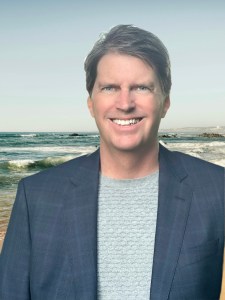
About this episode
When it comes to addressing climate change, sometimes it’s the “unworkable” ideas that are the ones we need the most. This episode features technologist-turned-sea-level-rise-provocateur Russ Walsh, who unpacks his audacious “SeaNet”: a globe-spanning lattice of canals and inland seas that would siphon ocean water inland and buy coastal cities time. Many will scoff—it’s too big, too messy, too hard. But with tides already licking at doorsteps and whole nations on the line, dismissing bold thinking is the riskiest move of all. Come for the skepticism; stay for the math, the engineering, and the unexpected upside (“blue gold”) that could turn adaptation into opportunity. If the water’s rising either way, shouldn’t we at least hear Russ out?
Notes and resources
- Russ Walsh’s LinkedIn
- Climate Swings episode with Janelle Kellman, former mayor, city of Sausalito
- Climate Swings Substack
Full transcript
Michael Ethan Gold (00:00)
All right. Well, thank you all for coming. Welcome everyone to the Groundfloor Climate Club live ⁓ podcast recording of Climate Swings featuring myself, the host of Climate Swings, Michael Gold and Russ Walsh. ⁓ Just a little bit of background first about
Groundfloor is a community space. We have Molly in the back who is the official ground floor representative. Anyone is interested in finding out more membership, please go talk to her. And the Climate Club is a sub club run by myself and Barb Chang also sitting in the back and then Ari Pearl Butler who was manning the door and unfortunately had to run. ⁓ And we host events about once a month or so on various climate related topics. ⁓
This is actually going to be my last one because I am moving out of the country soon. So thank you all for coming to my swan song Climate Club Groundfloor event. We’ll get you back. Yeah. Okay. We’ll come back sometime. And then the Climate Swings podcast is a bi-weekly show that I started almost a year ago, just talking to interesting people in the climate space, doing interesting projects. You can follow it wherever you get your podcasts and also on Substack, climateswings.substack.com.
Check it out, like, share, subscribe, all the good things. ⁓ I am a former journalist and ⁓ now a climate communications consultant. I run my own consultancy called Word Clouds Consulting and I do a variety of communication services for clients. And ⁓ I connected with Russ a couple of months ago actually through another podcast recording that I was doing and he approached me and thought it would be interesting to discuss
him and his background and his project on sea level rise called the SeaNet. And of course we’ll get to all of that but the way I’d like to start is just to ask you Russ to give a brief self introduction to yourself and key points that you think the audience should know about.
Russ Walsh (02:00)
Sure, so thanks again for having me here. It’s a pleasure to be in front of you guys. And for me, I’ve been in tech most of my career. I’ve worked with IBM, Facebook, Apple, Google. I think I counted over 100 companies because I’ve done a lot of consulting. I’ve been employed as well. But I got kind of started on this slice of the pie, if you will, ⁓ during my days at GE during COVID. We were kind of desperately trying to figure out how we’re going to survive. And I was helping part of their aerospace business. But one thing led to another.
And next thing you know, come across sea level rise. If you asked me five years ago, I was probably in a club of people thinking that it’s gonna go up an inch, a century. We got a lot of time and what’s the big deal? But it’s much faster than that. And we’ve got some places around the world that could be gone by 2050. They’re already saying if you got property in the Maldives, you might wanna think about places in Florida, all over the globe. Anything that touches the coast is at risk. And the sad thing is that they’re saying that it could go up as much as 200 feet
in the worst case, and since I grew up in South Carolina in Columbia, middle of the state, we had sand dunes in our backyard and we used to find oyster shells. So it has gone up that high. So the question is, what can we do? We can’t have that now. A million years ago, 10 million years ago, it was a different world. So anyway, that’s kind of my story of kind of finding out about this, and the last five years I’ve done a lot of research on this. And the good thing is, I think we got a solution. That’s what I’m looking forward to talking about.
Michael Ethan Gold (03:26)
Yeah, that’s the SeaNet. So the way we’re going to structure this and my podcast often goes deep into the backgrounds of the people that I interview. So we’ll spend a few minutes on that. Of course, people are here to find out about sea level rise and Russ’s solution, the SeaNet, which is interesting and idiosyncratic, to say the least. ⁓ But let’s start sort of, you know, further back in your career, you said you’ve worked in tech, you’ve worked in IT, you’re originally from South Carolina and you studied computer engineering and you’ve worked in a variety of tech, IT kind
cyber related roles. What kind of were the sort early career motivations that you were pursuing sort of for the first like say decade or so of your career?
Russ Walsh (04:04)
I kind of wanted to learn, get into something I knew zero about. I knew nothing about electricity, so electrical engineering was kind of fascinating. liked, beyond turning on a light switch, I had no idea and screwing in a light bulb. It was nice to like, I have expertise in this now. ⁓ Computers, again, they were so new. You know, back in the day I was starting, we were still, I’m dating myself, but punch cards and things like that. Computer terminals were just coming out. There was no internet. There was no network. If you wanted to notify a bunch of people at the company I worked with,
like a thousand employees, you print out a whole bunch of documents or your document run to the copier machine, make 20 copies, you go drop it in people’s chairs. That’s literally how we were still doing business. So watching it all evolve to what it’s become today with the internet and the AI and things like that, been very fascinating to watch that whole thing unfold and to be a part of it.
Michael Ethan Gold (04:56)
Yeah, so in the sort of pursuit of innovation, the pursuit of kind of ⁓ the next new thing, ⁓ did you have any ⁓ roles relating to kind of climate or the natural environment or sustainability at that time?
Russ Walsh (05:10)
Not really. It’s been fairly new. Now, I did work in the pulp and paper industry in the 90s. And one thing I saw continually were, you know, new regulations coming on and push back from management that this will be the thing that breaks our back. Right. And, you know, we have to do these things. And two years later, we’re like having a record bonuses. It’s like, OK, it didn’t break our backs and the place is safer and cleaner than it was. So for me, you know, I’ve seen both sides of this and I saw how the paper industry got much cleaner and
safer even for working there. So some good things can happen if we put some reasonable boundaries on things.
Michael Ethan Gold (05:48)
So the thing that would break the back being the impact on the environment and specifically say like regulations.
Russ Walsh (05:55)
The cost
of
doing all these things, right? If we have to put all these things on our whatever the things that release chemicals in the air, all these scrubbers, I think is the term they use, is so expensive and then everybody will buy their paper products from some other country, right? And it didn’t happen because, you know, it was a different industry, but it worked out well for us. You know, seeing how climate and sustainability had been around a while in various forms, but have also watched the pushback and then I’ve watched sometimes when things changed and it got better, you know.
⁓ I’m kind of on that side of the fence where you know it could be one way a little too extreme It could be the other but we’ve got to find middle ground on all this.
Michael Ethan Gold (06:33)
Yeah, of course the
pulp and paper industry has gone through a lot of changes. We’re not really here to discuss that, but that’s a whole different industry than I’m sure when you were working there. You ⁓ worked in General Electric and you had some exposure to wildfire risk and resilience, I believe, during that role. Do you want to talk about that a little bit?
Russ Walsh (06:52)
Again, that was more of a stretch. That wasn’t my core job. During COVID, we’re all stuck at home. My wife’s overseas taking care of her aging parents. The kids are all grown in an empty nest. I’m like, what can I do with my spare time? I might as well help the company. And I really rolled up my sleeves and started looking at what we could do to help, especially the aerospace part of GE was really getting hit hard. It’s like, hey, if we can help with wildfire response, we make a huge percentage of the world’s jet engines, helicopter engines.
Drones, we could make an impact and help minimize that. And that’s kind of what led me into this was I just kept seeing more and more like, hey, what’s the sea level rise thing? So that’s kind of how I’ve evolved into it in the last five to seven years.
Michael Ethan Gold (07:35)
But you’ve also kept very much ⁓ rooted in the sort of cyber IT space and you’re currently the chief revenue officer at CyberServ. Can you just describe a little bit about like your sort of full-time job right now?
Russ Walsh (07:49)
Well, again, everybody’s becoming more more at risk to cyber type issues. I mean, we’ve had we had to cancel credit cards this week. So things are always going these scams and all that. But for corporations or little tiny small businesses, we’re trying to help everybody in between. But I’ve done a lot of work at the big guys. I’ve helped like a GE, right? An 80 billion dollar company with one hundred sixty thousand employees. How do we stay safe? Because we know the bad guys want to get in and steal our secrets. How do you make jet engines? Right. And there’s all types of things.
And then sometimes they just want to destroy your business. ⁓
20 years ago, I go back, technology still was very traditional in the sense of it was big data centers. Every company had their own data center. They kind of had everything protected. And then as we’ve started to go to software as a service concept, Salesforce kind of broke the mold. That was probably the company that made a way of doing an important part of the business be something you do in the cloud, right? You just, you know, if you want to become a Salesforce customer and start using it, you can do it and you
in a few hours, you can go from concept, you don’t have to buy servers and build all the stuff that takes six to eight months to do, six to eight hours and you’re up and running, right? That changed the game, but also now your data’s in their hands, right? So if they mess up from a cyber perspective, they don’t back up the data or somebody gets in and damages it, your business is affected in a much different way. So cybersecurity’s kind of evolved from something, ⁓ just one last point about that. At GE, before we built a cloud product,
this cybersecurity organization had nobody really that was a full-time person. It’s like, oh, I’m pretty good at this. And when they said, hey, we’re going to build this cloud tool, they hired 150 people, right? Because we have to build this to protect the data. So I’ve watched this evolve. And again, lot of brilliant people in this space. There’s people who understand kind of how, in a big picture, how do you do cybersecurity? And then there’s the people, the real highly technical stuff. I’m more at the big picture. And there are some brilliant people I’ve worked with that know how to
get those technical things right and there’s thousands of them to think about. ⁓
Michael Ethan Gold (09:58)
So that’s your headline career, I would say, in a nutshell, what’s paid the bills. And then, of course, there’s the SeaNet, which, again, we’ll get into. But I, again, want to go back a little bit, because you described growing up in South Carolina. And you’ve talked to me previously about encountering people in the coastal communities and their experience with what we now call sea level rise, where it’s it’s
But of course, the pace of it is sort of too slow to really understand what’s going on or to craft a coherent response. Can you talk a little bit about that and how it’s sort of threaded throughout your life and sort of what your awareness was of that problem?
Russ Walsh (10:37)
Absolutely. So I lived in the Carolinas, Georgia, the first 30 plus years of my life. So I was used to going to the coast and dealing with life there. A lot of friends of mine were lucky enough to move to the coast in their 20s, they’re still there, and you know, several decades later, but they’re like, things are happening here that did not happen 30 years ago. I mean, daytime, what they call it, sunny tides or whatever, right? Doesn’t look like any kind of weather, what you should call it, flooding or
but all of a sudden my front yard’s underwater for some reason. These king tides as they call it, several times a year where the moon’s in a really strong spot to pull. But again, that wasn’t happening 20 or 30 years ago. It wasn’t creeping into that level. So it’s terrifying for them to think, what’s 20 or 30 years from now gonna look like, especially if it’s accelerating?
Michael Ethan Gold (11:28)
And so how did that sort of carry with you? You came out to the West Coast, obviously. You’ve done a whole career on kind of the digital side of things. Was that kind of in the back of your head as you were going through your various other career stages? Where was that with you?
Russ Walsh (11:40)
sort of you were.
It wasn’t until the last year
or that I really started asking these questions to friends who live in coastal areas like, are you seeing any difference? You’re living it. And they go, yeah, we are. We’re not posting it on Facebook all the time or whatever, but it’s happening. And this is part of what’s going on with this whole sea level rise. I call it the sort of silent scream because the developers and ⁓ mortgage holders and the insurance companies in Miami do not want people to really panic, but they’re going to panic
someday if this keeps going, right? But some places you can’t get but a 15 year mortgage because the bank’s not confident 30 years from now your homes or your business is going to be viable where it is. And so it’s like we’re just sort of watching this on pins and needles and not really making the headlines of this that we probably should. And I’ve said this to people before, the, you know, as we’re focusing on carbon, which is important and it’s all playing a role in this, if the temperature in this room is two or three degrees warmer
than we want, we can tolerate it. But if we got two or three feet of water over here, we got a different kind of problem. And that’s what we’re facing here. We’re facing water coming at us in a way that’s really going to be problematic.
Michael Ethan Gold (12:55)
So what was it in the last couple of years that started to plant the seed for this idea that would eventually grow into the SeaNet? Like a really deep-seeded concern that you obviously show toward sea level rise in particular.
Russ Walsh (13:10)
I think it was just a continual watching
amazing people from ⁓ all types of careers who were researching this and seeing that every video, every documentary, whether it was PBS, BBC, NASA, National Geographic, they all had a terrible ending. We’re gonna lose this, we’re gonna all have to retreat to higher ground someday, we can’t win this battle. That’s what frustrated me was come on, we can figure this out, right? So the notion of, as we’ll dig into more detail, there could be a solution and as I’ve had
chance to speak with some climate leaders at Stanford University and in Venice, Italy and other places and I say could we do this and they go hey that might work. You’re like really? So they’re like can you dig in and we’ll dig in a little bit too and that’s kind of what triggered me to write the book was is that this concept is had not been really considered and we’re running out of time. We’ve got to do something. So that calls me to pause and take some months this year to really focus on writing a book and documenting this and then sounding
off some really ⁓ people in the know and getting more more feedback that, this could work and this may be the solution.
Michael Ethan Gold (14:21)
This being
the SeaNet of course. And again, we’ll dive real deep into what exactly you’re proposing. But why don’t you maybe provide a little bit of more context for the audience about the scale of the problem. Because you’ve, in your book, as I’ve read, you’ve documented some really scary and horrifying statistics that could be waiting for us in the future if we don’t do anything.
Russ Walsh (14:46)
Well again, sea level rise of 200 feet means, you know, Florida’s gone, right? All of Florida, right? Nothing will be left. And half of the South Carolina will be gone, right? Everything will be underwater. Good bit of Georgia, all the way to the coast of Texas, just the US. And again, there’s almost 400,000 miles of global coastline. And the coastline will be also, you know, it’s indiscriminate. It doesn’t know where the lines are, right? Whether you’re in Korea or whether you’re in Japan or whether you’re in Bangladesh.
The ocean’s the ocean. If it goes up a foot here, it goes up a foot there. But what’s happening too in some places is you have subsidence. If you’ve got a rocky base where you live, a two-inch sea level rise may have no impact at all. But if you’ve got limestone, which a lot of places do, two inches here might cause some sinking of six inches. And that’s what’s happening in a lot of places, that they’re losing a lot of land or the land they have is getting ⁓ infiltrated with salty water
that’s affecting their coastline, ⁓ agriculture and things like that. I mean, for Bangladesh, they’re in a really ⁓ humanitarian mess already and it’s just getting worse.
Michael Ethan Gold (15:57)
And what is the time scale that we’re talking about? mean, Florida being gone, like, when would that actually happen if we don’t take any action?
Russ Walsh (16:03)
Ew.
Good question.
Again, the 200 feet worst case is something that would take several centuries based on the current projections. But they are saying the sea could rise ⁓ by five to 15 feet by the end of this century, which that’s still staggering numbers to think of. Pretty much every coastal port in the world is going to have to make an adjustment. Even the ships just won’t even align if you weren’t able to do something. it’s pretty drastic in the sense of that. ⁓ In the worst case, we’re
a third of the world’s population being displaced. Several countries won’t exist at all. Like the Maldives, they’re already saying, they’re giving them until 2050 that they’ll probably be completely gone at that point, right? So if you own a condo there, you might want to think about selling it unless we can do the SeaNet and save it. That’s kind of what the reality is. So it’s very scary what we’re facing here, even in San Rafael here in the Bay Area. They’re having king tides now pushing all the way into City Hall
from what I’ve seen. So it’s a very big wake-up call for them that, this is real. It’s right in our front yard now.
Michael Ethan Gold (17:13)
Yeah,
so obviously climate activists will talk about sea level rise
as a main reason why we have to get climate change under control because, you know, as I’m sure many people here understand, most of my audience will understand, it’s the ocean expanding due to warming temperatures as well as the melting glaciers and icebergs and the ice sheets and whatnot. So that’s kind of like the downstream effects, obviously, of the warming climate. But it does seem like we’re going to overshoot
internationally ⁓ recognized targets for climate temperature rise. So we will have to accept a certain level of sea encroachment. So aside from what you’re thinking of, are there solutions that seem viable out there that are sort of being mooted in kind of international fora for dealing with this?
Russ Walsh (18:09)
It’s again, that’s what shocked me was the lack of real hope, the lack of real solutions. If this thing goes beyond that, most things you watch on CO2 and greenhouse gases, really there’s a desperate plea. We can’t let this go any worse. We can’t let the ice continue melting. And if we can stop it, we can put the brakes on in 20 to 30 years and get this kind of back to where we were. And the ice, may take a long time to build back
what we had, but that’s the approach most people have is that we got to do it, but the reality is…
just took a course at Stanford University and they said, even if we did everything and we went to net zero, we still, some of the stuff’s already in motion, right? It’s gonna keep going. Carbon takes something like a thousand years to kind of work its way out of the atmosphere if we don’t do something to pull it out. I think methane’s just like a few years and methane is one of the ones they’re focusing on now because you can make an impact on that. Five years from now, if you stop, it’ll be, you’ll feel the difference of that.
Michael Ethan Gold (19:17)
Yeah, but because we have this sort of like baked in impact. See, let’s see level rise will happen. And basically there isn’t really a good kind of holistic solution that can really deal with the adaptation that’s needed. So that’s where the SeaNet comes in. So why don’t you just like provide a quick sort of overview of what the whole vision is? Sure.
Russ Walsh (19:40)
Again, to me it’s quite logical. I mean, cities that are prone to flooding in certain seasons, they’ve been building little holding ponds, reservoirs, things like that for centuries so that when it does rain a lot, the water has somewhere to go without flooding the town and everything else. We’re talking about something of that nature, but we’re talking about at a whole different magnitude. So if we could redirect the ocean to places right now that are quite arid and need water,
Sahara, Australia, Saudi Arabia, Southern Argentina. There’s quite a few candidates for that. And we’ve already talked with some people in Australia who have some and they’re like, wow, this is a game changer. We’ve been trying to figure out how to get water for the last 150 years. And now you’re saying we could have more than we can imagine. Of course, it’s going to be salty to start with. But again, mean, Saudi Arabia has to desalinize is everything they do because they don’t have any fresh water source. So we’re getting pretty good at that. We may have to do it in an epic way. But again,
I’m calling this the Suez Canal on steroids. How big of a swimming pool essentially do we need to build to really make a difference to offset two inches of sea level rise, two feet?
200 feet, right? What’s that gonna take and how would we do it over time? But again, some of the top engineering companies I’ve talked with, they’re like, this is feasible, this is doable, but it is gonna be at an epic proportion. The good thing is it’s coming at us slowly, so we have time to start out, pilot this over the next decade or so, and see, learn from this to where we can really come up with a game plan for how we could do this.
Michael Ethan Gold (21:18)
So it’s essentially building a massive network of inland lakes and reservoirs connected to the ocean by canals to essentially alleviate pressure on the coast.
Russ Walsh (21:28)
That’s a big part of it. We really think too, it’s going to be all about water management. I mean, there’s only so much water, right? So what if we, you know, if you look at a map of Canada, Northern Canada is so wet, right? What if we could just dig out a little bit and create like a big bowl and they get a lot of rain and everything else and snow. We start catching more water in places like that. So even existing places…
⁓ Maybe we build higher dams to capture more water where we already have lakes. Maybe we dredge things. So I think it’s gonna be a culmination of a lot of things to make a difference on this because again, the amount of water we’re talking about is really extensive. Building these inland seas and lakes, I think could be a big part of it. Maybe that is where we get 50% of the solution and the other comes from a culmination of a lot of other things.
Michael Ethan Gold (22:15)
So you as a digital first cyber IT guy, how did you even start formulating this kind of idea that involves just significant massive real world engineering change and sort of reforming the natural landscape? How did the pieces of this idea sort of start to come together for you?
Russ Walsh (22:40)
Well, at GE, ⁓ I was doing risk and compliance. Cyber’s a part of that. But one of the biggest projects we were involved with was this project called NEOM out of Saudi Arabia. We were ⁓ watching that very closely. And I don’t know if the audience ⁓ knows what that is. But Saudi Arabia is really trying to transform themselves. Since they are worth trillions of dollars right now, they have the money to do this while they still have oil and people are buying it to really become something new. So they’re really doing some very creative ways
to build new cities and a whole new environment. So watching that this is what’s happening and you watch cities like Dubai, Singapore, and even where we have property in the Philippines, edge of Manila. Manila took an old military base and said, hey, this is around the edge of town, we don’t need that here, what if we could build a brand new city here? And we’ve watched that transform in the last 15 years to, it’s probably 50 buildings that are more than 50 stories tall where it used to just be a couple military base and open fields.
We can transform landscapes and things, ways that we never could imagine a few hundred years ago or even a few decades ago. So that’s what’s exciting is being around and seeing how we’re doing that, ⁓ that gave me the hope we can do something of this scale. When they did the Suez Canal, they put it a parallel extension about 12 years ago because they were bottlenecked. You’d have a bunch of ships come in and a bunch of ships go out. So they decided to build a parallel canal, and they
did it in like 15 months with $8 billion, right? And stuff. So what we can still do on this planet with some great engineering resources is phenomenal. So I think there’s gonna be a lot of engineers foaming at the mouth like, gosh, what are the possibilities of what we could create here as we do this?
Michael Ethan Gold (24:29)
Yeah, I mean
people often point to like putting a man on the moon and building the like gigantic skyscrapers but obviously the way that we’ve been able to manage water you know sort of our relationship with the ocean in particular is another major feat of humanity. But again like in your book ⁓ which I’ve I’ve when you were generous enough to let me take a look at an advanced copy. There are really detailed or granular measurements and diagrams. How did you come up? How did you like have the like idea to essentially
put those together, where did the sort of ⁓ real world sense of what this will look like come from?
Russ Walsh (25:08)
I mean, before I ventured into writing the book, before I even ventured into proposing, I did have some people in my world of 10,000 LinkedIn friends and connections ⁓
step up and say, hey, we’ll help you look at this. Let’s just do the basic math, right? Here’s how much water we have. You the earth is 4000 miles thick and the ocean is about a 12,000 feet deep on average, right? So when you think about it, that’s two miles. I mean, that’s just a scratch of the surface. But still, it’s pretty significant when you think about it, because if we go down 10 miles into the earth, there’s things going on that we can’t really go beyond. In fact, we’re struggling to go beyond a mile deep because you hit heat issues and
some crazy things like that. But the thing that I would say pushed me into this was getting that validation from these people that the numbers show this is doable, we have enough land to make this work, and so now we can go forward, right? So that was the basic. You gotta get that first calculation. Couldn’t this even work? Do we have enough land to work with? Do we have enough to offset the sea? That was a big thing.
Michael Ethan Gold (26:18)
So how did you take an idea like this, which I think a lot of people would probably describe as audacious, bold, although I’m sure plenty of people would call it unworkable, how do you start to shop it around? I mean, how do you build a coalition and a network behind making this, getting enough detail for your book and making this more than just something that you’re thinking about in your head or like on the back of an envelope?
Russ Walsh (26:43)
It’s a journey, but again, it’s been interesting watching Silicon Valley companies over the years. I worked with this little company once upon a time called Google when they had about 300 people, right? I’ve seen several companies ServiceNow, worked with them when they were small, and a of people may know them. I worked with Salesforce when they were pretty small. So watching in Silicon Valley how we can take some great ideas and literally a handful of people and a few million dollars to get started, and eight years later, this is something worth
$20, $30 billion, and 30,000 companies across the globe are using this technology. So knowing that we can do that, I think, really gives me comfort. And just seeing how we’ve done that over and over again.
Michael Ethan Gold (27:25)
So aside from the book, when will that ⁓ be published?
Russ Walsh (27:30)
It
looks like January is going to be the release date.
Michael Ethan Gold (27:33)
Okay,
you can, and the full title is…
Russ Walsh (27:36)
So the full title is the SeaNet Vision: Stop Rising Seas and Turn Melting Ice into Blue Gold. Okay, it’s a long title and we debated taking a word or two out. But everybody said if you take the word out you lose some context. Let’s just go with it.
Michael Ethan Gold (27:49)
Right, that’s the book plug. Aside from the book, what exactly is the SeaNet now? Do you have an organization behind it? Because you’ve been doing speaking and convening people on this topic. What is the formal structure that you’re trying to put in place?
Russ Walsh (28:06)
It’s, it’s, it’s…
evolving. I can’t say yet, but we are starting a think tank ⁓ with the help of what looks like UC Davis and several other companies around it, along with some former FEMA people. And ⁓ we’ll be ⁓ having some kickoff discussions tomorrow in Sacramento about that. So it’s more of just really I’ve made a lot of emails and phone calls and LinkedIn connections to see who will respond. You were one of the people who said, hey, this is interesting
interesting, let’s talk further. And I’d say half the people I’ve reached out to have said, let’s talk. And now that we’re getting more momentum, some of the people who were first kind of pushing back, because they didn’t know, like, hey, Russ, this looks, sounds…
like this is going somewhere and now I get what you’re saying so we’re starting to get people coming back in. I haven’t really had a lot of pushback but it’s still, we got a long way to go. I mean, if you look at the topics for what they’re gonna speak about in Davos in January, I’m not seeing much on sea level rise and this is the biggest problem the earth’s facing with climate. I’d… ⁓
like to have somebody representing the concept of a solution for this speaking there. That’d be really nice if we can get there in the next couple of months. That’s a big leap, but if we can get the right people behind this, right, that’s the key we need, right? Who is that next person who can say, we’ve got to take ⁓ this on?
Michael Ethan Gold (29:35)
Have you pitched
yourself for Davos yet?
Russ Walsh (29:36)
Not yet, but the publisher of my book has huge connections with the media. So next month I have 72 interviews with various media sources from the Today Show, Good Morning America, and a huge swath of magazines and everybody, right? So I think as we go into Q4, we have a real good opportunity to make this become much more viral.
Michael Ethan Gold (29:59)
How did you get the book together actually? What were the steps that you took to sit down and write it and secure a publisher and everything?
Russ Walsh (30:07)
Well,
I did write a book before, so that made it easier. I do have a published book out there and stuff. And I actually wrote the original version of that in the mid-90s. And when I first got a laptop for the first time and everything, I had an idea for a book and did it in a year and a half, wrote it. But back then, getting published was just so difficult. So literally, Kinkos, print 100 copies, three-hole punch them, buy a bunch of little binders, and hand them out to family and friends. It sat on the shelf for about literally 20 years until somebody
came along and said, hey, that book you wrote is still relevant and current. Can we get you to refresh it? And so we released that book about seven years ago. It’s called Eternity. So more of a spiritual book, but still, we’re all going to die someday. So that’s kind of another important issue to cover at some point.
Michael Ethan Gold (30:54)
Yeah, maybe for another podcast. Did you work with the same publisher?
Russ Walsh (30:58)
No,
I didn’t. ⁓ And that was a thing to ⁓ my wife was wanted to write a book and she started researching about a year before this idea came up for me and had a big head start and found a publisher she was really excited about. They do this all self published so you do pay them but at same time they know what they’re doing and they do this over and over again. They’ve helped produce Rich Dad Poor Dad and Chicken Soup for the Soul and some really amazing books that most people recognize the titles of. And the PR program they
do to help is just so good. I mean, that’s what’s impressive because a lot of companies will help you produce a book, but you’re on your own to sell it, market it, do the whole PR. These guys are covering that side of it for me and it’s just, they make it so much fun.
Michael Ethan Gold (31:44)
Gotcha. Okay, so this is really you’ve been driving this like really from kind of just your bootstrapping it all the way kind of all the way up essentially. What is some of the pushback that you’ve gotten from people that you’ve encountered especially say like scientists who are in the space?
Russ Walsh (31:58)
It’s been more not pushback as much as just sort of okay. Thank you, but just kind of moving on I’m not gonna name the name of the university, but one a pretty top university came back with a pretty quick response like you just can’t cover land with water and I’m just kind of well It’s gonna get covered with water whether we like it or not if we don’t do something about it and we when I step back and research and realize we built 90,000 dams in America in the last
150 years and we had to get approval for all those right you don’t go to just do that unless it’s in your property on your yard but generally when you build a lake and a reservoir that you know displaces a lot of people there very likely some farmers and people living in lower areas that are gonna have to move out because you’re gonna flood that area, right? So we’ve done it many times before. So that was a little surprising that they kind of were quick to just say that’s that another case I had someone that was a little more environmental-leaning that is like, you know, you can’t displace
all that land in Australia for all those habitats. And I’m like, they’re all gonna get displaced someday if we don’t do something. So wouldn’t it be better to plan it and prepare it and find a way to get a happy outcome for everybody?
Michael Ethan Gold (33:11)
And so you also in the book subtitle talk about blue gold and that’s kind of your euphemism for the economic opportunity that could arise from this kind of project. Talk about that a little bit because at this point the way you think about it is like this requires mobilization by governments and a huge amount of investment and like what’s the upside you know like just yeah get into the kind of like where the opportunity actually lies.
Russ Walsh (33:34)
Yeah, absolutely. This is where it really gets fun and I think the section of the book where I really describe the vision again if you’re a civil engineer and you get to plan this right like where are gonna put this in Australia and what’s gonna be the pilot place and how do we get people there right what kind of infrastructure we’re gonna build and when it’s all said and done and we build this phase and we got a little small city and a small lake that’s five miles by five miles But it’s our test thing but still we got two or three hundred thousand people that live in an area that maybe only had two thousand people you know at start of the
project, but now we’re building these incredible high speed rail systems and we’re building all this infrastructure and these new cities and towns and and ⁓ you know resorts and national parks and all the possibilities agriculture that you could do there. You know again universities hospitals all that would go into building brand new things from scratch. It’s extremely exciting, but what’s also really fun is the outcome. So imagine that let’s just say
we did have a five mile by five mile surface lake when we’re done. Of course, we want this thing to be as deep as possible, so it’s going to be kind of a, ⁓ probably square based on what our engineers are telling us. But imagine that the coastline of this thing ⁓ is ⁓ mangroves, right? The first part of it, it transitions from land to water, right? We have mangroves. Then a little further, we have coral reefs, right? And then we have floating kelp farms and
again, this is salt water, which and stuff. But when you look down on the blue of the lake, it might be a lot more green than you expect. And it could actually be one of the biggest carbon sink concepts that there would be, right? Because it’s that blend of all those things that are good for bringing carbon out of the atmosphere as well. And even imagining what if people, you know, we start converting people to live on the water too. Bringing cruise ships, right? And allow people to be living in those, you know? I mean, some of hold what, three or four
4,000 people, you know the idea that hey we could have schools on here and you live your life on this and weekends you get off the boat and you go to the town or whatever but these are all possibilities even just small houseboats and things. All right just more living on the water is a possibility too so it’s really exciting and then of course building as we do the landscape dig building these new hills around it ⁓ and then homes on the hillside like the south of France or where you’re moving to Barcelona, right? We’re and that’s a dream a lot of people
have is to be able to see the sea and maybe if you’re lucky enough you can see the real ocean 10 miles away and then you can see the new lake on the other side from the windows on the other side of your house right. That’s the possibilities of what we could create and and that’s really exciting to kind of know we can build it from scratch and I hope you know we also do this in a way that’s very equitable to the people that are involved right. We’ve seen people exploited over the centuries and and stuff for big projects of somebodies but a lot of people, you know,
lost their lives and their family members to build this Suez Canal in the 1860s or whatever, right? So I really hope from the humanity side, we really make this a great opportunity to raise the bar for lot of people.
Michael Ethan Gold (36:48)
So this ⁓ is huge vision of really holistic transformation. That’s kind why you’re saying that like…
the inland lake idea is kind of only half the battle because you really have to turn this into like a whole almost like a whole new way of living in a lot of senses and like a whole yeah like a whole new part of the a of the center the global economy have you talked to any governments about this because this looks like a you know a such a gigantic lift here you know on such a massive scale that you would need a really high level push from the governmental side
Russ Walsh (37:18)
Well,
tomorrow is kind of my first taste of kind of dealing with that being in Sacramento, California, right? I mean, what, third or fifth largest economy in the world. Having the representation of people here from government as well as industries is going to be a good next step forward on this. But we do have some people on our team that I’ve been working with the last few months who are former FEMA people and people in academia getting excited about it. But yeah, that next step of how do we get
Australia perhaps to say, we’re going to do this, right? And we’re going to get behind this and we’re going to make these things happen. Those are all things we still got to unpack.
Michael Ethan Gold (37:58)
And all the people that you’re working with me this is all basically just they’re putting in kind of their sweat equity at this point it’s all pretty much volunteer based.
Russ Walsh (38:06)
It is, it is. Right now we don’t have funding. We are talking with several outlets for getting funding and grants and other things, but that’s such a mess in the U.S. right now. I mean, that’s the one thing we’re getting pushback is just such turmoil on all that process. So that’s something we’ll have to navigate as well.
Michael Ethan Gold (38:24)
How do you see the landscape, say, like one year out for this, for what you’re working on now?
Russ Walsh (38:30)
I think things are gonna stabilize on this. I mean, right now, I mean, again, several countries are facing shifts in the way leadership is doing things and prioritizing, and we all know in America, you know, things have shifted a lot in the last eight or 10 years, right, from this to that, and seems like the shifts are more extreme now than they used to be. I think there’ll be a balance, and I believe, too, you if we can get the current administration to realize there may be some really good economic output of this. ⁓
We’re hearing too, you know, Silicon Valley is always looking for what’s that next thing? I mean, they’ve kind of been behind AI the last several years and now that’s starting to take fruition I mean, I’m hardly going a day without talking to ChatGPT and a year ago, I couldn’t spell it. So we’re getting there rapidly ⁓ but one thing I’ve been told is that Silicon Valley is also looking for that next big thing is like hey if we’re going to be building new construction equipment new ⁓ ways to live
and all types of things that could come out of this as by-products. New ways to pump water, to desalinate. What if Silicon Valley is behind creating a lot of the newer technology to do that and fueling that? So I think we can really get some buy-in from here in the Bay Area and the VC community as we go forward when they see the opportunity as well.
Michael Ethan Gold (39:52)
Yeah, and we’re in a kind of, as you mentioned, sort of a rather febrile political moment. It also seems like the idea of, climate and sustainability has kind of fallen out of favor politically in a lot of ways, which, you know, is is of course unfortunate, I think, for a lot of people here and probably lot of I’m sure a lot of my audience would would feel the same way. When you’re talking about sea level rise, though. There’s a sense, I think, that people can
feel it and see it and touch it and it’s really tangible and real for them, as you were saying, you know, you know, about the South Carolinian communities and I’ve had Janelle Kellman, the former mayor of Sausalito on my podcast and she’s discussed how she’s done a lot, a ton of work to make Sausalito more resilient to things like sea level rise and tides. How do you message this to say more conservative stakeholders and audiences for whom
climate is not really the concern, but say there is an issue around, coastal resilience or sea level rise and infrastructure.
Russ Walsh (40:53)
I mean, I’m kind of in the middle politically, so I’m seeing that most people, the 80% of people in the middle are like, I think we got a problem here. And I’ve talked with a lot of kind of climate deniers recently, and I’m like, can you show me that the sea level is not going up? And when they come back and go, I can’t. I don’t think it’s going up as fast as they’re saying it’s going to, but it has gone up nine inches in 125 years, three inches this century, is, you know, in 25 years we’re at a
doubling rate from last century already. So when they validate and say that, they also can’t show you that the polar ice kept in the North Sea hasn’t
shrunk drastically. Why would we be talking about warfare across the ocean that we never did 10, 20 years ago? Because that ice melted, right? It really has happened. So if you deny it and you go, wait a minute, why are we worried about Russia and China and the US navigating those waters that 20 years ago, it was impossible, right? It was 20 feet of ice blocking it most of the year. So why is that? So there’s some reality checks that we have to do.
I think there’s gonna be some wake up on both sides. And I hope the people in the middle who are kind of thinking, just let’s look at this collectively, guys. We all gotta win this, right? We gotta create a world for our children and grandchildren. And let’s pull together on these issues and make things happen. So I think there’ll be a coming together. At some point, if the sea does go up 10 feet, it’s gonna have a lot of attention of everybody, right? We can’t ignore it too much longer.
Michael Ethan Gold (42:34)
So trying to keep it as apolitical and removed from kind of the culture war element of all this is possible.
Russ Walsh (42:40)
And I even had people recently like, maybe this is one of those things that could bring us back together a bit, right? We got some common element to talk about, and it’s not so divisive. Let’s figure this out, right? And then let’s put our heads together on this. That’s my hope. This is one of those things that starts to bridge the gap.
Michael Ethan Gold (42:57)
Yeah. And so, you know, on my podcast, I’ve had a lot of people for whom sustainability has been kind of the headline in their career for a long time, you know, they’ve sort of integrated it in various ways, but you really sort of like have made a very sort of sharp swing into a space that I am sure that you really didn’t know much about. You really had to learn quickly and get over your imposter syndrome and whatnot. I mean,
for a lot of people who are thinking about trying to go into climate, work in climate, sort of become climate practitioners or, you know, in sort of the adjacent spaces like sea level rise, what’s some advice that you would give to people who are interested because you’ve had a long career and now you’re starting this completely different chapter essentially.
Russ Walsh (43:39)
I mean, I wish I could say I have all the expertise to give the insight, so how to advise people. I’m still learning that side of how sustainability departments work within companies. I just took some coursework at Stanford where I learned a lot more about that as well. But again, I’m still a little bit of a novice on that. But one thing I would say is,
you know, don’t be afraid to just keep learning. That’s the thing I do. It’s like every minute I’ve got. I mean, I might play FreeCell for three minutes a day just to kind of make sure my brain still works and I can solve the problem. But other than that, it’s just like use your time wisely. And that’s why I love to binge watch all these things on YouTube. And, you know, my brothers used to laugh at me because they’d come home and I’m like 12 years old and I’m watching the Weather Channel, like really watching it like, hey, you see that storm?
That one coming off Africa, that thing’s gonna hit Puerto Rico.
Michael Ethan Gold (44:32)
Geeking out on
the Weather Channel is nothing to be ashamed of.
Russ Walsh (44:35)
Exactly. But nonetheless, that spirit of, it’s OK to be different and to be thinking about things in a different way, I would encourage that. Keep learning. And if you’ve got an inclination to look at this or look at that, go with it and really see what the possibilities might be.
Michael Ethan Gold (44:55)
Yeah, and what’s like a message like if you could really just sort of sum up what you’re hoping the audience to take away and you know anybody who might be listening to this or watching this like what’s kind of like a ⁓ sharp message that you would want them to think about?
Russ Walsh (45:10)
Again, sea level rise seems very real. I mean, if I was a betting person, I’d say 99.9% chance this is real and we got a real problem here. And we can do something collectively about it. What I’d like to do if we can is take a few questions from the audience, because every time I walk away with somebody giving me one more good idea. That book is full of ideas, because after the first version that was written in March, and I took some, you know, really pushed this out to some people who were in the know.
⁓ Civil engineers and others, they came back and said, hey, think about this, think about that. You could solve it this way, you could solve it that way, right? ⁓ That’s what really makes these discussions fun, because I bet there’s people in the audience out there with, it might be a question, but that question leads to a possible solution we never thought of. So to me, that’s what gets really interesting and exciting.
Michael Ethan Gold (46:01)
Yeah, we’re definitely going to move to audience questions. ⁓ First, though, if anyone listening or watching the podcast, how can they get in touch with you if they have an interesting idea?
Russ Walsh (46:12)
It’s good. I have a very simple way now. It’s just info@RussWalsh.com. So I went ahead and set up a new email website and all that in the last few months. The website’s still in the works, should be coming up pretty soon. But at least that email does work. You could send that. And I love getting emails from people about this and just continuing to build things out. I hope I’m…
people don’t get impatient. I do monitor that every day, but if I do start to get more more activity, it may take a little while longer to get back to people. But again, keep the thoughts and questions and ideas coming. Don’t hesitate to reach out to me. I’d love to follow up and learn more about what you’re thinking.
Michael Ethan Gold (46:53)
And my last question before we open it up that I like to ask all my guests is casting your mind sort of to the end essentially of your career, maybe even of your life, I know, you know, that’s quite a thought. What would you want people to have thought about your contribution to this cause in particular, you know, to this issue, which you’re obviously very passionate about now.
Russ Walsh (47:15)
Again, you know, I like to think I’m a humble guy because I’ve had people when I had my own company like you should call it Walsh Corp. I’m like, I can’t do that. I’m not going to do that. I had somebody ask me to, you know, what if someday they call this area of Australia where they build this Walshtralia? like, I don’t want to even go there. But I do kind of want people to, you know, be nice to 50 years from now, 100 years from now. People say, hey, this guy had an idea and it really transformed the direction we went with this, right?
That’d be great. And honestly, I’d…
It a dream of mine that my 18-month-old grandson is, 30 years from now, is writing the seventh volume of this book. He’s walking around Australia, and he’s walking around the Sahara and seeing how it’s working, how it’s actually happening, right? That would kind of be really cool to me to see it kind of carry on generation after generation to where, because this could take 300 years to solve, right? It be a lot of fun to see if this outdoes the Harry Potter book series.
Michael Ethan Gold (48:16)
Yeah,
but if they say as I say if you’re gonna dream dream big I suppose. Well, thank you very much Russ Walsh for appearing on Climate Swings. This was wonderful and we can open it up to audience questions now. Don’t be shy
Russ Walsh (48:34)
There we go.
Michael Ethan Gold (48:35)
Please.
⁓
Russ Walsh (48:46)
Okay.
Well, that’s the idea. It’s kind of like the Suez Canal, right? So the Suez Canal, it’s at sea level, right? So technically they had to dig down below sea level, if you will, and at some point they opened the floodgates and let the water flow in, once they dug it. That’s the idea is that further inland we would dig these massive holding places for the water and ultimately we connect it to the sea and let the sea kind of fill this in, right? And then we continue to expand the network
as we go. That’s the basic idea, but some of the engineers are telling me that because there’s limits on how deep you can dig, because you run into heat, you run into underground water systems, you run into some problems.
Yeah, we may not be able to go miles deep or even thousands of feet. We may be hit our limit at three to 500 feet. We don’t know that, but we hope we have the opportunity to make these lakes hold as much water as possible. But what they were saying is as we build, you we dig, we have all these massive hillsides that could go up thousands of feet like a cereal bowl. Then we figure out really ways to start pumping the water in over time to fill it up even more. It should be above sea level. The surface of the water could eventually in some place
be higher than the sea level, like Tahoe concept, right? Where it 6,000 feet at the surface level.
Michael Ethan Gold (50:14)
You would also presumably need to take account of elevation change as you move inland, right? Which is also presumably one of the reasons why Australia is appealing because it is flat and…
Russ Walsh (50:26)
Right,
that’s where the geoengineering is going to come in. There are places that you can go pretty far into the Sahara and Australia where maybe 500 miles inland you’re still only 10, maybe 20 meters or less than 100 feet above sea level. But at same time there are hills, mountains, and places where you got 8,000 foot mountains between you and them. Do we navigate around that and find ways to develop it on the other side? That’s what’s going to be really fun, I think, is starting to figure out where we
we could really put this. In Israel, you got the Dead Sea. They’re very excited about what are we, that thing’s way below sea level. We could route the water and kind of fill that up to sea level and make that place more useful as well. So I’ve even been talking with people in Israel who are thinking about that possibility of how this could affect them in so many possible ways.
Michael Ethan Gold (51:20)
Other audience questions? ⁓
Russ Walsh (51:26)
Okay,
sure, yeah. Okay.
Michael Ethan Gold (51:28)
I
was happy to hear you address the impact on existing ecosystems and celebrate your inclusion of experts in that arena. I think maybe the question is, you or have you been working across collaborative approaches
to this or other problems that have been inspiring in that way, where one ecosystem is intact, we’re going to another intact ecosystem, and we’re having to do a dance of some kind.
Russ Walsh (52:08)
I think
a of that is going on is we’ve done like the climate, San Francisco Climate Week, you meet so many people that are doing amazing things. So just looking at the micro level of the sea itself and the habitats, you know, are we losing coral reefs? Are we losing certain kinds of animals that we know used to be here and they’re not as they once were? We do need to make sure those people are very involved in this, right? They’ve learned a lot and that’s going to be very important for us. They’re the ones that are telling us like, hey,
coral reefs, mangroves, those things. We can create those manmade versions of those and they make a difference. There’s a movie that came out, I saw it on a Delta Airlines flight, called 2040. If you haven’t seen that, very good. And it gave me several good ideas, like the floating kelp farms now. Of course, the cool thing is because they float, you can put them anywhere in the ocean. Doesn’t matter if the bottom of the ocean is 20,000 feet below, it’s still on the surface. That also is wonderful, not only for growing,
kind of an agricultural product that’s useful, but the habitat, the wildlife and the sea loves that too, right? It creates the hiding places for the little fish, the big fish and everybody, right? To thrive. So a lot of things like that, but one of the things that they learned at Stanford University was what they call the three Ps. People, planet and profit, right? All those three need to be considered and I talk about that in the book, right? It’s not just that we solve the problem,
the problem. It’s not just that we make money out of it, but we’ve really got to think about the whole aspect of it. And for me, the people is a big part of it, right? It’s going to take people to build this, although with AI and things, you know, lot of the mining equipment now that they do in Australia, from what I’m told, they operated out of Perth and the machines are out there, you know, hundreds of miles away doing what they want. This is like a joystick. It’s a game, right?
So whether we’ll need as many people to do this as we don’t know yet, those are things we have to answer and solve as we go forward. But I envision someday having bulldozers the size of high school gymnasiums. Why not, right? I we’ve already got ships, the Titanic, right? We built 100 years ago. These enormous things. So why can’t we build digging equipment that can dig Lake Tahoe in three weeks or something, right? It means possibility of to what extreme we could go.
Michael Ethan Gold (54:38)
One thing you did touch upon in your book was what you do with all the earth that’s dug up. We want to go into that for a second.
Russ Walsh (54:44)
Yeah, I
mean, again, ⁓ even the Netherlands has you can find some articles they’ve done where they’ve been thinking about putting building mountains off the coast to protect themselves. And it was like, we’re to build them. Why don’t we build them tall enough, know, 6,000 feet where, know, you could have ski resorts at the top of these things, too, right? Because with the weather and climate they have, that would be cold enough for sure to do it. ⁓ But when they built the ⁓ Suez Canal, it’s interesting, they decided in that
case to fill the water in as they did it. It was easier to dig wet sand and put it in and dredge it than it was to dig raw rock and sand dry. And they chose to do it that way. So they’d fill these ships up and then take them out to wherever they need land, you know, and stuff. And they just dump the bottom of the ship, opens up and it dumps it so that…
idea of what if we could go protect Bangladesh, what if we could protect the Maldives, what if we could protect Venice, Italy by, you know, some of the land that’s displaced gets shipped over and we build up something where Venice has these little tiny mountains or maybe a couple hundred feet tall off the shore, but they’re just rock solid protected, right? They still need a canal to go through to get in and out, but something like that where we could reuse the land to a certain degree.
Michael Ethan Gold (56:05)
Any other audience questions? Well, no, go ahead. Yeah, go ahead. I’m curious if you’ve done a simulation with an exact location in mind and.
and started about it.
those out and also like a project like this are we able to justify the carbon emission that it was part of.
Russ Walsh (56:32)
We know that there’s probably going to be some in the process of doing the construction, but we also hope the net result is something that’s going to help us with the carbon in the long term. ⁓ But those are things that we do have to sort out. And it sounds like if you know some information about that, we’d love to talk with you.
Michael Ethan Gold (56:49)
I want to talk to
you because I want to pivot into climate. I’m learning a lot. Yeah. Yeah, I’m just kind of following on the same thread of risk assessment and how it’s going to change the landscape since so many inland lakes are generally freshwater.
Russ Walsh (56:53)
Okay, excellent. All right, sure, absolutely.
Michael Ethan Gold (57:13)
salt water in terms of like groundwater.
Russ Walsh (57:19)
That’s certainly a big factor because again, one of the things that a civil engineer told me after the first version of the book came out in March when he did the analysis is like Russ, you know, that building filling in an empty lake that’s 30 miles by 30 miles that’s maybe gets to a point where it’s about a mile deep. You know, even if you had the Mississippi River flowing in, that is going to take a couple of years to fill that up. Right. So getting that much water in is not going to be an easy
quick task. So trying to convert that much water to fresh water in the process could also be even more complicated as we go forward. So we may end up having to do this in stages to where some lakes go through, you know, become, you know, where we transform into fresh water and then we pump those inland. But there’s a lot of things to sort through. Good question.
Yeah, we certainly are thinking about that. We certainly don’t want to build anywhere ⁓ where there’s volcanic activity. That would be a nightmare to run into lava and all that goes with that. But yeah, those are things that we’re thinking about. Some of the things too in the solutions is talking about, you know, those empty places where we pumped all the oil out if we’re not already doing it. in some cases, I think we are pump water back in, fill it up, right? So the earth is less prone to, you know, sinking or other issues that could come with that.
At least let’s replace the oil with something that fills that in. And how much would that make a difference in the, again, how big of a swimming pool we ultimately need to build. You know, these pockets of how many gallons of water make a difference into this scheme of things. But those are great questions and good insights as well.
Michael Ethan Gold (59:19)
A swimming pool fit for, I guess, Zeus from Mount Olympus, right, essentially.
Russ Walsh (59:23)
I
joke in the book that maybe when we’re all done, a billion people on the planet have a private swimming pool, and we make them all 100 feet deep. Yeah, end’s really deep.
Michael Ethan Gold (59:31)
Yeah, right. Yeah, that’s the equivalent, ⁓
Okay, great. Well, everyone, please join me in thanking Russ. Wonderful conversation. Thank you again so much for appearing on Climate Swings.