

About this episode
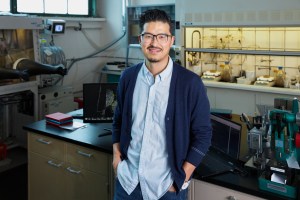
Jonathan Tan took the long way to the front lines of the energy transition: UC-Berkeley chemical engineer turned field-hand in the cold of Edmonton and the deserts of Australia, installing wastewater and waste-gas recyclers—then co-founding Coreshell in 2017 after bootstrapping “the world’s cheapest battery lab” from auctioned equipment in a Richmond, California garage. Jonathan straddles business and deep tech, and he’s betting on a deceptively simple idea with huge stakes: swap today’s graphite anodes—mostly sourced from China—for a low-cost, abundant silicon alternative made with assets already operating in North America. If he’s right, EV batteries get cheaper, supply chains get sturdier, and decarbonization speeds up—not only as a moral imperative, but because the product is better for people’s lives. From rock-climbing calmly under pressure to building a team that’s stuck with him for eight years, Jonathan’s story is equal parts grit, chemistry, and clear-eyed pragmatism.
Notes and resources
Full transcript
Michael Ethan Gold (00:00)
Jonathan Tan, welcome to Climate Swings. It’s great to have you here.
Jonathan Tan (00:06)
Thanks, Michael. Great to meet you. Great to be on this podcast, especially a few days after Earth Day, during climate week.
Yeah, it’s a great time to sit down and reflect on
all the journeys that we’ve had in this
industry if you want to call it that. So it’s great to be talking to you and chat about those things.
Michael Ethan Gold (00:27)
Great, great, yeah. So the way I usually like to start with my guests is just for you to provide a fairly high level introduction, bit of potted history of yourself and what brought you to your current role as the head of Coreshell.
Jonathan Tan (00:43)
Yeah. So just a brief background about myself. ⁓ I was trained as a chemical engineer at UC Berkeley. So started off my career on really the technical side of things. When I graduated, I got a field engineering job, ⁓ as well as a process engineering job, working in wastewater recycling. So really trying to clean up a lot of water in a really economical and efficient manner.
Deployed a lot of wastewater treatment plants around the world. From there, I then took a bit of a pivot in my career, transitioning away from the technical side, not fully, but more towards the commercial side. So became head of BD at another membrane company, but doing waste gas recycling for heavy industries rather than wastewater recycling. And there I was much more head of
commercial developments, but still for a very technical and material science driven product. And that’s really, I think, where the story of Coreshell began was that my co-founder and I had both spent a decade working in industry, serendipitously, both in thin film chemistry, but myself much more on the commercialization and scaling side of things, him much more on the fundamental R&D and material science aspect of things.
And we decided to really apply our industrial and career backgrounds and our skills to try to solve technical challenges within batteries. And I think that’s very intuitive to talk about these days and and sort of the framework of tackling climate change. When we first started the company back in 2017, I think what was really interesting is that when we pitched the company, a lot of people then
asked us if we wanted to solve battery problems for iPhones. That was like the most ubiquitous use of batteries or the term batteries was, you really want to make my iPhone last better. That’s great. That sounds like a fun little project. ⁓ It’s really amazing how quick this landscape has changed. And by the way, obviously we weren’t trying to solve iPhone battery problems. We saw batteries as really being the linchpin technology for this major energy transition that we’re trying to promote these days, right?
Whether it’s electrification of vehicles, whether it’s renewables on the grid. We knew that batteries had the longest or the largest gap to be able to fill. And I still believe that it has probably the largest gap from terms of technology and economics to really make that transition possible. So that’s how we started Coreshell. And of course, then we have taken quite a journey from our early days to where we are now in Coreshell.
Michael Ethan Gold (03:34)
Yeah, I mean, this is obviously not a technical podcast, but you are a fairly technical person. ⁓ But I am just kind of curious, thinking back on some of those early kind of technical learnings that you acquired and some of the degrees you got and some of that experience, when did you start thinking that you could apply what you were learning into climate and sustainability? Was there kind of an aha moment? Did it emerge naturally or organically?
Jonathan Tan (03:47)
Thank
Michael Ethan Gold (04:04)
How did that sort of start to enter your professional lexicon.
Jonathan Tan (04:07)
That’s a great question. ⁓ I think it’s really, for me, ⁓ what I think is maybe surprising for some folks is that if you go talk to people that I’ve interacted with from a business perspective, they think of me as like a technical founder. And if you go talk to people that know me from like a technology perspective, they think about me probably more as a business or commercial guy. And really, I think I kind of have always
I’m straddled a little bit of both. Even back at my days in Cal, when I was getting my chemical engineering degree, I remember having a lot of conversations, me and my co-founder, by the way, we graduated from Cal together. We were best friends and roommates back in Cal and beyond. And so even back then, we always talked about chemical engineering and material science as having a bit of a lack of soul in a way, right? Like there’s, and
there’s lot of really interesting technical challenges you can solve from them. But even back then, I think we really wanted to have more of a purpose or direction for the things that we’re trying to solve for rather than just purely solving them for a technical curiosity or an innovation just to solve the most complex innovation or technical challenge.
So I think we both aligned from that from the very beginning. ⁓ I think what was interesting for my personal career was that, ⁓ as I mentioned, ⁓ when I first started my career, I started as a field engineer. And that was a really informative period for me because I was installing these waste water recycling facilities and I was doing it in the remotest parts of the world, ⁓ all over the place. You know, I remember being in the dead of winter in Edmonton
installing a facility to convert a Mennonite, their manure waste into potable water in the dead of winter. From there going to like the deserts of Australia and trying to solve some of their crazy problems with water shortage. And it was really during those experiences that it really, to me became more interesting
Michael Ethan Gold (06:16)
Wow.
Jonathan Tan (06:35)
for me to work on trying to solve challenges that people really valued rather than focusing just on the technology or the technical concepts. So I definitely tried to keep some of my technical foundational skills, although ⁓ I’m sure my co-founder and some of the team members who I work with who are way more technical than I am would laugh at me saying that. ⁓
I have tried to keep some of the skills, but I really find the people side of the equation way more interesting and way more complex. Yeah, something that I enjoy much more so than the technical portions of it. I do believe in the foundations of technology, but that’s not really kind of what gets me up every day.
Michael Ethan Gold (07:23)
Yeah, you don’t have like an advanced degree, you don’t have a PhD or like anything beyond bachelor’s, is that right?
Jonathan Tan (07:29)
No, that’s, that’s
right. So that’s my, that’s my co-founder, right? So that’s why we had a good match was that he went on to obviously get his advanced degree. And it’s not that we both are one way or the other, like we both
have a grayscale here. But I think he found way more of the interest in the technical, solving the technical challenges aspects of it, whereas I moved way more early on in solving more of the commercial aspects and on that side. So it was a natural fit from when we first started the company is that we both had this shared intersection of solving technical challenges from different perspectives. But yeah, different lenses from which to look at.
Michael Ethan Gold (08:11)
Yeah, I mean, there’s definitely a sense of engineers as basically building the modern world, right? They’re the reasons we have essentially buildings, infrastructure, electricity, all that stuff. But there’s of course, different ways that you can do that, right? I mean, there’s the way that it’s been done for, you know, decades, right? Like 70 years, 100 years since the Industrial Revolution, essentially. And then there’s kind of like the next way and the next way and the next way. And I kind of wondering how you
decided that you wanted to focus on kind of what’s next, right? Like kind of the innovative side of engineering, because a lot of people with your background could just go into like, you know, a big company and just kind of help them improve incrementally. Like how did you go from, you know, your sort of more, ⁓ your business focused work experience into something that you really wanted to push the envelope on?
Jonathan Tan (09:05)
Yeah, I think that really dovetails well with the discussion that I’m sure we’re gonna start heading into, which is ⁓ much more about climate change and solving climate change and trying to find solutions to that. And obviously, well, maybe not obviously, but I’m sure as everyone who’s listening to this podcast and you know, ⁓ we can’t keep doing the same things we’re doing, right? Like that’s just not…
the way that we’re going to progress as a society, it’s not the way that we’re going to meet our climate goals. But much more than that, I truly believe it’s not for the best interests of people’s quality of lives. And we’ll talk about this more, but especially in today’s environment during the current administration, during the politicization of the term climate tech and all this.
To me, I have come back to the firm belief that we should be doing what’s good for people and their lives. And that’s really why I wanted to start Coreshell. It’s the reason why my co-founder and I really found it to be the probably the easiest decision. To me, it’s one of the easiest decisions I’ve ever made is that, yes, there’s this massive problem. It’s gonna affect all of our lives. It’s gonna…
⁓ massively deteriorate the quality of life of all of our lives. Why wouldn’t we be doing everything that we can to try to get ahead of that problem or solve that problem or mitigate it or do what we can to address that challenge? And to us, it was pretty simple. Like you’re not going to solve those challenges with software. And that’s not to the discredit of my peers and compatriots who working on really innovative and cool software
challenges and you need that in climate tech as well. Absolutely. But the foundational problems are going to be about molecules and electrons. And how do we get those things much more efficient and now much more cost effective, much more economical to be able to solve and address these major issues? Like you have to innovate at a foundational level. And thankfully, you know, I think Roger and I had built up,
him much more on the technical side, again, me on like kind of this hybrid role, the skills and necessary things to be able to at least have a crack at doing that. And so, you know, it was, it’s kind of a no brainer to me to really push the forefront of innovation, because it’s, to me, just the necessary thing that we have to do.
Michael Ethan Gold (11:52)
Yeah. And I guess, you know, it just so happens that we live in a world in which, ⁓ the, one of the most important technologies in general, batteries, is also one of the most important technologies for sustainability, for climate, for the energy transition. So when you and your co-founder decided to start Coreshell was batteries, just, it was like a no brainer. Did it, was it like mana from heaven for you? You were like, yes, batteries. That’s, that’s where it’s going to be at.
Jonathan Tan (12:20)
It’s a funny question. I’ll say two things about that. One is that neither of us worked in batteries before we started Coreshell. We worked in other materials industries. And like I mentioned, I was working in heavy industry. I was trying to clean up heavy industry before we started Coreshell. My co-founder worked in thin film solar. And then he worked in an industry called electrochromic windows, which are the windows on the Dreamliners that go from light to dark when you press,
when you pass voltage across them. And what people don’t realize is that those are large lithium ion devices
⁓ but they obviously don’t have nearly the impact that battery technology does in clean energy transition. So to answer your question about, you know, was it, did it feel like mana in heaven? It was actually different that we intentionally chose to work in batteries because
we felt like it was going to be the most important thing. So that was a calculated effort on our part. And it goes back to, I think, my core belief in more of like a utilitarian type of perspective on this stuff, which is let’s take a look and let’s be obviously impassioned about the things that we do, but let’s take a look at it from almost, I don’t want to call it a dispassionate or an engineered perspective and just take a look at the numbers and address the
biggest problems that we can, right? Like what are the things that have the most CO2 impact? What are the things that have the most quality of life improvements that we can do and address those problems first, or least attempt to. And so that was the natural choice for us to go work in batteries. ⁓ I will say that after having worked in batteries for the past eight years, it is absolutely the hardest and if
I don’t know if I can curse on this podcast or not, but it’s, it’s, well, I don’t know. It’s the most God awful challenge that you can possibly try to overtake. ⁓ and I think that’s evidenced by the fact that there has not been major winners in this space, right? There just hasn’t been major innovations that have really gotten across the finish line to address the challenges that batters are facing. ⁓ but I still see that as, ⁓ even more reason
Michael Ethan Gold (14:17)
Yeah, go ahead.
Jonathan Tan (14:44)
to be working in this, right? Because it has still, like I mentioned at the beginning, the most gap of where we need to be from where we are today. Solar is so cheap now. ⁓ All these other renewable technologies have come down in cost so much, but batteries are still by far the most expensive portion of it. And they’re by far the portion that is the most prohibitive
in terms of getting these things across the finish line for mass market adoption.
I still believe it’s the most important and the most impactful area that we need to be working on today. So I’m grateful that we had a chance to try to solve that problem.
Michael Ethan Gold (15:26)
And for someone like me, wastewater, you building a wastewater treatment plant sounds hard, dealing with waste gas sounds hard, batteries sound hard. I mean, it all sounds hard for my non-technical brain, but the way you describe batteries as even more challenging, even more difficult and the delta between where we need to be and where we are as being even bigger. How did you guys make that swing then? I mean, like, you know, given where we need to be and where we’re at and all the challenges.
How did you guys start and lay the groundwork for what would become Coreshell?
Jonathan Tan (16:00)
Yeah, I’m happy to talk about the journey with Coreshell. I think it’s, at least from what we’ve seen, fairly unique in this space. So like I mentioned, we had been working in industry for the decade or so before we started Coreshell. So we didn’t spin out of a university lab, right? Which is where most of these deep tech material innovations come from is, you know, spun out of a professor’s and a postdoc and, you know, their researchers’
graduate work or a thesis that they worked on, ⁓ better or for worse, we started the company from ground zero. And what that meant was that we had no lab to build our first prototypes in. We had no ⁓ research grants to fund us. ⁓ We didn’t really have a home to be doing this. So we had to self-fund it and really build it from the ground up. we…
put our savings in. That was the first capital we put in. We didn’t pay ourselves for the first almost two years. ⁓ We worked in this garage warehouse where we bought a bunch of auction equipment. We built what we considered to be the world’s cheapest battery R&D lab. ⁓ I still think there’s probably some world records that we could claim for that. ⁓ And that was the first two years of our existence was really doing that and ⁓ using that
to really build our first prototypes to get things off the ground. From there, I think then we started to really progress ⁓ in a way that you would see more traditional ⁓ material science innovations that get the first VC dollars and all that sort of stuff go through. So from there, it really kind of started to take off. ⁓ But it’s been a challenge the whole ride and I’m glad that we are facing now
obviously different challenges that we’re facing back then. Now we’re facing the challenges of how do we take the technology we developed, really prove that it’s fundamentally scalable and has the profound unit economics to effectively address the gap in the price of batteries for electric vehicles and the price of batteries for renewables on the grid and grid storage.
So it’s been a complex and multifaceted journey. We still have a long ways to go, but we’re now, I think, really solving some pretty exciting challenges. There’s not very many people that get to say that they’ve built an automotive-sized battery that has a completely different chemistry than what’s out there today. We’ve done that now. There’s not a lot of people then that can then go and say that,
actually, I don’t know any that can say that they’ve created a foundational and new chemistry that’s gotten all the way into an automotive vehicle. We have a chance of doing that in the next couple of years. So ⁓ I’m pretty grateful for having gone on that journey and where we are now. ⁓ It’s been a wild ride along the way though.
Michael Ethan Gold (19:06)
And remind me how long has Coreshell been in existence now?
Jonathan Tan (19:10)
Yeah, we’ve been around for eight years. So 2017 was when my co-founder, Roger and I, you know, decided to make the leap, quit our full daytime jobs, get the blessing of our partners to really leave ⁓ nice jobs, nice, well-paying jobs and ⁓ yeah, start the company. So it’s, yeah, it’s been a long ride.
Michael Ethan Gold (19:33)
We call them swings here on climate swings. But anyway, ⁓ I mean, bootstrapping a battery lab sounds incredibly intimidating. I mean, it’s you said you just like had a bunch of battery materials like essentially in a garage. Is that kind of like how it came together?
Jonathan Tan (19:36)
Yeah
We, well, I mean, it’s not really the way that people would like to think about circular economy, ⁓ but we actually bought a lot of the equipment that we first started the lab off of startups from the cleantech 1.0 boom that never really made ⁓ it. They, ⁓ unfortunately, some of them were dying or falling off at that point. So we bought a lot of their auction equipment for pennies on the dollar. ⁓
creating a second life, if you will, for a lot of their lab equipment. ⁓ And then we we built the lab ourselves. ⁓ Thankfully, again, the combination of our experience, Roger, who had helped build and operate a lot of those ⁓ material science and wet lab ⁓ pieces of equipment and had really run those operations for some of the companies that had,
he had been working on before. And then thankfully for me, I’m a chemical engineer, but I was a field engineer. As we talked about, I was actually out there installing wastewater treatment facilities. I know how to use a wrench. I know how to build things. And I’m happy to say some of those first pieces of equipment and things that we built several years ago, some of them are still being used in our lab today, even though we’ve scaled way
bigger and we’ve gotten way more advanced, some of those things are still being used by our scientists today to do foundational research on material science.
Michael Ethan Gold (21:27)
I have to ask, where do you go to find equipment from failed start? Is there like eBay for startups or something? Like, did you just put a call on link? Like, how does that work?
Jonathan Tan (21:33)
yeah.
Yeah, there’s definitely that. There’s one called SVD Auction. There’s a lot of auction houses. ⁓ Yeah, I actually wasn’t plugged into that, but I gotta say my co-founder Roger still is. ⁓ We’re still getting auction equipment ⁓ in the battery space, especially right now. There’s a lot of auction battery equipment for better or for worse.
So yeah, there’s definitely eBay for auctions, used equipment that never really found its way to ⁓ the finish line for a lot of companies.
Michael Ethan Gold (22:13)
Okay, so I think we can now give you like a minute or two to provide like the kind of elevator pitch for Coreshell if you want to just like kind of explain to the audience in as simple terms as possible because you said it’s like a different kind of chemistry for automotive. Sounds very exciting. What does that really mean?
Jonathan Tan (22:28)
Yeah, our goal is to commercialize the lowest cost anode on the market ⁓ as a way to really drive the ⁓ adoption and the profitability of automotive to meet mass market specs. We are now
Michael Ethan Gold (22:43)
And sorry, can you explain
what an anode is?
Jonathan Tan (22:46)
Yeah, that’s
a great, great. So for a lithium ion battery, there’s a cathode and anode, the positive and negative sides that when you’re charging the car, go into the, well, you move the ions to the negative side, but you move the energy over so that you can store it. And then when you discharge the car, obviously, then you flow the ions from the negative side back to the positive side. So the anode material right now in all lithium ion batteries is graphite.
We’re trying to replace the graphite with something that is both cheaper and way more abundant. So what that is, is a low cost, metallurgical silicon anode. And the benefits that we’re bringing to the market right now are that we strongly believe that we have the only anode material here in the United States or in Europe that can be a wholesale replacement for Chinese graphite, both unit economic-wise
as well as the amount of supply and the amount of material production in both regions. There’s really nobody else that’s offering the total amount of assets or the unit economics to do that. So I think that’s really now caught the attention, of course, of a lot of automotive and a lot of people in the industry, also Department of Defense and security of having an alternative supply chain. So it’s really coming in a timely
point in the market from a supply chain basis, but we’ve always thought about it from unit economics, right? How do we make batteries way more efficient in terms of the cost of materials and the amount of materials that are being used to put in there? And how do we lower the CO2 footprint of all those batteries going to EVs and on the grid?
Michael Ethan Gold (24:30)
So I think most of the audience will probably know why we need a replacement for a Chinese product period but first question is why can’t we just use our own graphite? Why do we need a whole different material?
Jonathan Tan (24:43)
⁓
It’s because there virtually is none. ⁓ China produces over 97% of the world’s battery-grade graphite. ⁓ If you look at the US domestic graphite production, first, there’s almost no natural graphite in the United States or in Europe. So the only way to get graphite here in the US or in Europe is synthetic graphite. Synthetic graphite is made from fossil fuels. So…
What is the point of trying to move off of fossil fuels to then just go use it to make a different form and put it into our batteries? That’s first and foremost. The second is that in order to meet the demand of electrification of vehicles, not even talking about grid-scale deployments, but just EVs in the next 10 years, we’d have to scale our domestic synthetic graphite production by over 20 times. That’s going to be multiple trillions of dollars.
Michael Ethan Gold (25:13)
Doesn’t really solve the problem, yeah.
Jonathan Tan (25:40)
Multiple, multiple heavy industries being built up in the United States, something that we haven’t really been doing very much of at all, similar in Europe. So when I say that we’re offering the only viable alternative, ⁓ what I’m saying is that we’re getting to use assets that are already being deployed here in the United States. Silicon is being produced here in the United States and hundreds of thousands of tons per year. ⁓
Our partner, Fair Globe, who we signed a strategic partnership agreement with and is vested in Coreshell, owns the two biggest mines in the United States, as well as one the largest mines in Canada. Those mines are operational today, producing commodity silicon for other markets. If you take a look at that amount of silicon that’s being produced in those mines, or actually the silica cores that then gets refined into silicon and other products,
that is the only asset in the United States that even has the potential scale of replacing Chinese graphite materials. Nothing else does. So everything else that you’re talking about has to go through massive heavy industry growth to even get there. And then you have to think about if you even had the natural graphite, things like
owning and operating new mines here in the United States. Is that really the pathway that the US really wants to go down? So what we’re doing is that we’re taking assets that the US already has, taking assets that Europe already has. So not digging new mines or not having to go and create new heavy industries, utilizing what we already have and deploy it for solving, again, this critical issue with batteries and doing so
with a unit in economics that’s less expensive than Chinese graphite. ⁓ So that to me is really what we’re trying to do from a value creation is make it a not only just a ⁓ climate tech solution, but something that is sustainable commercially and can help the industry mature into a profitable and self-sustaining industry for electrification and for grid storage. So that’s our goal.
Michael Ethan Gold (27:55)
Yeah, and to be clear, this is like battery chemistry, kind of ⁓ universally applicable across industries, or is this like just for EVs or just for like one application of batteries? Or could you could you put this in an iPhone?
Jonathan Tan (28:09)
You definitely could put in an iPhone. I think that there’s no reason why it definitely couldn’t get into all the different industries that we’ve been talking about. The one thing that I will say is that our first goal is to get into electrification of vehicles because that is the biggest market and what we believe to be really already the first domino to fall on kind of the transition away from fossil fuels. So if we can do that, that’s already a massive win.
For these other industries, there’s different specifications and there’s different product requirements. So I’m not saying that as today we’ve taken a look and being able to satisfy all those product requirements, but inherently, yes, this is a chemistry that could work for all those different things. What I will say is that I do believe that there’s not really a one shoe fits all type of situation here. There are definitely other batter chemistries that can solve grid deployment. You know, long duration storage, for example, is something that we’re not ever going to really touch.
But yeah, there’s multiple industries, there’s multiple applications. We’ll be hopefully a winner in some of those and some of the big ones, especially electrification of vehicles and transportation. I’m sure there’s gonna be winners in other ones. It’s really about finding where you have the most value for those different types of applications and technologies.
Michael Ethan Gold (29:27)
Why not long duration storage? Just out of curiosity.
Jonathan Tan (29:32)
⁓ It’s just such a different energy storage ⁓ process and
Michael Ethan Gold (29:38)
And guess what’s
your definition of long duration?
Jonathan Tan (29:42)
That’s a great question on its own, Like, you know, ⁓ everything from four to six hour batteries all the way to seasonal long duration storage. When I think about long duration storage, I’m thinking about like, you know, past the four to six hours into like the even longer periods of storage. ⁓ I think you’re at that scale and that size, you’d want to be moving away not just from our chemistry, I think you’d be wanting to move away from lithium ion in general, just because ⁓
the sort of massive ⁓ processes that you’re trying to enable through that and how much more efficient from a round trip efficiency perspective that you have to get to. ⁓ Lithium ion today, really the only reason why it’s even being considered for some of that stuff is that the unit economics have come down way faster for that stuff than it has been for anything else.
⁓ Inherently from a chemistry and a technology perspective, do I believe that that should be the case long term? That’s not my belief. I would hope that you’d find better solutions for that. Lithium ion is designed for energy density, right? It’s designed to be able to pack into small spaces and deliver the energy and the power in a small package, right? If you don’t have that small package consideration, there’s not really an inherent reason from a technology perspective
that lithium ion should be the choice.
Michael Ethan Gold (31:07)
Yeah, but also designed to kind of be recharged and discharged fairly regularly, like within a day or a couple days at least.
Jonathan Tan (31:14)
Yeah, exactly.
the charging, the power, all those things are perfectly suited for passenger vehicles and for small mobility in small industry, ⁓ not for storing energy during the summer and then transporting it and keeping it all the way to the wintertime. That’s not really what lithium ion should be used for.
Michael Ethan Gold (31:37)
Yeah, okay. So let’s get big picture for a little while. What do you think of the term climate tech? Just kind of throwing that out there because obviously what you do with batteries, as you know, we were talking about iPhones, not exactly climate tech, but we’re also, you you’re clearly very ⁓ bullish on EVs. What do you think about that as a general industry category? Is it a misnomer or do you think it actually defines something real?
Jonathan Tan (31:43)
Thank you.
Okay.
Yeah, it’s an interesting point. And actually, I was attending a panel and I’m, I forget who exactly said it. So I don’t want to misappropriate to somebody if it came from somebody else. But somebody on one of the panels that was here was really speaking from like climate tech investment perspective. But they mentioned that really, if you think about climate tech and climate tech investment, or just climate tech in general,
it’s really the most generalist category that you can have, right? It’s actually the broadest thing that you could possibly be thinking about because we should be trying to decarbonize and make more sustainable every single industry, like across the board. And for each one of those industries, we need a different solution. And it has to fit what that industry needs. It has to be tailored both
technically and commercially and ⁓ regulatory-wise or anything else to fit that industry. And we need people who are experts in that industry to go tackle that problem from a way that makes sense on a sustainability perspective, but also from a commercial and yeah, financial perspective as well. So, you know, the term climate tech,
I especially right now in this environment, I really do believe that there’s probably some rethinking that we should do about how we’re messaging it, how we’re branding it. Coming back to like what I said originally, you know, earlier on, I really try to think about things from more of a utilitarian perspective of what is beneficial for people’s lives, quality of life. ⁓
basic fundamental first principles. I think we’re getting to a point, especially in this environment, where I actually feel like there’s maybe been a disconnect there between people who see themselves as climate tech entrepreneurs or climate tech leaders and the value that they’re creating in people’s lives on a daily basis. And I’ll make a point of this and we can move on to other topics.
⁓ this was something that I think was a realization, especially during this recent administration change. if you’re a single mother of four trying to get by and working two jobs to support your family, if you’re being forced to consider paying more to get an electric vehicle and people are coming to you saying that you have to do that
because you have a moral obligation to participate in whatever the climate tech movement is, is that right? Are we speaking to people at the terms that they really need to be thinking about? What I really think needs to happen is that we can no longer ⁓ think about climate tech as this ⁓ moral movement or this sort of altruistic movement.
We need to think about what is beneficial both for the sustainability of our planet, which I firmly believe is imperative, but also what makes sense for people’s daily lives, what they can afford, what is sustainable from a commercial perspective, what generates profits, right? And it’s been too long that I think we’ve lived in this bubble
of thinking about almost like the Fern Gully or the Avatar perspective of one versus the other, right? Climate tech being sort of the native, you know, populist kind of do-gooder sense and these giant corporations as being purely evil and coming in driving for profit. That’s actually not true. We need to be able to do both. We need to be able to find solutions that are sustainable for the planet. And we need to be able to make those solutions
profitable, low cost and affordable so that the people in their daily lives who are struggling right now, frankly, to meet ends meet, it actually helps them, right? It actually is beneficial to them to choose the sustainable solutions, not to have it forced upon them. So I really do believe that that’s the moment in the current macro environment that we need to really get to. And I think we need to change the dialogue around that and really find a way that
these products make sense, not just from an abstract moral perspective, but from a daily lives perspective.
Michael Ethan Gold (37:07)
Yeah. And in EVs in particular, beyond just the cost question, which, you’re very focused on kind of bringing the cost down in a, you know, a sustainable and sort of near-shored way, et cetera. ⁓ there’s a bigger, much bigger sort of systems question around how we replace the entire petrol car fleet with something completely different. I mean, do you think, I mean, how do you, how do you see that landscape now, given everything that’s been going on?
Jonathan Tan (37:14)
Thank you.
Michael Ethan Gold (37:37)
And what do you think about sort of what’s needed to help advance that transition? Because it’s not just about making electric cars cheaper and cooler and better, right?
Jonathan Tan (37:47)
No, I mean, it kind of goes back to what I just said, which is that it needs to be a better product and it needs to be something that works better for people’s daily lives. Right. And I think that, you know, not that cost is the end all be all, but I do think that cost is a big factor in that. Right. If you can make electric vehicles cheaper than the traditional ICE vehicles that are out there, why wouldn’t people buy them just based on affordability? So that’s one part of it. Right. You need to be able to
make the unit economics make sense. You then need to be able to make that profitable for the automotives to do that, right? They can’t generate any profits right now. You make it incentivize for them to build more electric vehicles. Right now they’re making a huge amount of profits on ICE engines. F-150, right? It’s just a money cow for Ford. Make an EV that can be a money cow and see how quickly they’ll start to implement electric vehicles rather than ICE vehicles, right? Make it make sense for them.
Obviously then we, it’s not just the EV, but you mentioned the system around it, right? Chargers and stations and everything. I think that also definitely needs to happen. And I think once you do, you know, I drive an electric vehicle myself and I think a lot of people have this story. The first time I drove an electric vehicle, it’s a superior product. It’s more quiet.
It’s more efficient. It’s just way nicer to be an electric vehicle and drive around that. The power is outstanding, right? Your acceleration capabilities and your model three is like well above a lot of really high powered ICE vehicles. So there’s a lot of reasons why we need to make this shift and it doesn’t need to be this size and it doesn’t need to be, people who are driving EVs or trying to save the planet, you know, no, it’s, it’s a better product and it’s
nice not having to refill a gas station. It’s nice to be able to do things like charge at your home, not have to go out for charging if people can do that. And if not, you know, I do think that there needs to be a lot more systematic approach to chargers and fast charging and all that. What’s I think happening in other places in the country is that you can either lean into that transition or lean out from it and
then be kind of in this existential limbo where you’re trying to make both industries go by. If you lean into it, then you end up with a situation, you know, I live in California. There’s so many chargers now. There’s more chargers here in California than there are gas pumps. ⁓ I don’t ever really have to worry about charging. And if you can do that, like,
you don’t need to have 500 mile vehicles that are super expensive and luxury. You can get away with smaller, lighter weight, cheaper vehicles because you don’t have to worry about the range that you have to go through. You know, the average American only drives 40 miles a day. Why would you need a 500 mile vehicle if you only drive 40 miles a day? So, you know, those sorts of systematic things, I do think that there is going to be a transition period. I hope that we can make it so that
the industry and the product, like I mentioned, is beneficial in all aspects for people’s lives so that it’s an easy choice, not one that is based off of tax incentives or, you know, government having to step in to force people to do that. Make it a natural choice, not one that’s forced upon people.
Michael Ethan Gold (41:21)
Yeah. And you’re obviously someone who’s still very much centers climate sustainability purpose in what you do and in Coreshell. But in the, I guess, you know, the climate tech movement, for lack of a better term, are you seeing that there is kind of like something of a retrenchment or like green hushing going on? I mean, you did talk about how it sort of needs to be framed as like what’s good for people, but like we still have this huge problem and there’s still a lot of people who care about climate and talk about it, I mean, how do you view that balance?
Jonathan Tan (41:51)
Yeah, I think it’s good to care. It’s great to care. And I think we still definitely need to have that purpose and to do things. ⁓ But I do think that it needs to be more grounded in a realism around what’s happening in everybody’s everyday lives. ⁓
When I was younger, I think I was way more impassioned about this sort of thing as someone that’s worked in the space for eight years and had to deal with a lot more gray area and finding the trade-offs and balances for things. I think I’ve learned to try to be more compassionate, to listen to all different sides of what people need in order for this to be workable
for what they need from someone that works in a large corporation to investors, to people that you just meet. So, I think that the problem with the emotional aspect of purpose and being mission-driven, it’s not inherently bad on itself. It’s bad if it blinds you to hearing the other side of people’s stories, hearing what they need in their daily lives,
recognizing that climate tech or sustainability may be your life’s purpose, but doesn’t necessarily need to be the life purpose of everyone living. And there are important things that they have to do on a daily life that are also really critical for them. So again, it kind of goes back to what I was saying is like, let’s take that energy that we have about being mission driven,
but refuel it in a way that is not blinded towards making win-win solutions. And then I think if we can do that, we can then hopefully depoliticize a lot of this action and make it actually better for those solutions that are truly win-win. ⁓ Because you don’t want those to be taken off the table just because they’re labeled as climate tech. And there are truly a lot of win-win solutions
that are now facing a lot of headwinds because they’re labeled as climate tech, right? I think of EVs kind of as one of those, but that’s probably a political topic for another day. You know, like, let’s make it beneficial and then let’s be compassionate about what everyone needs from that and then try to use that framework rather than one of, you know, altruism or virtue or, you know, greenwashing or any of those things. Let’s move away from those.
Michael Ethan Gold (44:42)
Yeah, and there are obviously a lot of younger people, you know, as we were saying, who really care about this topic and they maybe also have, you know, technical background or they want to go into batteries. They want to go into essentially what you’re doing, but they’re like kind of, you know, where is the direction of travel? Which way is the wind blowing? I mean, what would you tell people that are coming up in their career that need a little bit of, you know, of a, of a little boost to get them on their path?
Jonathan Tan (45:14)
⁓ I, you know, I think it’s, ⁓ it’s something that.
I felt like I had to learn around in my pathway, which is that at the early stages, it’s really just about trying to grow and learn as much as you can and to really utilize those early moments in your career to try to discover what makes you tick and what makes you really want to wake up every day and go and tackle these challenges.
⁓ not just from like a abstract perspective from like a day-to-day perspective of really what you, what you really, what really fuels you to kind of get up and go. It’s kind of what I mentioned at the very beginning as, as part of like my learning was, you know, I trained as a chemical engineer, but like I mentioned, I don’t really, and I’m not see myself as a chemical engineer, especially not in this day in my, my life. I don’t even know if I early days, I really identified
as a chemical engineer, right? And it’s because I found myself much way more interested in people’s lives and their psychology and what makes them tick and ⁓ understanding people, understanding culture, understanding the differences between all these different cultures and ⁓ how people make decisions. And ⁓ those sorts of things were just way more interesting for me, right? So ⁓ keep the passion about trying to solve
these critical issues for climate tech, but find the day to day that really fits you and where you want to see yourself in your career. If you do those things, you know, I hate to kind of like pour the adage of like, you know, if you love your work, you don’t work a single day, but there’s some truth to that, right? Like if you really find what drives you and fuels you from a daily basis, then you’re much less ⁓ inclined to be disillusioned or to feel
you know, knocked off or any of those things. You know, to me, the headwinds are obviously challenging, but they’re part of the journey in the cycle that we have to go through. It’s definitely always going to come here. ⁓ Somebody else in another panel, actually, I think it was Ira from DBL made a really good point, which is that if you look at the short-term cycles, you know, this is definitely obviously a
part of the vibrations of up and downs that we go through. If you take a look at the macroeconomics, and he’s been around for like 30 plus years, we have way more funding, we have way more appetite, we have way more resources, we have way more community, we have way more of all the things that we need now, and so much more abundance than we did 20 or 30 years ago when people who trying to hawk solar were doing so in,
I think he was mentioning casinos and the backyards of people’s lives. And Tesla was going through this existential crisis of almost running out of money every single day, which they may again, but that’s another story. ⁓ But it’s good to have that broader perspective so that you’re not beholden to the waves of what’s coming in and out.
And again, that might be my sort of trauma as like a CEO of like trying to be more dispassionate about these sorts of things. But I do believe that there’s benefit in doing that. ⁓ Thinking about long term and thinking about the goal, but not necessarily anchoring yourself to the winds of the up and downs of the current gyrations, I think is also important.
Michael Ethan Gold (49:07)
Yeah. And looking back at some of the early swings in your career, and maybe you can pinpoint the founding of Coreshell is probably like, you know, among the most significant, right? Because it’s basically got you to where you are now. What are a couple of things that you might tell yourself that you would have wanted to know about the work that you’re going to do?
Jonathan Tan (49:30)
Yeah, I think in addition to what I mentioned around, you know, not anchoring yourself too much to like the large swings and the emotional ups and downs. I would say a couple of things. One, I truly believe now as I’ve gotten, I would say late in my career, but at least into the mid points of my career, the ⁓
Your professional journey is limited by your personal journey and how much you really spend time understanding yourself and to be able to tackle your personal, I would say challenges, but personal understandings. I really believe that effective leadership and effective entrepreneurship is really not
a side product of that, but really dependent on being able to solve some of those things. So that’s one is never stop growing, never stop pushing yourself personally in order to solve professionally the challenges that you need to solve. It’s also the most rewarding journey, I think, to be able to go on to solve those personal issues to then grow professionally. And then the second thing is, you know, just surrounding yourself with
⁓ the most brilliant people, ⁓ the most capable, the most passionate people, even though I talked about like trying to be more dispassionate, but like people who had that long-term drive, the fire in their belly, right? To solve those things and taking inspiration from them on a daily basis. ⁓ I would say that that’s probably the thing that I have the most gratitude for at this moment in my career is ⁓ how many incredible people
that I’ve met along the way and how many of them have continued to believe in the journey that Roger and I started in that dirty warehouse in Richmond, California off of the auction equipment that we have. How many of them have elected to stay with us through almost this entire eight year journey, sacrificing a lot of their daily lives and a lot of things that they’ve had to do to get us to where we are and how incredible they are.
Right? That is ⁓ something that I’m always just going to be dumbfounded by. So those two things, like the personal journey, as well as like the collective of the people that I met along the way are, you know, if I were to start all over again, I’d definitely try to tell myself to anchor around those two things much more so than like, you know, your career title or, you know, your salary, especially at your early age or, you know, some of these other things that ⁓
almost have a false sense of prestige when you’re early that’s easy to chase really aren’t that meaningful as you get later on in your your career and your your personal journey I think.
Michael Ethan Gold (52:37)
Yeah, you’ve talked about rock climbing previously, right? So you would essentially tell yourself to do more rock climbing and less company building maybe. Or do both.
Jonathan Tan (52:44)
No, no,
they’re definitely not mutually exclusive. What’s interesting is that I came to rock climbing. The thing that kept me in the rock climbing community, I just said it, the thing that kept me with rock climbing the most was also community. ⁓ I was also just incredibly impressed. ⁓ I think everyone knows Alex Honnold now, the guy who’s crazy in Free Solo and everything like that. ⁓ He’s obviously, and I climbed with him by the way, ⁓ back when I was…
going outdoors a lot more. There’s a lot of people in the rock climbing community who have this kind of dedicated passion towards that sport in a way that is really inspiring. And ⁓ the community that I built up there was really, really amazing. And it pushed me personally as well to think about risk and think about mitigating risks and think about being steady at times where you should be the most afraid
and you should be naturally the most instinctually, you know, trying to save your life. Sometimes it’s counterintuitive to kind of take a deep breath and center yourself around those things. So it’s funny that like you’ve mentioned rock climbing and building Coreshell. To me, it’s all been like one continuous journey. I don’t know if I would have been as good at being a CEO for Coreshell if I hadn’t gone through that journey of like personal risk and mitigation and community building as a rock climber.
So it’s either, I would say it’s not one or the other. I think you have to be able to do both.
Michael Ethan Gold (54:13)
Of course,
of course, of course. And as a kind of a final question, I like to ask all my guests, ⁓ thinking to the end of your career, and of course, you have a long way until you reach that point, ⁓ knock wood, of course, but what would you want your epitaph to be? What would you want people to think about the contribution you made to batteries, to sustainability, climate, the things that you care most about?
Jonathan Tan (54:25)
I hope so.
It’s a great question. It’s the one that I’m probably gonna have the hardest time being comfortable answering right now. I would just love to have it as he tried. He tried his damnedest. He did as much as he could. He made as much effort as he could to try to get these things to the finish line. And I think the reason why it’s just hard for me to think about that right
just because we’re so in the thick of things at the moment that ⁓ I really dictate my belief that you have to anchor yourself to process not necessarily outcome in these moments and to really kind of think about the day to day rather than sort of the larger picture. I hope when we get to that point, I can look back and have a more profound answer. But right now, ⁓ my main anchored belief is just waking up every day and
doing the best that I can because I think it’s worthwhile. It’s worth all the effort and sacrifice we have just to even make the effort. So yeah, tried his best.
Michael Ethan Gold (55:48)
There’s no right or wrong answer for that one. I had a previous guest that just said he didn’t really want to be remembered. He’s just a normal person. So that’s also perfectly valid.
Jonathan Tan (55:56)
That’s also really valid. I hope I can get remembered by at least like my friends and family who I’ve been close to. So I don’t know if I’m like quite that ⁓ egoless, but ⁓ you know, I mean, if we make a profound impact in people’s daily lives, like that would be amazing.
Michael Ethan Gold (56:13)
Well, I’m sure if your friends and family are listening, I’m sure they’ll take that to heart. And your colleagues and coworkers and clients and everybody. Anyway, well, thank you so much, Jonathan. This was wonderful. Thank you again for appearing on Climate Swings.
Jonathan Tan (56:18)
I hope so. ⁓
Yeah, thanks for having me, Michael. ⁓ Yeah, happy Climate Week and hope we can go do some good in the world.