

About this episode
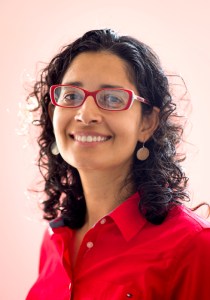
How does a passionate environmentalist swing from managing garbage piles in India to launching a groundbreaking climate education platform that’s transformed thousands of careers? Join me as I interview Kamal Kapadia, co-founder of Terra.do. Her remarkable journey took her from crowded Indian cities to Oxford’s hallowed halls, from installing solar panels in Sri Lankan villages to teaching middle schoolers in Hawaiian tents, and finally to creating one of the most influential climate education programs in the world. Through her story of constant reinvention—from journalism to academia, from food gardens (including tending to an appropriately icky “worm bin”) to tech startups—Kamal reveals how education can be our most powerful tool for climate action, and why sometimes the most meaningful careers are built not from careful planning, but from a series of bold adventures guided by curiosity and conviction.
Notes and resources
Full transcript
Michael Gold (00:00)
So thank you all for coming. Again, this is Groundfloor. Molly’s our amazing Groundfloor hostess. The Climate Club is a sub-club of Groundfloor. In case you were wondering what Groundfloor is, this is a co-working space in a lounge, and Climate Club is a sub-club. We host climate events, and the club consists of
myself, Ari Pearl-Butler at the door, and Barb Chang who unfortunately is ill and can’t make it. And they were nice enough to offer the space for me to do a live in-person recording of my podcast, Climate Swings, which you have, if you haven’t heard of Climate Swings, it’s been out for about six months and it is about climate career pioneers and trailblazers and the different swings that they have made
throughout their professional life to get them to where they are. And of course, everybody here presumably knows my guest today, Kamal Kapadia, the co-founder of Terra.do. Raise your hand if you have taken a Terra course. So a pretty good slice of the audience.
Great. I’m so glad to see that there’s a lot of Terra fans here. The podcast is really a forum and a showcase for Kamal to tell her story. So I will just start with my first question that I ask all my guests, which is, can you please give a short self-introduction to yourself, what you do, and maybe just like a short potted history of what brought you to who you are now?
Kamal Kapadia (01:40)
Wow, how long do we have, Michael?
Michael Gold (01:43)
We have a good amount of time, so.
Kamal Kapadia (01:45)
So I’m Kamal, as many of you know, Kamal Kapadia. I’m one of the founders at Terra.do. I’m also the chief learning officer, and I am part of the team that created the Learning for Action program. I originally designed it, and now it’s very much a team effort. So I want to acknowledge the whole team. And I know many of you have taken this course.
How did, where did I start my career? I grew up in India and I identified as an environmentalist even in high school. But when you are, I think this is common for many young people. You.
You orient around your local environment first, like that’s where you notice the problems first and where you want to engage. So I actually got very interested in waste management originally in India. We had a big problem with municipal waste collection when I was young and there were piles of garbage on the street. And so I got involved with this youth group in college and we called ourselves this very optimistic name, Association of Youth for a Better India. It was a volunteer group and I was obsessed with garbage.
And so we were trying to get people to separate at source and not send the waste out the door and to have the dry waste collected, et cetera, compost the wet waste. And that’s kind of how I got started really in this work. And I think thanks to that work, I got a scholarship in the year 1997, the year of the Kyoto Protocol to go to Oxford and study on this program. It was quite a new program then. This was only the fourth year. It was a master’s program in environmental change and management.
So I went into this program and I discovered solar energy. I thought, you I was in my 20s and I was like, this is the answer to all our world problems. ⁓ my God. We will solve global poverty. We will solve climate change. We will fix all the world problems with solar power, which, you know, is still partially true. It’s an amazing thing. Of course, we haven’t solved all the world’s problems, but I got very, very interested in solar. And so then I
got a couple of jobs at some solar startups and yeah, have done a lot of things since then that took me all the way to Terra.
Michael Gold (04:00)
So we will get into that a lot of things, sort of piece by piece, but I want to start way back. Why were you obsessed with garbage? Like what in your upbringing or in your childhood, your early years in India got you obsessed with garbage? That’s a really interesting thing to be obsessed with.
Kamal Kapadia (04:19)
It’s a great question. Actually, think many of us, ⁓ when we’re young, and I learned this too because I worked in schools, and it’s how important mentors and role models are when you’re young. And my mom actually had a friend, an auntie, and she was already working on this problem. She used to go in Indian cities, most middle class people, live in what we call building societies. So it’s like collections of buildings in a sort of
sort of gated community except the gate is always open and people just come and go. And so she was trying to get people in these building societies to separate their waste at source, to keep the wet waste and compost it on site, ⁓ and to process the dry waste, like to kind of hand it over to people who, the recyclers essentially. So she was already doing this work and ⁓ I knew her and I was quite interested in this. And so actually I started just going along with her.
And that’s really how it started. And so just having this one person, yeah, made big difference.
Michael Gold (05:23)
At what age around was that?
Kamal Kapadia (05:26)
I must have been 14, 15, yeah.
Michael Gold (05:30)
that kind of I guess like if you’re a little kid maybe you think garbage is kind of cool because like it’s sort of fun to play in or something but you just you are already thinking maybe that this was something you wanted to
Kamal Kapadia (05:40)
Growing up in India at that time, you could not escape this problem. Literally outside our house, there was a giant pile of garbage just on the street. And there were dogs in it, and it was stinky. And you knew this was a big problem. Since then, of course, the municipality has done a lot better. So now they collect it. And yeah, there’s a much better system. And in fact, many societies do separate now. It’s just part of what they do. But back then,
it was just a big problem in Mumbai where I went to college, in Pune where my parents lived. You couldn’t escape it. It was so obvious this problem existed and we needed to do something about it.
Michael Gold (06:19)
Yeah. So one thing I like to do on my podcast is sort of unpack the evolution of environmentalism and sort of environmental thinking and how people sort of just understand that climate is a thing or that climate is a problem. Obviously, if you’re growing up with a giant pile of garbage outside your house, you have a sense that this isn’t quite right. And that is sort of your first early introduction to so-called environmentalism, I presume. Is that right?
Kamal Kapadia (06:45)
Well, actually it goes back further. I had a friend in… ⁓ So I moved to the city of Pune when I was in seventh grade ⁓ and I became friends with somebody, ⁓ this girl who had grown up on a tea estate in India. So she had actually grown up in rural India and she loved being out in nature and we were really lucky even though we were in the city that right…
Close to where we lived, was a stream. And there was just green space around the stream. And there were trees. And it was just public space. And so she and I would spend tons of time outside in this area. And she taught me to catch frogs with my bare hands and not be afraid of bugs. she taught me to become curious about nature around me. So I think she actually, her name is Shonali Broom.
I kind of credit her, I think, and her family with orienting me, think, originally towards environmentalism.
Michael Gold (07:51)
And I
suppose the contrast of visiting the tea plantation and playing with the frogs in the stream and then going to the city and seeing the piles of garbage really must have sparked something in you that said.
Kamal Kapadia (08:02)
Well,
she was on the tea plant, I had never been to rural India. I was like a total city girl. Yeah, she’s the one who opened my mind. Yeah. But yeah, I think, I don’t know how it went to garbage, maybe because I have learned this because I have worked in schools and I work with children and I see how…
the way they enter into this work in a way is really through what is right in front of them. So when you are a kid, where do you feel you have power or influence? It’s like in your immediate environment. It might even be in your school, in your family. So that’s really how they enter into this work. I worked at two schools in Hawaii, and one of them ⁓ was this big private school, Punahou School. And we would take kids
to, we took these kids on beach cleanups. And I don’t know if anyone’s been to a beach cleanup, but it’s like the world’s most useless thing. Like it’s so useless. Like you go there, there’s so much plastic. Like if you actually start looking in the sand and certain beaches in Hawaii, not all beaches, but certain beaches, because of the currents, like they would accumulate a lot of waste and especially plastic, tiny, tiny, tiny, tiny, tiny, tiny, of pieces of plastic just mixed in the sand.
And so we would take these kids to this beach, and they would spend the whole day sifting sand and trying to get the plastic out. And it felt so hopeless. But that would be the start. Like the moment they had done that work, they’d realize this was so much bigger of a problem. And then usually, they’d come back. They’d
join the sustainability club on campus, and they’d be like, no plastic bottles, like plastic bottles off the campus. Because the campus is the next place where they can have some control and influence. So that’s the next thing. Like, OK, plastic bottles, ban plastic bottles. And it grows from there. But that beach cleanup is like the starting point, because they see it, they experience it, they see how big this problem is. And they spend the whole day trying to do this work, and they realize, this is
yeah, so much bigger than what we can do with this cleanup. So I think, yeah, I think a lot of young people, something in their immediate environment, like it sparks the interest and then it kind of grows from there.
Michael Gold (10:28)
But
you obviously did not become a waste management professional for the entirety of your career. You’ve many, many different things. So obviously at Oxford, when you were exposed to solar energy and kind of discovered solar energy, what was the kind of lens, I mean, you said you thought it was going to save the world, was, I mean, you said in 1997 was the Kyoto Protocol, but what was your lens that you explored solar through at that time?
Kamal Kapadia (10:54)
Yes, so I…
So Kyoto Protocol was the first big global agreement on climate change, so before Paris. But at that time, we still talked about climate change as something that was going to happen in the future. So in 1997, even though we were already entering, I mean, we could see the trends, it was still spoken of as if it was a problem of the future. So ⁓ it wasn’t an immediate concern for me. But I had come from India.
And I went all the way to the UK and I learned in this program that at the time there were two billion people in the world who lacked access to grid electricity. And this blew my mind. Okay, this was amazing to me. And also shocking, and that a lot of these people lived in my own country. They lived in India. And this was kind of really grabbed me as just this ⁓ crazy problem, you know, and it
I had never conceived of this before because I’d grown up in the cities and yes, we had blackouts and we didn’t have reliable electricity, but we certainly had electricity. And so this problem really grabbed my attention. And then I was lucky that at the time, the person who eventually became my first boss was thinking about starting a solar company. And so he had come into the program and he had spoken to us and…
and he had introduced me to actually the person who became my second boss. so I got like, you know, it’s always and your career is usually decided as some combination of interest and meets opportunity. So opportunity has to present itself. The other thing to know is back in 1998 when I graduated, it was a one year masters. There were like no environmental jobs. Okay. There was like no such thing as a climate career. This concept did not exist. There were very, very few environmental jobs.
And so you kind of had to take what you could find or you had to be very proactive to find something. And so all these things kind of came together for me and I did my master’s you had to do a project and I did it on solar and rural electrification. I went to Nepal actually. And so yeah, I got hooked at that point because I was very interested. I always thought of environmental problems through this very integrated lens.
Like growing up in India, you can’t ever not be thinking about poverty and development. And so for me, it was always about sustainable development coming from India. It was never just about climate or just about the environment. And solar seemed to present this opportunity for bringing it all together.
Michael Gold (13:35)
Yeah,
and you’re not shy about your continued and previous geekiness about solar. I mean, on your LinkedIn, you have a photo of yourself at 22. If you go on Kamal’s LinkedIn, can see sort of young Kamal ⁓ in rural Sri Lanka, I think that was,
Kamal Kapadia (13:50)
This is actually
rural India. I installed that panel and I did all the wiring in that house, much to the horror of the family. Cause there were all these technicians way more qualified than me and they were like, why is she doing the wiring? Because I wanted to learn. I wanted to learn how to install the system.
Michael Gold (14:04)
Right. But you also did not end up becoming a solar expert engineer, solar practitioner for your career. You kind of pivoted into education. Can you talk about that swing and what inspired it at the time?
Kamal Kapadia (14:21)
Sure. After I had these solar jobs, I ended up in academia. So I ended up coming to Berkeley, actually, to get a PhD. And the reason I actually ended up coming back to school is because I ⁓ was doing this solar work in India and Sri Lanka. Mainly, I was in Sri Lanka. So I worked for a company, and we did rural solar electrification for off-grid communities. And we had three subsidiaries at the time, India, Sri Lanka, Vietnam.
Sri Lanka and Vietnam have closed long ago and the India company now has evolved into a giant nonprofit. They’re really big. You can check them out, Selco Foundation. Anyway, I was doing this work and what was interesting is we were a for-profit company, not making a lot of profit, ⁓ as you can imagine. of course, energy and electrification is a space in which the government plays a really big role.
And we would sort of butt up against the government in all kinds of ways. And I didn’t have any sort of mental models or ways to make sense of this. And I kept noticing that we were struggling in various ways and somehow it had to do with politics and government. And I really couldn’t make sense of it or figure out how to engage really. And so I thought maybe I should go back to school. So I came back to school. But then of course, being in academia and…
having no money and having to pay for grad school, I spent a lot of time teaching in grad school. So I was a teaching assistant for four semesters and I loved teaching. And I thought, okay, I like doing this a lot. And then I continued teaching after that when I had a postdoc in the UK. So yeah, it’s kind of how I got interested in education really. And the other thing is education did so much for me. So I think I got a lot of validation. I mean, my…
you know, entire global journey was made possible through education. And so I think because I got a lot out of education myself, it called to me also as an area of work.
Michael Gold (16:22)
And you focused on essentially sustainability and climate as your kind of educational pedagogical focus. Is that right? Not yet?
Kamal Kapadia (16:31)
Yeah, climate came later. Yeah, environment broadly, environment, sustainable development mainly, really, as sort of the area for teaching. Yeah, for example, at Oxford, I taught a course called Environment and Development. Small, small little topic. Yeah, so I was teaching kind of interdisciplinary thinking around these issues. I also taught more practical courses, but yeah.
Michael Gold (17:00)
Yeah.
How did the climate question enter your professional lexicon? Because you did start to swing and start to pivot from just sustainable development and kind of environmentalism more broadly defined into climate change is the problem, right?
Kamal Kapadia (17:19)
Yeah, I guess it sort of just became the context really in which this work was happening. So clean energy was, I was already in clean energy. I was interested in clean energy. And it’s a good question. Like when did it all become about climate? By the time I was in Hawaii, especially when I started working in the schools and in Punahou School where it was, there was a high school, like those kids were really
concerned about climate change. They were terrified about climate change. So this, certainly by the time, it’s been over 10 years now, maybe about 12, 15 years ago, ⁓ it became a kind of framing, like, you know, word, not word, but sort of a way to reorient myself and my work. Because I was already doing the work and people started talking about this and it…
seemed to make sense to start talking about it as well. It’s weird, I’ve known. Since the 90s, I’ve known, yeah, there’s climate change. But people were not responding to this term at all. It wasn’t a term. Even when we were doing the solar work. So I worked for two different solar companies, one in India, Sri Lanka, Vietnam, and the other. My very first job was with UK’s first retail PV company. So we were—
in the year 1998, there was no way to just buy a solar panel in England retail. And the guy who started this company was ex-scientific director of Greenpeace. So he was like an amazing person. He had actually started his career prospecting for oil with Shell. He used to go to, he was a geologist. He had a PhD in geology and he used to go to Afghanistan and Pakistan and prospect for oil. And then,
in the 80s, he had an attack of conscience and he started hearing about climate change and he went and joined Greenpeace. Yeah, talk about a career transition. And he did that for 10 years and he got fed up of the nonprofit sector and he thought, that’s it, I’m just starting a PV company. So he moved to the sunniest place, England, which is where he was from. And he was like, yeah, why not? Let’s start the PV company here. So when I joined, we were three people.
Michael Gold (19:21)
Yeah.
Kamal Kapadia (19:42)
None of us had installed a solar panel. None of us had worked in business. None of us knew marketing or engineering. And yet here we were starting this PV company. And luckily for us, the right people joined the team. I only did that job for one year because I had a training visa. I was on a limited visa. But that company grew into a multi-billion dollar company, global company, and recently got bought out by, I think, a Scandinavian, even bigger energy company.
And he is off on his next career, by the way. He’s like in his 70s. And he started a rewilding company, Jeremy Leggett. You can look him up. Yeah, yeah, lots of climate swings. I think I lost the.
Michael Gold (20:21)
Some inspiration there for sure. ⁓
No, no, no, I’ll bring us back. Don’t worry. Going back to your work in the education sector, I’m really curious because you said that climate kind of felt like it sort of seeped in organic. There was almost more like a bottom up thing because you said the kids really cared about it. What was it like fashioning environmental and then I guess later climate curriculum for like public schools and for schools in general? What was that?
Kamal Kapadia (20:47)
So
was never in like a regular public school. I worked in these two schools. One was this very elite, rich private school called Punahou and the other was the exact opposite. It was an extremely scrappy charter middle school called SEEQS. The school for examining essential questions of sustainability. Now this school, the most amazing school on the planet. It is a charter school, which means it is free. It was a lottery based admission.
Michael Gold (21:06)
That’s a unique school.
Kamal Kapadia (21:15)
And that means like there were homeless kids sitting next to university professor kids in the classrooms. The classrooms were big tents. We were on a Salvation Army grounds in these big tents, because this was Hawaii and you could have your classrooms in big tents. And honestly, for anybody who got anything out of LFA, you should credit this school for completely revolutionizing the way I thought about education. I had to throw away everything I knew about education, and I had to learn it from scratch.
Because until that point, was in a very traditional, I had a very traditional model of education, which was the education I had received, which was very lecture-based standard. And then what I saw, what teachers were doing with these kids was just phenomenal. They had designed the whole curriculum around these sustainability skills, five sustainability skills, and kids were so engaged. There was like every…
year started with these visits in community in order to spark imagination. So there’d be a theme like energy or water or something, fresh water. And we’d take the kids all over the island to just like spark their ideas and imagination because they would have to do projects themselves. So yeah, that school really opened up for me what was possible in sustainability education. And again, I’ve lost the thread of the question.
Michael Gold (22:39)
No, no, was pretty much. I mean, it was kind of like when you started doing those kind of curriculums and whatnot, it seemed like the environment was just already really conducive is what I’m hearing.
Kamal Kapadia (22:49)
Yeah, and we didn’t do
much with climate because it a middle school. And actually, I entered the school because I was very curious about… I knew I wanted to keep working in education, but I did not want to continue at university, mainly because I was tired of research and writing as an academic. I hated the academic style of writing and having to write more academic papers just did not call to me. And so I switched over to schools. And
that school, I entered that school because I was really curious about food gardens. So I knew that this was a really, had a friend who was doing this work in Hawaii and she talked about like how much education could happen in the food garden itself, in the school garden. And so actually I started in the school as a volunteer. I was the garden volunteer and I knew nothing about growing food, about gardening,
nothing. And what I learned in this school with these other teachers is that it was okay to know nothing, you know, or to know very little. And the teachers in this school, not a single one of them had any kind of formal sustainability or background. I mean, they were teachers with all kinds of backgrounds. They were, know, math teachers or English teachers, and they saw themselves as guides and connectors. Okay. And they would learn along with the kids.
And they were okay with not knowing things. And they turned everything into a kind of a shared inquiry. And this was how I approached the food garden as well. Like there was a worm bin in this school. Worm bins are amazing if any.
Michael Gold (24:32)
Worm bin. Bin, yeah. Filled with worms.
Kamal Kapadia (24:35)
With worms,
yeah. Worms. Actually, these are amazing things. Yeah, worm bins. Amazing. OK. So the worm bin is where you put your wet waste. You can’t put meat waste, but you can put your peelings and vegetable waste. And that worm bin had collapsed when I had joined the school meeting. It was dead, essentially. There were no worms. So the first thing we did with the kids, we were like, well, we’re all worm doctors. What happened?
Why is this worm bin dead? So we were worm doctors and then we had to restart the worm bin so we had to like collectively figure out how do you get the worm bin going again. Yeah, so like.
Michael Gold (25:15)
You were really like a fish in water. I mean, you know, not to use another animal metaphor, but it seemed like it was really the place for you to explore that kind of education, right?
Kamal Kapadia (25:23)
It was also the hardest job of my life. Seriously, anybody else here taught middle school ever in this country? Yeah, it was the hardest job of my life. And I have worked in a country with a Civil War. But this was a really tough job. Like being a middle school teacher and keeping kids engaged and like, I just remember this one kid once telling me, he’s like, I don’t have to listen to you. You’re just the worm. You’re just the garden lady.
Michael Gold (25:37)
Fair enough.
Kamal Kapadia (25:52)
I don’t have to listen to you, you’re just the garden lady.
Michael Gold (25:54)
It
sounded like you were going to say the Worm Lady, which kind of…
Kamal Kapadia (25:57)
I had those confused. And I thought, he is so right. He doesn’t have to listen to me. I am just a garden lady. It doesn’t matter that I have these two master’s degrees and a PhD. This kid at this moment has complete power over me and I have no idea how to respond in this situation.
Michael Gold (26:16)
But you obviously didn’t stay in middle school as a middle school teacher. So what inspired the next swing? I think there was ⁓ one or two other swings before you got to Terra. So many swings? God. OK.
Kamal Kapadia (26:29)
Yes,
you know, I think back on my career now and I’m like, you know what, it’s just been a series of adventures. I’ve also done jobs that have nothing to do with environment in between. With the school, the middle school, I actually really wanted to stay and I decided that I was going to be a middle school teacher. I was getting paid $15 an hour because I did not have a Hawaii teaching license. And the school was actually regulated by the Department of Education. So I did this for a year and I said, I cannot, we cannot live in Honolulu.
Michael Gold (26:37)
Okay, ⁓
Kamal Kapadia (26:58)
My husband was a university professor. So I went to the University of Hawaii and I was like, please, please help me get this teaching license. And they were not very flexible at all. And they said, you’ve got to do this two year evening program. And at that point, I was like, I’ve been in school for too long, too many years. Like, I can’t do this anymore, two more years without income. So I switched to the private school.
Michael Gold (27:21)
Yeah. Okay. So from, and then from the private school, swing, swing, swing. Oh God, so many. I one of those swing.
Kamal Kapadia (27:28)
I went, yeah, I didn’t stay at the private school because I spent a year there, but having been at a school where sustainability was really at the core, I found it very hard in the private school. I realized that sustainability was just absolutely at the margins and was not at the core, and could not be at the core of the school’s curriculum, even though the kids were so interested in it. The most popular course for high schoolers was AP Environmental Science.
Michael Gold (27:36)
Mm-hmm.
Kamal Kapadia (27:55)
400 kids were enrolled in this AP course and yet the school could not center, get themselves to really center this in any way or form and that just really annoyed me and I was like I don’t want no part of this is a waste of my time. So I left.
Michael Gold (28:10)
So, and you decided to make your own school that does center climate and sustainability. So, talk about the inception and the founding of Terra. We’re finally there. We’ve swung into it now.
Kamal Kapadia (28:15)
Exactly. That’s why I met Anshuman.
And
I’ve done other things, by the way, in between. I wrote for the Hawaiian Airlines magazine for a while. Yeah, I did other things, ⁓ which had nothing to do with environment at all. But I have a bad habit of just leaving jobs if I don’t like them. Now, it’s a privilege because my husband is very stable and stays in a stable employment so that I can swing in and out like this. So I recognize that as a privilege. So I was unemployed when I met
Anshuman and kind of trying to figure out my next thing and Co-founder and he was introduced to me actually our my brother-in-law introduced us and when I met him he at that time this was December 2019 so three months before we all went into lockdown and we are we didn’t know this was about to happen. He he was introduced to me by my brother-in-law who told me that hey, I know somebody who is very interested in climate
Michael Gold (28:57)
Anshuman’s your co-founder.
Kamal Kapadia (29:22)
and he’s trying to figure this out. And I was like, sure, I’ll talk to somebody who’s interested in climate. And when I got talking with Anshuman, he’s a very skilled entrepreneur. So he had started multiple companies. He’s a tech entrepreneur. So he has a very different background from me. The last company he had started was bought out by a company
where he became the chief product officer and it grew into this huge 4,000 people Nasdaq-listed company. So when I met him, he was the chief product officer of MakeMyTrip.com, which is the number one travel booking website in India, ⁓ and he had grown this company. And when I met him, he had actually given in his resignation because over the last year, he had gotten so worried about climate change. He had started reading about it and learning about it, and he was still in India at the time. He now lives here in California.
And he was really freaked out about climate change. But he said he couldn’t figure out how his skills applied. So he had spent a whole year on this journey alone. He had also found this journey very lonely. He had said, ⁓ once he got interested, his professional community wasn’t having the same conversations or they didn’t have the same interests. And he lacked mentors, he lacked a peer community.
So when we got talking and he was beginning to get a group of people around him and on a Slack and on WhatsApp and he was thinking about his next thing and we thought, well, why don’t we just try to solve Anshuman’s, if Anshuman is facing this problem, there must be many people out there who are facing the same issue. ⁓ And so that’s how we started. That was the origin. And I was like, well, what do I know how to do? I know how to teach, so we would make a course. Many of you are now graduates. So that’s how we started, yeah.
We didn’t know we were going into lockdown, of course. So by the time we got moving around January, we were just like bootstrapping this thing. And then, yeah, March, everything went into lockdown. I didn’t, by the way, meet my co-founder in person for one and a half years. Either of my co-founders. We have a third co-founder in India. I was in Hawaii, he had met his wife who was actually in a PhD program here. So they had moved to the US by this point, sometime just around that time.
Michael Gold (31:31)
⁓ yeah.
Because you were still in Hawaii at the time.
Kamal Kapadia (31:45)
And yeah, but we couldn’t meet. But we launched the company together.
Michael Gold (31:50)
So the question was going to be, how did you actually get the company going and off the ground and spread the word and everything? with this context, it’s just like, wow, how did you do that at the time, especially? Yeah.
Kamal Kapadia (32:01)
So
Anshuman knew how to start companies. So that was very helpful because I did not. And he got the right team together initially. None of us were taking any money. So from January till June, we were just kind of working on it together. And in June, he was like, that’s it. I think it was end of May or June. He was like, we’re launching the first cohort. And so I was designing the course. And we actually built the
learning management system ourselves as well because Anshuman’s a tech entrepreneur and our third co-founder was in tech as well. So we had a couple of software engineers. So we built this first LMS, which was terrible and really buggy and the course content was terrible and it had so many mistakes and the quizzes were full of mistakes. Actually I got Laney on board who now runs the climate farm school. Laney was our first instructor ⁓ and Laney and I,
How do you get the first group of students? It’s also all credit to Anshuman. He was like, it’s called hand-to-hand combat. He’s like, we went on two Slack communities, so MCJ, My Climate Journey, already had a Slack community. And we went on Climate Action Tech. Because initially, I had asked Anshuman, Anshuman, who is the audience for this course? And he said, well, it’s me. It’s like people in tech. So we thought initially this was only going to be a course for people in tech. And he was literally going through the course materials and stuff as kind of
the first student in a way. And so the other community was called Climate Action Tech. It was another Slack community. And we were just DMing people. And we were like, hey, we released a couple of classes for free first of all. And then we were literally just DMing people and were like, hey, we think you would be interested. It doesn’t matter what you can pay. Just come for the course. So the first 20 people, we just put together this way.
But even in that first cohort, I feel like there were a few people who were not from tech, and we don’t know how they turned up, like in India. We had a journalist. She was amazing. And so most people, were in tech, but not engineers necessarily, different roles. And it was the summer, the first summer of the pandemic. It was the Black Lives Matter protests in the US. And we were this group of 20, and Laney and me. And it was just this amazing community.
People were so nice and so kind about all the mistakes in the course. And we just really felt like we were building something together. It was a very loving, they all just that first cohort, Monarchs, they really live in my heart. And yeah, and in fact, we ended up hiring like half of them at Terra afterwards. Like, I don’t know, so many Monarch graduates ended up working for us in various ways.
Michael Gold (34:49)
How did you decide what to focus on when it comes to climate? I mean, you named the course Learning for Action. What were the key things that you wanted people to take away from it?
Kamal Kapadia (35:02)
So the important thing to remember is that I had actually been out of university level education for a long time by this point. And actually, I was relearning it as I was writing the course. So of course, I had taken some course on climate science, but that was in 2002. I had not done any climate science in that long. So it was actually really good for our students that I was also learning it again.
I had enough context and enough history that I knew where to look for the materials. The other thing I think was very useful was that I spent, I wrote stories for the Hawaiian Airlines magazine. This was a little side thing I did in my career when my son was very young. And yeah, it was an amazing job. It paid almost no money, but I loved it. I used to travel and cover these amazing stories of incredible people. I just felt so honored that I would get to tell these people’s stories, like people in community doing amazing work.
This magazine, by the way, is unique for an airline magazine. It’s called Hana Ho, and it was like the leading cultural magazine of Hawaii, and it was also the Hawaiian Airlines magazine. So it was like a proper magazine with some good stories. And what was good about that is I learned how to be a writer. I switched out of academic writing, and I had to learn how to be a storyteller and a writer. So that, think, has also really helped with this course, because as you know, there’s a lot of content in this course.
It’s accessible to people. But in terms of what to focus on, the course has evolved a lot. So it was actually originally nine weeks. I mean, I think just from my experience to that point, I sort of knew, I had the mental models. I had the mental model. I knew how people approach these topics, how they talk about them, what the issues are. So just from experience, yeah. But there were certain
things I knew nothing about, climate finance. In fact, at the very last minute, someone else was gonna write the classes and I had been like hounding her. She was an expert and then she didn’t write the classes. And so we launched the first cohort and we were like two weeks and Laney and I wrote the climate finance classes, which they have improved and we have brought in an expert and she has—but certain topics that I was not that familiar with, we brought in experts and they co-wrote it or they.
They originally did it themselves, and so the courses really evolved a lot. And it’s just become a big team effort, you know, with like course director and others really playing very important roles. And the most important role, many of you probably know, is the instructor. Like they are like the beating heart of the program. Having the instructor, yeah, instructors really lead it is been very, very important, I think, to the experience.
Michael Gold (37:52)
Yeah. And climate education outside of traditional school settings for continuing learners and reskillers and upskillers and whatnot, it has kind of come a long way, it seems. I mean, even since Terra’s inception, what do you think about the landscape and how it’s evolved, especially given that, you know, the moment we’re in right now politically is quite difficult for most, for pretty much anything climate and sustainability related.
Kamal Kapadia (38:19)
Yes. So there are many options now. And ⁓ there’s
full master’s programs and like there’s just so many of them. There’s, you know, the Climatebase course, there’s our course, there’s the one, the 1.5, they have a course that’s more for consultants, sustainability consultants. There’s all kinds of certifications. If you’re in finance, if you’re in buildings, there’s, I was on edX and like there are hundreds of courses, self-serve courses. The secret of self-serve courses is like almost nobody finishes them. So yeah, Coursera’s model, edX’s model,
nobody really knows what the completion rates are of those courses, but it’s like under 10%. So yeah, it’s why, you know, when I started this course, I knew about education, but I didn’t know anything about online education. And amazingly for me, the principal of the high school at Punahou School, even though she was a principal of a brick and mortar school, she had done an entire PhD on online education and she was on the board of a very innovative online education organization. So I literally just had coffee with her.
And I asked her, I was like, what? Tell me what matters. And she said two things. She said two things matter. And the first principle, which is really the core principle of the program, which I think is unique to our program, which is for professionals and adults. She said, the same thing that matters in a K to 12 classroom matters online, which is you need a caring adult
who is invested in your success as a student. She’s like, all the research, everything, no matter what you look at across the board, it shows that you need a teacher who is invested in your success and a person who cares about you. And she said, people think it’s all about the glossy videos and the fancy tech. And she said, you can run a great program on Google
Docs and Zoom and you don’t need any of that. None of that makes a difference to learning outcomes to student experience. The second thing she told me is that when you are online, you need great clarity of instruction. Like do this first, do that second. Like that stuff is harder for folks to navigate and especially in a complex demanding program. So you really good clarity. You need to be communicating that in multiple ways. You need that clarity.
Michael Gold (40:27)
You don’t need all the bells and whistles.
Kamal Kapadia (40:52)
So just that sort of the communication side of what I should do now and what I should do next and what those expectations are, that has to be really, really done well. And you have to put extra effort. It’s not like a physical classroom. So those two things, that’s all she told me, really. And from that, we built the course.
Michael Gold (41:13)
And what about the current moment? Given what’s been going on politically and even socially in lot of ways, what are the prospects like for the climate education sector?
Kamal Kapadia (41:27)
So I think back on when I started. And there were no real prospects then. I I got into solar at a time when it was an insanely expensive technology. And it was way more expensive than fossil fuels. It just made no sense to be doing the work, honestly. And yet we did the work. And it’s what got things started.
And so I think ⁓ this is not unlike that moment in a way. Or at least I think back to that time. And I take away the fact that people keep doing the work in some way or the other, ⁓ even when times are hard. So ⁓ now I’m not saying that everybody, I mean, you can’t argue against the structural stuff. Like there will just be fewer climate jobs right now.
OK. But it doesn’t mean you can’t engage. There aren’t other ways you can engage. If you are gainfully employed, you can always donate. There’s lots of organizations right now that are hurting. You could donate to causes you like. There’s things you can do personally, your personal habits, your finances. That’s a huge thing. You can do things with your finances. And also, nothing is forever career-wise. Think of when I look back at all the things I’ve done and you know, like,
nothing lasted forever. Take the long view. Sadly, climate change is not going away. Turns out we haven’t fixed it yet. So that’s not going away. So even if you don’t see opportunity right now, there will be opportunity in the future. do notice, I mean, being in education, I have seen this, that in times of crisis, people actually go back. It’s like a moment and people actually go back and get retrained.
Like a lot, you see this a lot and actually universities benefit from economic downturns because many people choose to, well they’ve lost their job and they’re like, well now’s my chance to, you know, find my true path and they often go back to school or not often but sometimes go back to school and so it’s actually an uptime for universities when the economy is down. So at least in traditional universities and who knows if what’s gonna happen to them but.
Michael Gold (43:52)
That’s another podcast.
Kamal Kapadia (43:54)
Maybe
we’ll see more people turning toward this, looking for opportunities. I mean, hopefully people will not get laid off, but certainly already all these federal workers are laid off, so who knows what’s coming. But I don’t think… The other thing, of course, is we’re in a completely different time when it comes to the clean energy economy. So now it’s a really big economy and it has its own momentum and it’s just a no-brainer
to be putting in renewables instead of fossil fuels. It’s just so much cheaper in so many contexts. ⁓ And it’s big business. They have their own lobby groups, big global businesses. Now, of course, we may see some effects of the tariffs. But it was the Biden administration that put like 60% tariffs on solar panels anyway, like in order to create a domestic industry. It’s not like we pay 3x for solar, what they do in Europe. ⁓
by the way, of our tariffs. And that was before the Trump administration. And we still have the solar industry.
Michael Gold (44:56)
So, reasons for hope.
Kamal Kapadia (44:58)
Yeah, I mean, of course, there’s always reasons for hope.
Michael Gold (45:00)
Yeah. Well, OK, we’re going to open it to the audience in just a minute. But I have two questions I’d like to ask pretty much all my guests. And they’re about you, of course. And the first one is looking back. And you can pick one, maybe you can go to the 14-year-old catching frogs in the tea plantation or wherever you want to go and think. Try to think of maybe one or two or three pieces of advice that you would give to 14-year-old Kamal or I don’t know,
just finishing her PhD or anything like that, that you would want to know as you were swinging through the rest of your career.
Kamal Kapadia (45:33)
Well, I don’t know if I’d want to tell any 14-year-old this, but I might say the climate crisis is going to get a lot worse. Or, hey, pay attention to this, because, we’re going to get deeper into this problem. But also, for you personally, things are going to work out. And you are going to go on adventures that you cannot conceive of at this moment.
You cannot conceive of the adventures you are going to go on. And your world is going to open up in all kinds of ways that no matter how much you sit and try to plan and control your future, you have no idea of what’s going to open up and all these journeys you’re going to go on and you’re going to live in Sri Lanka and you’re going to go to the UK and you’re going to be in the US and in Hawaii. God, I would have never in my dreams imagined that.
So yeah, things are gonna work out.
Michael Gold (46:37)
You still look very Hawaiian by the way. And the last question is if you can cast your mind say to the end of your career, I know that’s a long, long way away, but what would you want people to remember you for? What would you want your epitaph to be about the contribution you made to climate or just in general to the things that you care about?
Kamal Kapadia (46:39)
Thank you. ⁓
I don’t think I’m going to care about my contributions at that point. I mean, I think if it’s about work, would be… She worked hard on things that mattered. Yeah. And yeah, I I’ve reached this point in my career. It’s a joke between my husband and me. I keep telling him, I’m like, you haven’t fixed climate change yet? Like, what’s wrong with you? You promised me when we got married, you would fix this by now.
So it’s very humbling to do this work. Because when you enter, you think, well, don’t worry climate change. I’m here now. I’m going to fix this. I’m here. Yeah. But as you do the work, it’s just very humbling. Like, every day you get up and you’ve not fixed the problem. And no one of us is going to fix this problem. That’s why Terra exists. That’s why we create these pathways. Because everybody is going to have to do their bit. ⁓ But it’s also just very humbling.
Michael Gold (47:56)
Takes a village. Or a very big village. Or the world.
Kamal Kapadia (47:59)
And I’m grateful for that. I’m grateful for that daily reminder.
Michael Gold (48:04)
Wonderful. All right. Well, we will wrap this part of the interview right there. Thank you so much, Kamal, for appearing on Climate Swings. This was wonderful.
Kamal Kapadia (48:12)
Thank
you for having me, Michael.
Michael Gold (48:19)
All right, we’ve got about 15 minutes for audience Q&A. I will just repeat the question so it can get picked up by the mics up here so if you can speak clearly so I can hear everything. Who would like to start?
Go ahead.
Kamal Kapadia (48:37)
Thank you for the talk this has been very inspiring I’m curious what adventures are next for you?
Michael Gold (48:42)
So the
question is what adventures will Kamal undertake next? What’s the next swing?
Kamal Kapadia (48:48)
You know, if you’d asked me that question last year, I might have said, I know. But given the context we’re in right now, I am in like the unknown. And I just have to make my peace with that. Because we’re just in a very difficult time in this country. And so I am trying to just live in that discomfort of not knowing. Because, yeah.
I mean, we were all expecting some terrible executive orders today, and I don’t know if they were ever announced eventually.
There were all these rumors, but they were like in mainstream publications about how there were going to be these executive orders today that were going to remove the charitable status of any organization that had anything to do with climate and all the philanthropies. And so we have no idea what’s coming. And even if the executive orders pass, what does it mean for the sector? There’s going to be court cases. Are they going to obey the rulings of the courts? It’s so much that is unknown right now
that I’m just trying to take it a day at a time. And yeah, not get too far ahead of myself. It’s a hard time for us at Terra. People, for good reason, aren’t
necessarily flocking into climate work right now. The term feels dangerous. It feels like loaded. Like I see a lot less engagement around climate posts on LinkedIn. And I kind of feel like maybe people are just afraid to even put a like on these posts. And especially if you’re an immigrant or on any immigrant visa right now, like, yeah, you probably are very afraid. Answer is, yeah.
Michael Gold (50:37)
And at the same time we’re here in Climate Week where like people can fill every day with climate, wall to wall climate and had Al Gore and I mean I don’t know it feels like we’re in almost like a dual world in a way, right?
Kamal Kapadia (50:49)
Good thing we are in California. Yeah, that makes a big difference. Yeah, I mean, there’s plenty going on here and that will continue. Like at least I hope it will. I don’t see any of that slowing down. This is a giant economy in and of itself. Now, if there’s a global economic downturn, we will not escape that. But we’ve been through that before too. We’ve been through that. There was like the whole financial crisis and…
There’s still a climate, you know, the climate movement survived that and there was COVID and the climate movement survived that and yeah. So.
Michael Gold (51:26)
Any other questions? Yeah.
I’m curious how the current political climate might shape the curriculum for Terra.do, especially the fellowship, which I’m currently taking right now, for the future, there’s certain things you would like to add or focus more on. So the question is how the curriculum for Terra might change in the future given the context, political context.
Kamal Kapadia (51:52)
This is a great question. ⁓ As you might have noticed, the course needs a bit of an update. We’re always behind on the updates because there is so much content. Yes, that was a mistake. We shouldn’t have had so much content. But ⁓ we are. So I think this is a great question. One thing I would do is wouldn’t try to answer it alone. I would sit with the instructors and even with some fellows and try to figure that out, first of all.
Because I don’t think I have all the answers right now, and especially for people trying to enter this field. We have inside Terra though, had this ongoing discussion or debate around whether this should really be about jobs at all. And what does it mean to turn up for the climate in a way and to sort of expand those possibilities and just make all of them valid. Now, of course, you still want it to be science-based.
You, even from personal choice and all, you want people to make the right choices. But there’s various, beyond your career, there’s all the individual stuff you can do. I mean, the political stuff is interesting because, like I said, there’s still plenty to do here in this state. For example, we have an LFA fellow right now, ⁓ Kevin Chow. graduated just a few cohorts ago. And he has launched,
actually, interestingly, it’s a nonprofit, even though he’s been a very successful entrepreneur himself, business entrepreneur. He’s launched a nonprofit called Bright Saver, and I suggest folks check it out. And they are trying to bring the balcony solar model of Germany to California. So one of the problems in California is that only if you are a homeowner, you can really buy solar. If you are a renter, you have no way of accessing this market.
Now in Germany, they’ve gotten around this problem with just this very simple, literally just plug it in and throw it over your balcony system. Now what that means is you don’t need permits. You don’t need anything. And in his model, you just pay as much as you save on your electricity bill, because electricity bills are so high in California. So actually, this thing pays itself off really fast. And he’s already thinking ahead also to batteries, because he knows that in California, a big thing is we need to time shift.
We need to actually be storing a lot of… We’ve got a lot of solar in midday, and we need more storage. And I think they’re already thinking, golly, the policy environment isn’t exactly right for this. And hey, actually, we may need to go to Sacramento and get some policies passed to make this, because they’ve realized that, they still need an electrician, and that’s already going to be a
limiting factor. They wanted it to be really easy for people to get this. So the fact that they need an electrician and it has to do with some complex thing in the code somewhere. So they’re already thinking ahead now to influencing policy to make this possible. And actually, I think everybody on his team is from LFA or a lot of people. He just found his little group of people and launched this organization. So state, there’s plenty you can do in the state. If you’re here
or if you’re from at least any other state that’s doing climate policy. There’s a lot you can get involved in. City stuff, like city level, county level, people don’t know this, but building codes are very, very hugely influential. And those things get decided at the county level. One of my various jobs.
I worked for a clean energy advocacy organization in Hawaii and we used to try to influence the building code. We used go to the county meetings to influence the building codes because we were just trying to get solar water heating as like the required, like any new build should have solar water heating and this was in the building code stuff and so we used to try to get this policy passed. So yeah, there’s, and also just resilience work in this state. I mean, think of what happened right now in Los Angeles, like.
The state is getting very interested in this. So yeah, there’s ways in which you can get involved with local organizations and support policy, support advocacy, influence city government. Like things are not necessarily slowing down here where we live. Yeah. So, and honestly, like if you can’t get a climate job, I mean, it’s okay. Like even I haven’t had climate jobs, you know.
It’s OK. You have a long career ahead of you, and this problem sadly isn’t going away. But hopefully the Trump administration is.
Michael Gold (56:43)
Other any others? Yes
Kamal Kapadia (56:59)
guys. ⁓
Michael Gold (57:01)
comprehensive.
The question is book recommendations from Kamal.
Kamal Kapadia (57:09)
I have to confess that I only read fiction. I read so much nonfiction for my job and I don’t tend to, ⁓ well because I need to put the materials online, I only look for materials that are already online and like publicly accessible. Like even academic.
We do need to cite academic studies, but even there we try to look for ones where we can find articles about them or so that people can actually, because we link to source for every single thing that we have used in the course.
Michael Gold (57:43)
What are some good fiction, some good novels you read recently?
Kamal Kapadia (57:45)
I mean
That’s a great question. I’m never not reading. Every single night I read. I don’t think there’s been a single day in my life since I was like 10 that I haven’t been reading. I’ve written a novel, by the way. Unpublished. Well, the original name of the novel was Growth because it had to do with personal growth and also it was set in this rural part of India which was forested. And it had to do with the forest as well. But, yes.
Michael Gold (58:03)
What’s it called?
Kamal Kapadia (58:18)
This was when I was doing the writing. I thought I would have a life as a writer. So when I was writing for the Hawaiian Airlines magazine, I was also writing this novel. But I’m trying to think, what was a recent novel that I read that I liked? God, it’s so hard to name one just off the top of my head.
I can’t remember her name, but there’s this Irish writer who I’ve started reading and she writes mystery novels set in Ireland and golly, I’ll have to come back to the name, I’m sorry. The worst thing about reading on Kindle is you no longer look at the book cover every day, so you can’t remember the names of your…
Michael Gold (58:56)
You can set the Kindle lock screen to be the book cover.
Kamal Kapadia (58:59)
I read on my phone though.
Kindle on my phone.
Michael Gold (59:04)
Any last one more? Any one more question? Okay, I think we will wrap it up there then. Thank you again, Kamal. This was wonderful. Please join me in thanking Kamal.